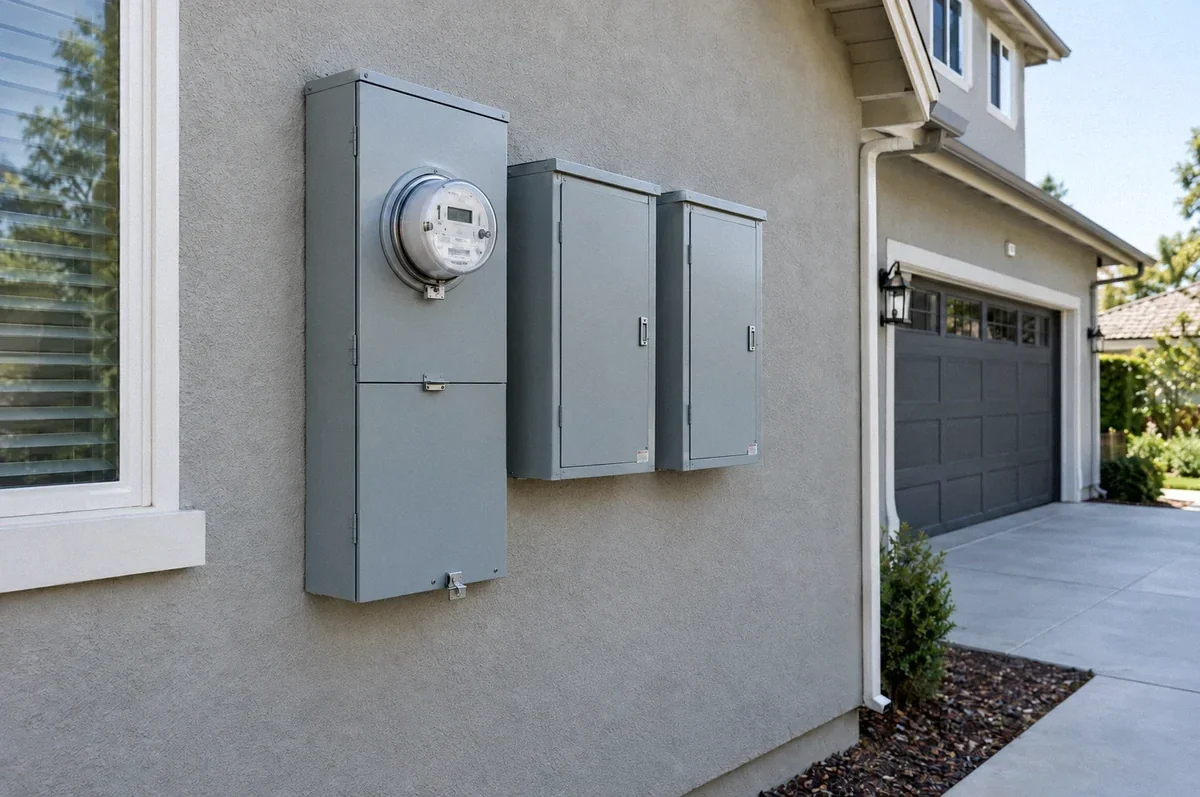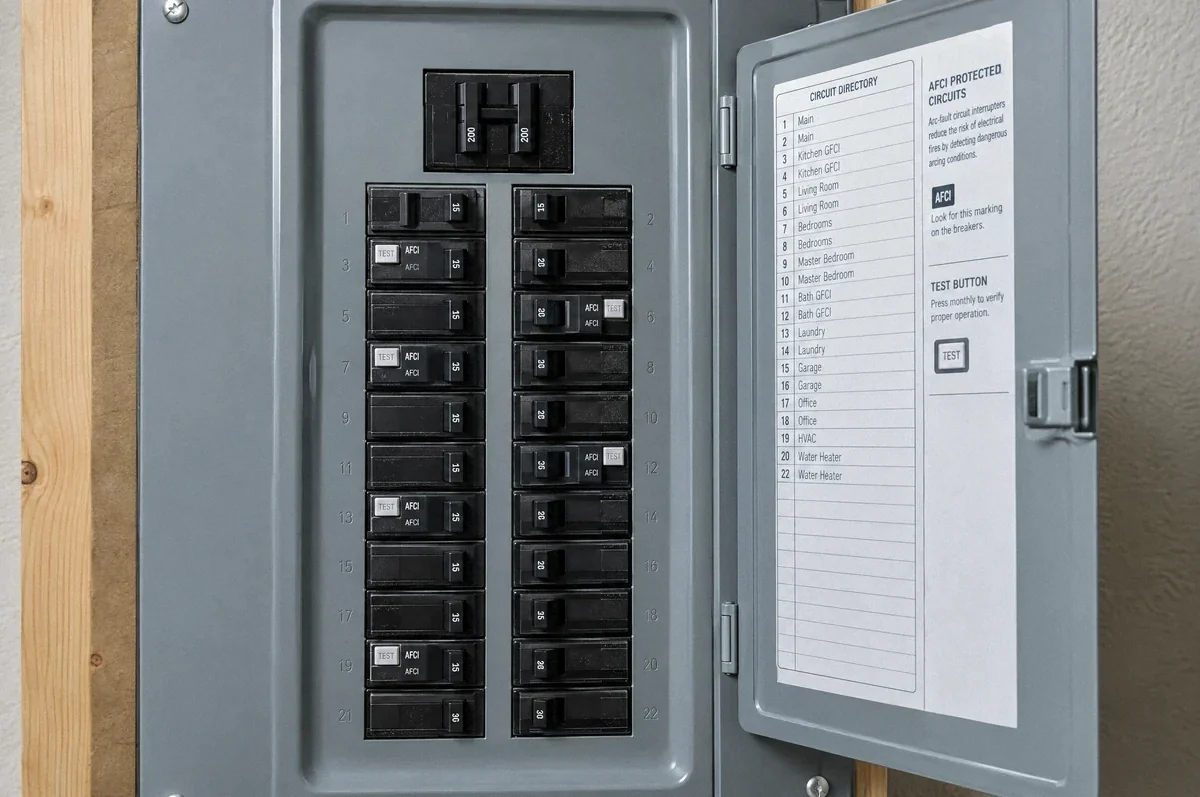

Electrical panel upgrade cost in the Bay Area depends first on whether you are replacing the panel or increasing the electrical supply to the property. Published local references describe very different projects: a panel update without added supply, a replacement offered through a city program, and a service upgrade that may require utility construction. Compare the scope before using any of those figures as your budget.
This guide separates those costs and provides a checklist for comparing written estimates. The outside figures below are attributed planning references checked on October 10, 2026. They are not Fox Electric prices or a quote for your address.
What do published Bay Area cost references show?
| Source and scope | Published amount | How to interpret it |
|---|---|---|
| WestLight Energy: panel update without increasing utility supply | $1,200 to $2,000 | The program's general reference for a panel update. It is not an itemized estimate for a full meter and service replacement. |
| City of Palo Alto: electric panel replacement | $3,850 to $8,450 | The city's installed-cost table is labeled as including a rebate, with rates effective February 2026. Program participation requires a water heater or heating conversion, or both. Site preparation can affect the total. |
| WestLight Energy: service upgrade | $4,000 to $30,000 | A broader project that increases the supply from PG&E. Utility requirements and construction can make it substantially different from changing a panel. |
These are not interchangeable offers. Do not average the rows, add them together, or assume a Palo Alto program price applies in another city. WestLight Energy's page does not provide a dated sample of completed Fox jobs or a breakdown for your building. Palo Alto also notes that site preparation and other building conditions can change the full project cost.
A contractor's total can exceed a published panel-only reference because it includes work the reference does not describe. Ask for that difference to be itemized. A lower figure is equally difficult to evaluate if the quote leaves utility work or restoration unresolved.
Which project are you actually pricing?
The panel is the distribution equipment that holds the circuit breakers. The electrical service is the supply and associated equipment bringing power into the property. Replacing a panel does not necessarily increase that supply. A branch circuit is the wiring from a breaker to outlets or equipment inside the building.
| Project | What the proposal must establish | Work to price separately when needed |
|---|---|---|
| Replace a damaged or unsuitable panel at the existing service rating | Equipment compatibility, condition of existing conductors, breaker requirements, location and permit scope | Repairs to branch circuits, concealed damage, additional circuits and finish repairs |
| Increase a 100-amp service to 200 amps | A load calculation, meaning a worksheet assessing household demand, and confirmation of the proposed utility service | Meter equipment, service conductors, utility construction, a new route or relocation |
| Move the meter or panel | An acceptable new location and a route connecting the equipment to the supply and existing circuits | Trenching, longer conductors, wall openings, paving, stucco, siding or paint |
| Add a subpanel for more circuit positions | Available supply capacity and a suitable feeder, the wiring supplying the additional panel | The feeder route, new branch circuits and changes to existing equipment |
A 200-amp label alone does not define an installed project. Two homes receiving equipment with the same rating can need very different construction. A larger panel also does not repair a fault elsewhere in the wiring.
A checklist for comparing two panel estimates
Ask each contractor to price the same written scope. Mark each item as included, excluded, or an allowance. An allowance is money reserved for work or a charge that has not yet been fixed. It should identify what will determine the final amount and how a change will be approved.
| Estimate item | What to ask for in writing |
|---|---|
| Panel, main disconnect and meter equipment | Proposed ratings, equipment type and whether the existing location will be reused |
| Breakers and circuit connections | Which circuits are included, required protection and how existing wiring defects are handled |
| Grounding and bonding | The connections that connect the system to earth and link metal parts for fault protection, with the corrections included in the scope |
| Permit and inspection | The responsible jurisdiction, applicant, included fees and responsibility for corrections or repeat visits |
| Utility coordination | Who submits the application, which charges are confirmed and which utility work remains pending |
| Access and restoration | Who opens and repairs walls, trenches, paving and landscaping; whether painting is included |
| Additional equipment | Separate amounts for EV charging, battery connections, surge protection or other additions |
| Completion | Circuit identification, inspection records, remaining follow-up and the written warranty terms |
Keep the electrical price and known third-party costs visible on the same comparison sheet. Ask whether taxes are included. Do not count a permit allowance and the final permit fee twice, or treat an optional charger circuit as part of the minimum panel replacement.
Use the quote-comparison checklist to record these differences before comparing totals. For each uncertain item, ask whether it is excluded, covered by an allowance, or awaiting a separate price. The permit responsibility guide explains which approval tasks should be assigned in the scope.
Utility charges are different from the contractor's price
PG&E's panel upgrade roadmap, published in 2025, says a single-family project may require an initial assessment advance of up to $5,000, to be refunded or credited toward a balance owed. That is a possible advance under the utility's process, not a universal permit fee or an extra $5,000 automatically added to every panel job. Confirm its applicability directly for your project.
Where utility infrastructure work is needed, the roadmap describes a separate design and estimate. Ask which costs belong in the contractor's proposal and which come from PG&E. Do not assume an electrical contractor controls the utility's design, construction schedule or final charges.
Project duration and time without power are different
Applications and design can happen before the installation day. The power-off period depends on the agreed work, inspection and utility release. Confirm the planned outage separately from the overall project schedule. Arrange a plan for medical equipment, refrigeration, security and anyone who cannot remain in a home without power.
Read our panel upgrade timeline guide before fixing other construction dates. Palo Alto and Santa Clara operate municipal electric utilities; their coordination processes must be confirmed with the serving utility rather than assumed from PG&E's roadmap.
Why the address changes a Bay Area proposal
The permit authority is determined by the property, not just its mailing city or county name. A city application, utility approval and any association approval are separate steps.
- Menlo Park: the city's meter replacement requirements list existing and proposed panel size, load calculations, a circuit schedule and manufacturer information. A site plan is required when the meter moves. The page also flags local requirements for future electrification that can apply to main-panel work.
- City of San Mateo: electrical service upgrades appear in the city's Express Building Permit list. Confirm that the actual scope qualifies; inclusion in that category does not schedule a PG&E reconnect.
- Unincorporated property: start with the applicable county office. The San Mateo County permit process is different from an incorporated city's application.
Use the local guides for Menlo Park, San Mateo, Los Gatos and Campbell to identify the next planning step. Do not transfer another city's permit fee or approval timeframe into your estimate.
Can you meet the goal with less electrical work?
Start with the reason for the project. If you want EV charging or an electric appliance, record the equipment's actual demand before choosing a service size. A suitable load-management system, which limits simultaneous electrical demand, may allow an installation within the existing supply. More breaker positions and more supply capacity are different needs.
If the panel is damaged or unsuitable, reducing the planned load does not remove the equipment problem. Likewise, repeated trips, new panel noise or partial power call for diagnosis before assuming that a capacity increase is the repair. Our panel decision guide separates these questions.
Ask for useful alternatives with their tradeoffs: keep the service and manage charging, add circuit space where capacity permits, or increase the supply for a defined set of loads. Compare those options against how you will actually use the home. For charging projects, our guide to EV charging without an automatic 200-amp upgrade explains what the capacity assessment needs to establish. Check current incentive eligibility with the program administrator before subtracting a rebate from the budget.
Common questions about panel upgrade cost
What should I budget for a 100-to-200-amp upgrade?
Use a proposal that includes the service equipment and route, not a panel-only price. The outside service-upgrade reference above is broad because it covers different construction needs. Fox has not published a verified average for identical 100-to-200-amp jobs; we will give a price for your documented scope.
Does a new panel include rewiring the house?
Only if the proposal says so. Reconnecting existing circuits, correcting specific defects and replacing all branch wiring are different tasks. Compare any rewiring proposal against the whole-home rewiring guide.
Why is one estimate much cheaper?
Check for differences in service work, breakers, grounding, permits, utility charges and restoration before judging the total. Ask both contractors to resolve missing items on the same checklist. A price difference alone does not establish poor workmanship or unnecessary work.
Can you quote from photos?
Safe exterior photos and a list of planned loads help prepare the visit. They cannot establish every concealed condition, conductor route or utility requirement. Do not remove panel covers or expose wiring to obtain an estimate.
Is the utility assessment advance the cost of the upgrade?
No. An assessment advance, any resulting utility construction charge and the contractor's work have different purposes. Ask how an advance will be credited and which remaining costs are still subject to review.
Request an estimate for your property's scope
Send the city, property type, reason for the work, planned appliances and any existing permit or utility correspondence. Note shared meters, association requirements and known access limitations. Fox Electric can review the scope through our panel upgrade service or at (650) 550-0719.
For an emergency involving smoke, fire or active arcing, leave the area and call 911. An online estimate request is not an emergency response channel.