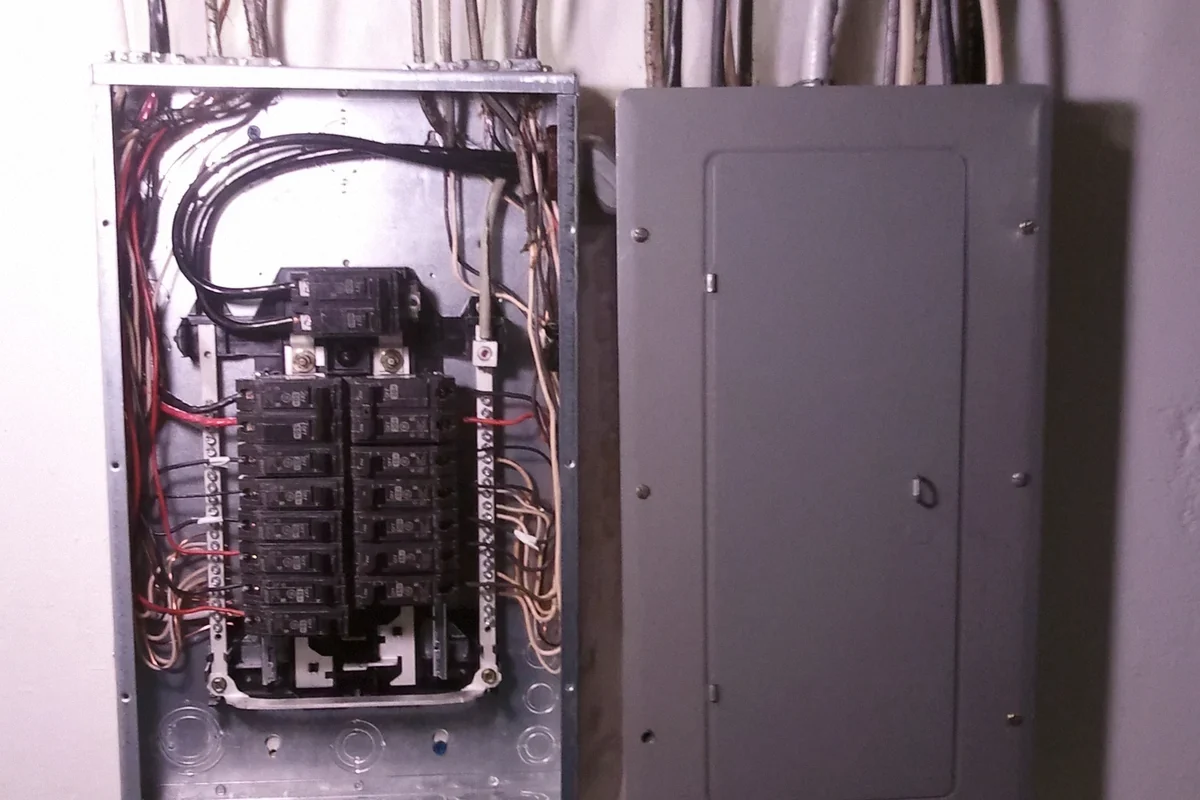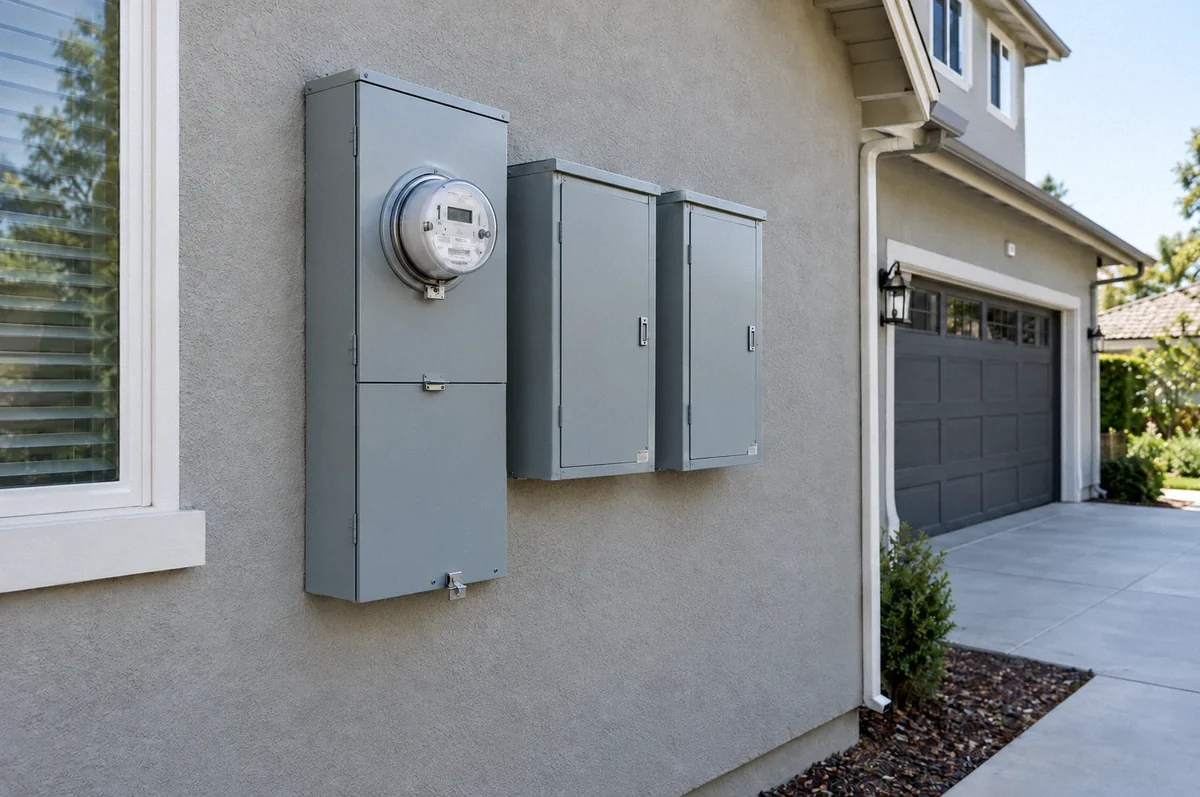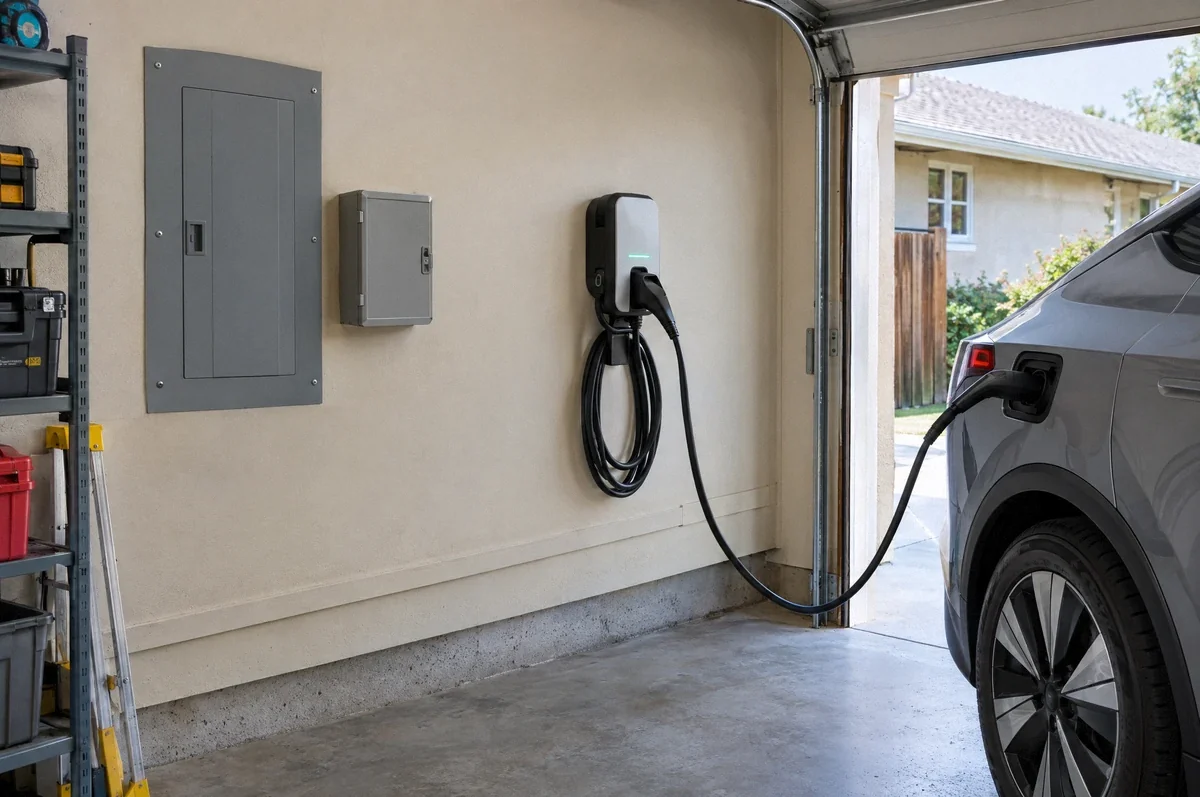
A 100-amp electrical service can support EV charging in some homes. It may support a conventional circuit, a lower configured charging rate, or an approved load-management system. Other homes need panel or service work. The service rating alone does not establish which answer applies.
Before accepting either a promise to avoid an upgrade or a recommendation for 200 amps, ask what condition or calculation supports it. The useful comparison separates equipment condition, breaker space, available capacity, and the energy your vehicle needs before its next departure.
What the 100-amp number tells you
The main service rating describes a limit of the electrical supply equipment. The number printed on a panel enclosure can describe the panel’s maximum rating without proving the home actually receives that service capacity. The main overcurrent device, service conductors, meter equipment, and utility arrangement all matter.
An electrician verifies those details rather than treating a photograph of one label as a complete assessment. Homeowners can provide clear photographs of closed, accessible equipment and visible labels. Leave covers in place; some components can remain energized even when a main breaker is off.
PG&E’s getting-started guidance for EV owners recognizes that a 100-amp home may support charging, with a load calculation or upgrades depending on the installation. That guidance is useful for PG&E customers, but the actual utility and permit authority still need to be identified for your address.
Four checks answer four different questions
| Check | What it establishes | What it does not establish |
|---|---|---|
| Equipment condition | Whether the existing equipment is suitable to retain | Whether there is capacity for another large load |
| Breaker compatibility and space | Whether the correct circuit protection can be installed | How much power the service can deliver |
| Demand assessment | Whether the proposed electrical load fits the service and feeder | Whether a damaged panel should remain |
| Charging requirement | How much output is useful for your driving | Whether that output is electrically permissible |
A subpanel is a secondary distribution panel supplied from the main system. It can add breaker spaces or place circuits closer to a garage. It does not add utility service capacity. Similarly, a physically larger replacement panel does not increase a 100-amp supply unless the service work required for the increase is also completed.
Our panel electrification guide applies these distinctions to EV charging, heat pumps, and electric cooking planned together.
How the demand assessment works
A code-based load calculation uses the home’s actual appliances and other relevant loads, with the calculation method’s demand factors. It is not a sum of the breaker handles. It also is not simply the power being used while an electrician happens to visit.
Where the applicable rules permit measured-demand methods, the accepted monitoring period and calculation still need to be established. A low monthly electricity bill does not reveal the highest simultaneous demand. Conversely, several high-rated appliances do not mean every nameplate load must be added without applying the appropriate method.
Provide information about electric cooking, clothes drying, space heating, water heating, air conditioning, pumps, additions, and other EVs. Include planned equipment when it is a real part of the project. The phrase “future electrification” is too vague to justify a specific service size without identifying the loads.
The proposed EVSE, or electric vehicle supply equipment, must be evaluated at the setting the installation will allow. A promise to turn it down manually whenever the oven is running is not the same as a documented electrical design.
Option one: select a lower fixed charging rate
Many home chargers can be commissioned to a lower output. Commissioning is the installer’s setup of limits and operating behavior for the completed circuit. Those limits are different from a driver temporarily reducing current in the car app.
Tesla’s Wall Connector table includes lower-output configurations as well as its 48-amp maximum. A smaller configured load may fit an existing service and still replace daily driving energy. The electrician must select compatible equipment and an allowed setting, then size and document the circuit accordingly.
Compare energy needed with parking time. A commuter who needs a modest daily refill and parks for ten hours has a different requirement from a driver returning nearly empty with a short turnaround. A lower rate can be practical without promising a full battery every morning in every household.
Level 1 charging on a suitable 120-volt circuit is another possible option. It still creates a sustained load and requires a suitable circuit and receptacle. It should not be described as asking almost nothing of the electrical system.
Option two: use compatible load management
An EV energy-management system can limit or interrupt charging according to an approved control scheme. A system that measures total demand can reduce charging when other household loads rise. This can make charging possible within an existing service, subject to its listing, installation instructions, and acceptance for the project.
Do not assume every connected charger performs that function. A timer schedules charging. A fixed maximum limits charging. A dynamic controller responds to measured demand. A group controller shares an allocation among multiple chargers. These are different functions.
Tesla’s current power-management guidance distinguishes those functions. Its Dynamic Power Management requires an approved meter and currently applies to a supported single Gen 3 Wall Connector installation. Group Power Management is a separate feature for compatible Wall Connectors; the page does not support treating both features as one universal household control system.
Ask what equipment is included, what electrical point it measures, what happens if communication fails, and how the configured limits are verified. Charging may slow or pause for an extended period when the available capacity remains low. Whether the car meets its departure target depends on the remaining charging window.
When service work is justified
An upgrade may be appropriate when the intended loads cannot fit with an acceptable charging arrangement, when the existing equipment is unsuitable, or when coordinated changes make a larger service practical. A badly deteriorated panel does not become acceptable because a load controller is added.
Keep panel replacement and service enlargement separate in the proposal. PG&E describes charging equipment, panel work, metering, and utility-system upgrades as distinct possible elements in its EV fundamentals guidance. Municipal utilities have their own procedures. Utility equipment or service changes require the provider’s assessment as well as the building-side design.
If service work is proposed, our panel upgrade service page explains the planning scope. Permit and utility scheduling should be described for the actual work, without promising a standard completion time.
Make competing proposals comparable
Ask each contractor to show the existing service information, panel condition, usable breaker spaces, demand method, proposed charging output, capacity controls, circuit route, and permit scope. Include any restoration and utility work. The electrical quote comparison guide helps organize that review.
If an upgrade is justified by future appliances, list those appliances in the proposal. If it is avoided through managed charging, record the resulting operational limits. Neither option is better simply because its price is larger or smaller.
For home EV installation, Fox Electric can review the panel, proposed equipment, and parking route together. Send the vehicle model, major electric loads, and accessible equipment information for an assessment. If equipment choice is still open, compare the Wall Connector and NEMA 14-50 options.