
Home & Garage Installs
EV Charger Installation
We plan the charging circuit around your vehicle, daily driving, charger specifications, panel capacity, and installation route. Options may include a hardwired Level 2 charger or a NEMA 14-50 receptacle for compatible portable charging equipment.
Quote My EV Install →Discuss your project
Tell Us About Your Project
Choose a service, enter the project city, and share any details that may help us understand the work. You can edit these fields before sending the form.
Serving homes and businesses in the San Francisco Bay Area and Santa Cruz.
(650) 550-0719Fox Electric is the marketing name of Fox Global Holdings LLC. CSLB #1145945, C-10.
Choose a Charging Setup That Fits Your Driving and Your Home
The charger model is only one part of the design. Charging speed, panel capacity, parking location, cable reach, and the installation route all affect the right scope.
Charging Needs
We use your daily mileage, available charging time, and vehicle specifications to avoid oversizing the circuit without a practical reason.
Panel Capacity
We review breaker space and electrical demand before recommending a circuit size, service upgrade, or compatible load-management option.
Hardwired or Receptacle
A hardwired charger and a NEMA 14-50 receptacle serve different equipment and circuit designs. We compare them for your actual charger.
Permit and Inspection
We identify the local permit path and prepare the approved installation for inspection. Utility coordination is added when service work requires it.
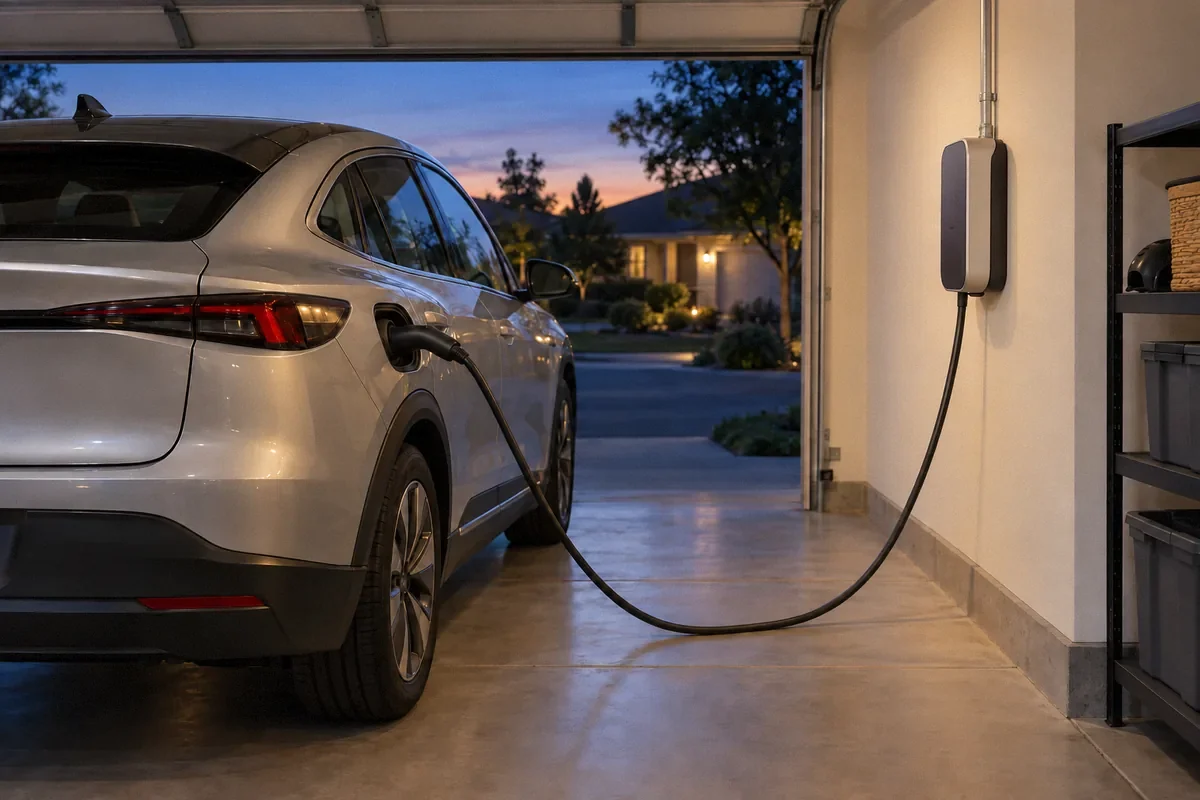
Match charging output to driving and available capacity
Start with daily mileage, charging hours, the exact vehicle and charger, panel capacity, and the route to the parking space. A schedule and measured load management are different.
Does a 100-amp service always need replacement?
No. PG&E says it may support charging, but the home may need a load calculation or electrical work depending on its conditions.
Can scheduling replace load management?
No. A schedule chooses charging hours. Dynamic management measures other demand and adjusts a supported charger configuration.
Tesla, ChargePoint & Other EV Chargers
We compare hardwired chargers and receptacles using the exact equipment, vehicle connection, panel capacity, and charging needs.

Tesla Gen 2 Wall Connector
The silver Gen 2 Wall Connector supports charging output up to 80 amps. Actual output depends on the vehicle, circuit rating, product instructions, panel capacity, and approved design.

Tesla Universal Wall Connector
Tesla's Universal Wall Connector includes an integrated adapter for supported vehicle connections. Compatibility still depends on the vehicle inlet, product version, and manufacturer instructions.

ChargePoint Home Flex
ChargePoint Home Flex is app-connected charging equipment with installation settings that must match the approved circuit and manufacturer instructions. Incentive eligibility must be confirmed separately.

Enphase / Wallbox / Emporia
J1772 is a vehicle charging connector used by compatible equipment and vehicles. We verify the exact charger, vehicle connection, adapters, and circuit requirements before installation.

NEMA 14-50 Outlet
A NEMA 14-50 receptacle is a 240-volt outlet that may serve compatible portable charging equipment. The circuit design and required protection follow the applicable permit, adopted code, and equipment instructions.

Hardwired Installation
Whether charging equipment must be hardwired depends on the product instructions, circuit design, applicable permit, and adopted code. We compare those requirements for the exact charger.
EV Charging Configurations

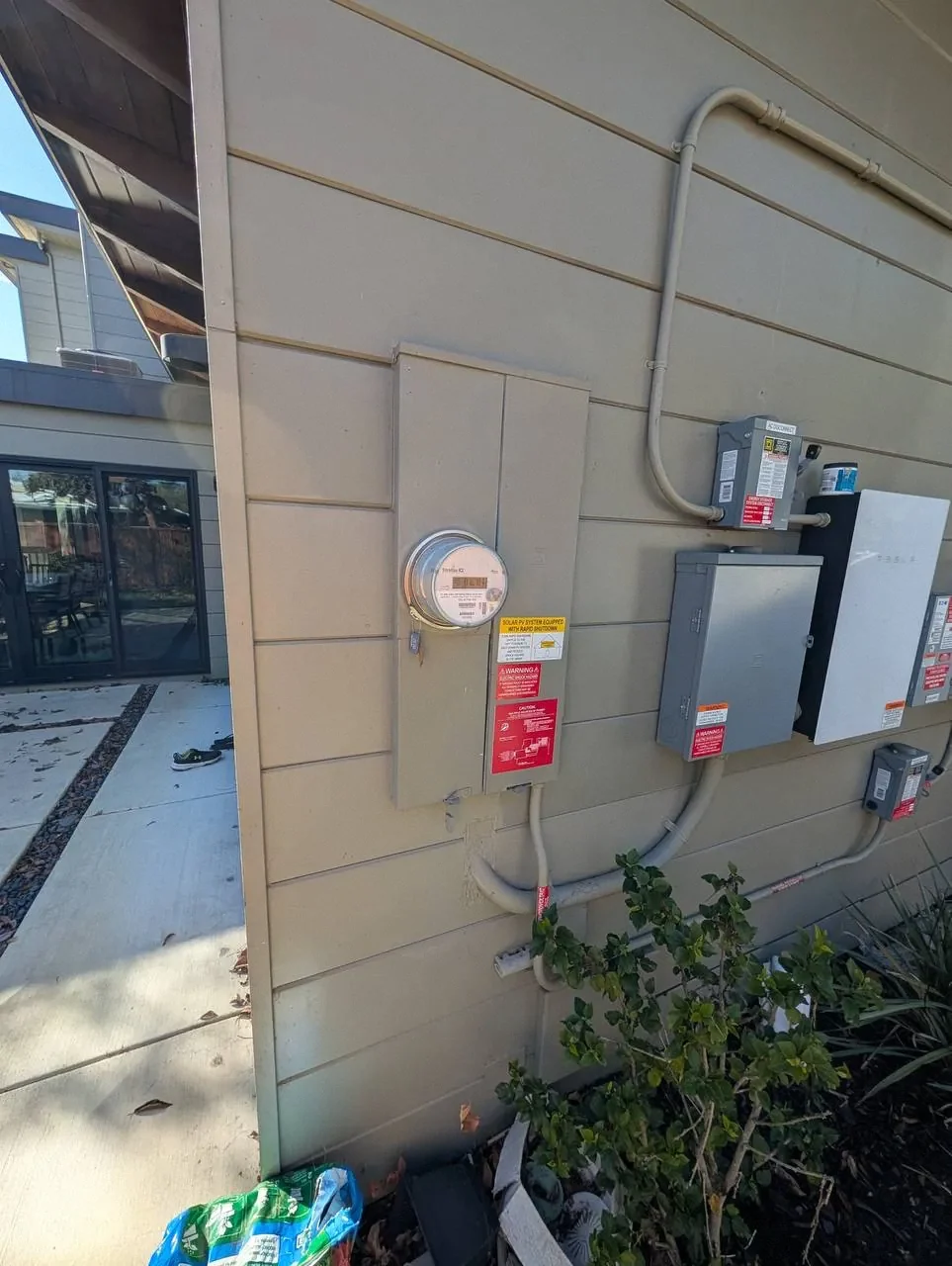
More Than Just Mounting a Box
The scope identifies the panel review, permit, inspection, utility coordination, and project records required for the specific installation.
Panel Capacity Check
The proposed charging load determines whether a load calculation is needed. We confirm the assessment scope before preparing the installation proposal.
EV Charger Selection
We compare charging equipment using your vehicle connection, charging needs, panel capacity, parking location, and preferred controls.
Permits & Inspection
Permit requirements depend on the jurisdiction and scope. We identify the applicable application, inspection, and closeout steps for the project address.
Utility Rate Options
Electric-rate options and eligibility change. Review the current plans and application instructions on the official PG&E website before selecting a rate.
Current Incentive Check
Incentive programs change and may depend on the customer, address, equipment, and available funding. Confirm current terms with the program administrator before including an incentive in the budget.
Future Charging Plans
We can plan conduit space and review capacity for a possible second charger. Future equipment and installation requirements must be checked when that charger is selected.
From First Call to First Charge
Four steps from capacity review through inspection. Permit, equipment, utility, and access requirements determine the schedule.
Panel Capacity Review
We review the panel and complete a load calculation, the worksheet used to estimate the home's electrical demand, when the proposed charging load requires it.
Charger Selection
We compare charging equipment using the vehicle connection, charging needs, panel capacity, parking location, and manufacturer requirements.
Permit + Install
We obtain the required permit, install the approved circuit and charging equipment, apply the required labels, and prepare the work for inspection.
Inspection and Records
We coordinate the required inspection and provide the project records available for your installation. Rebate and rate-plan eligibility must be confirmed with the current program administrator.
How We Plan a Home EV Charging Project
Panel Check First
We review panel capacity and complete a load calculation, the worksheet used to estimate the home's electrical demand, when the proposed charging load requires it.
Equipment Compatibility
We verify the vehicle connection, charger specifications, circuit rating, and panel capacity before defining the installation.
Project Records
We provide the project records included in the approved scope. Incentive eligibility and application requirements must be confirmed with the current program administrator.
Planning for a Second Charger
We can review conduit space, circuit capacity, and compatible load management for a possible second charger. The later installation still requires equipment-specific review.
Project Scheduling
Scheduling follows the confirmed equipment, permit, access, and utility requirements for the project.
Solar and Battery Coordination
We can scope the electrical infrastructure and coordinate with the solar or battery provider. Equipment programming remains subject to compatibility and the agreed division of work.
EV Charger Installation Questions
How much does a home EV charger install cost?
Cost depends on the charger, circuit size, distance from the panel, installation route, wall access, panel capacity, and permit requirements. We define what is included after reviewing those conditions.
How long does the install take?
Installation time depends on the wiring route, panel work, permit, inspection, and any required utility coordination. We provide a project schedule after the scope is confirmed.
Can I install a NEMA 14-50 outlet instead of hardwiring?
A NEMA 14-50 receptacle can serve compatible portable charging equipment, while many wall-mounted chargers are designed for a hardwired connection. Circuit capacity and required protection depend on the equipment instructions, applicable permit, and adopted code.
Do you handle PG&E rebates and EV rate plan switches?
We provide the project records included in the approved scope. Check current rebate and electric-rate eligibility directly with the relevant program or utility.
Can you install for Tesla, Ford, Rivian, Hyundai EVs?
Compatibility depends on the vehicle inlet, charging equipment, adapters, circuit rating, and manufacturer requirements. We verify the exact vehicle and charger models before specifying the installation.
What about a future second EV?
We can consider a future second charger when planning conduit, panel capacity, and compatible load management. The second installation will still require review of the future vehicle, charging equipment, and applicable requirements.
Do you do solar + Powerwall + EV setups?
Solar, battery, and electric vehicle charging systems require equipment-specific design and a clear division of responsibility. We scope the electrical work and coordinate with the other providers identified for the project.
EV Charger Installation Across the Bay Area
Explore local planning information for ev charger installation, including permit and utility coordination.
Get in Touch
Ready to Charge at Home?
Tell us your vehicle, charger model, parking location, and panel location. Call (650) 550-0719 or send a project inquiry.
Ask about the scope and fee for an assessment, diagnosis, or inspection before booking.
(650) 550-0719Related electrical guides
Continue with a guide that addresses the next planning decision.
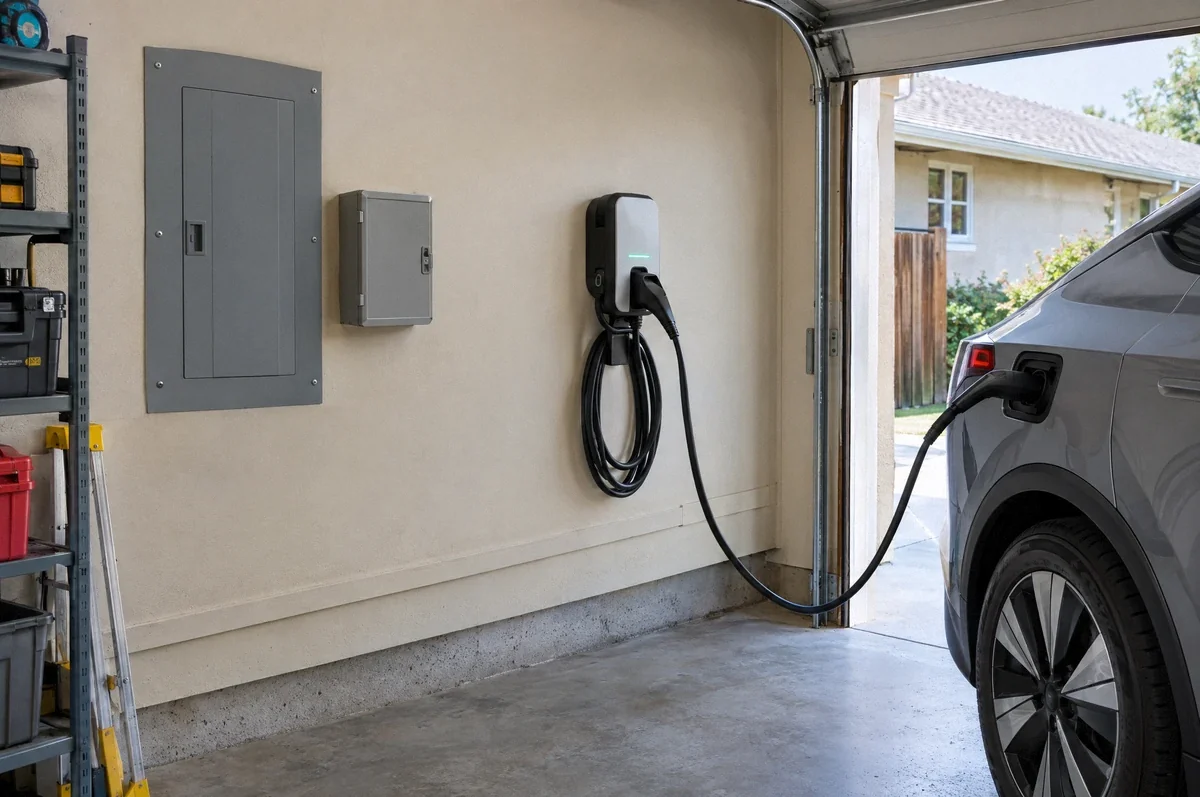
EV Charging
Can a 100-Amp Panel Handle an EV Charger?
A 100-amp label is a starting fact. Demand, equipment condition, circuit space, and charging needs determine the installation.
Read the guide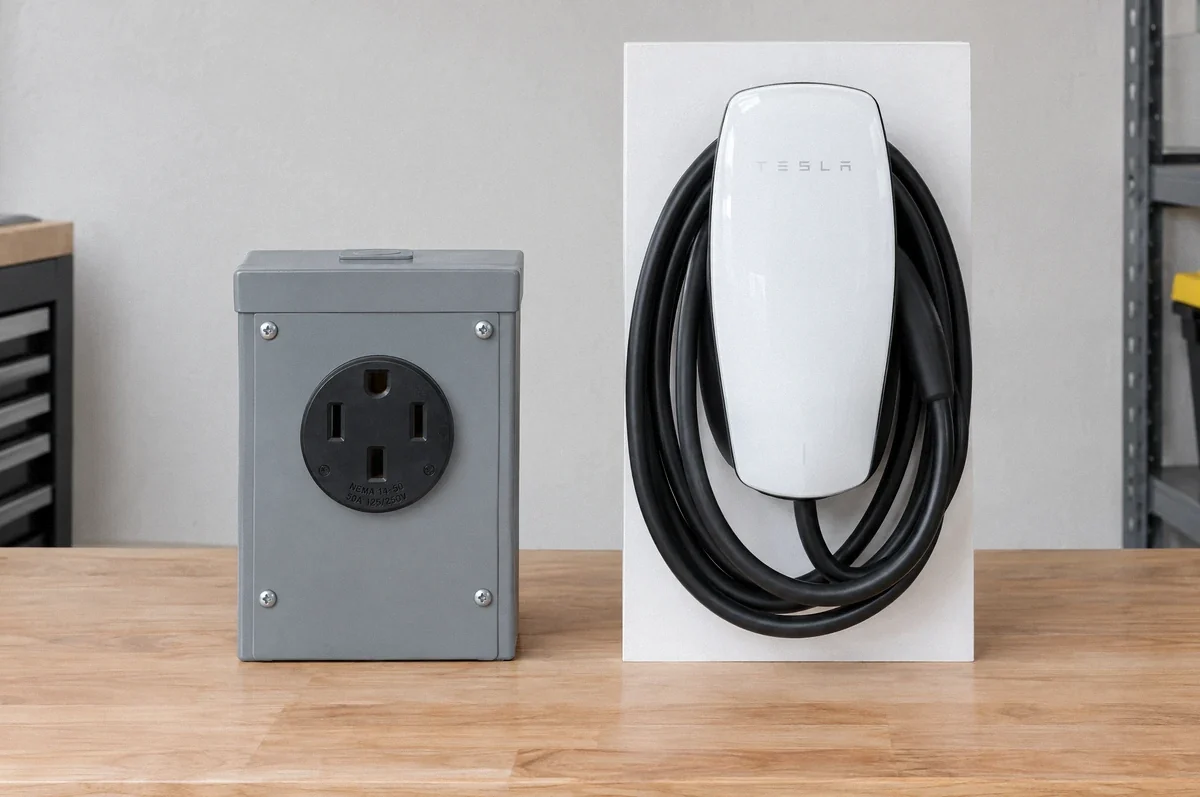
EV Charging
Tesla Wall Connector vs NEMA 14-50: Choosing a Home EV Setup
Compare the complete installations, including the portable charger, circuit protection, charging limits, and available power.
Read the guide