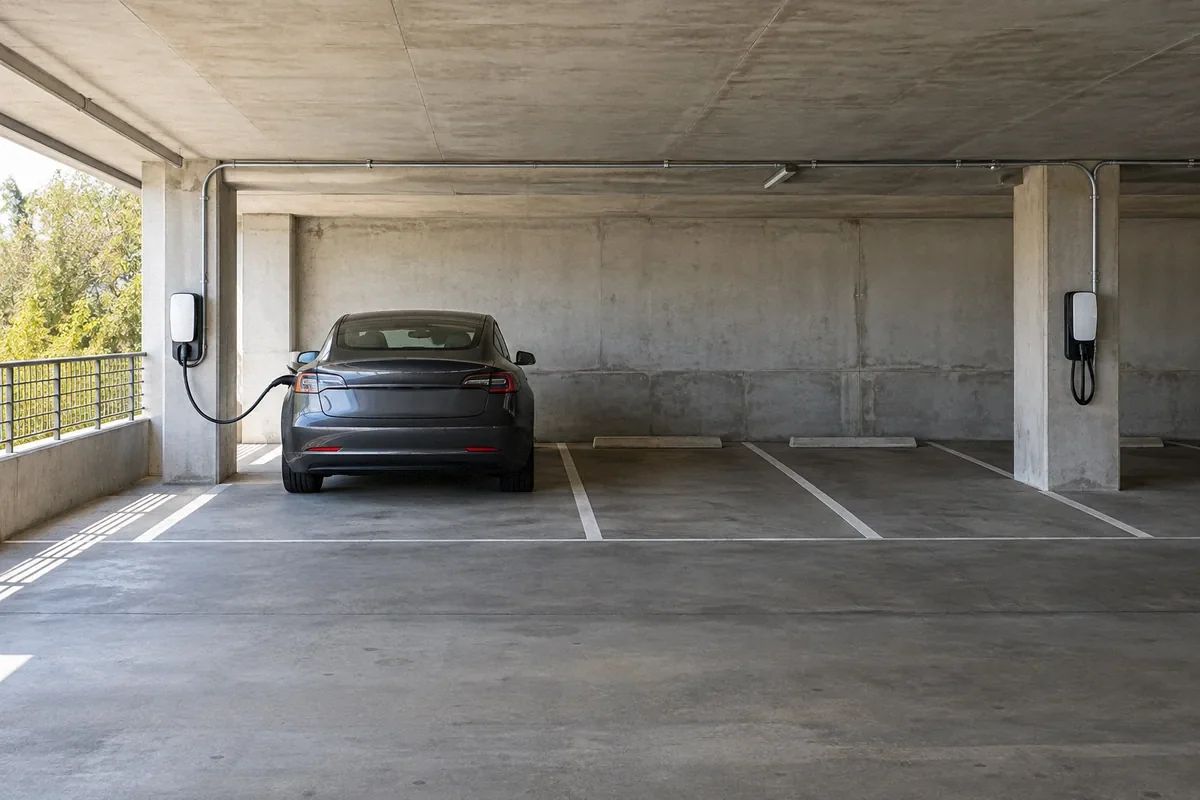
Workplace, Apartment & Shared Parking
Commercial EV Charging Stations
Plan electric vehicle (EV) charging around who parks, how long they stay, and the available power. We assess electrical installation for properties in the San Francisco Bay Area.
Get a Quote →Discuss your project
Tell Us About Your Project
Choose a service, enter the project city, and share any details that may help us understand the work. You can edit these fields before sending the form.
Serving homes and businesses in the San Francisco Bay Area and Santa Cruz.
(650) 550-0719Fox Electric is the marketing name of Fox Global Holdings LLC. CSLB #1145945, C-10.
Before selecting stations, decide who will use them and who will manage access, electricity costs, and maintenance. We review the parking layout and available power with you. Electrical work, network services, and any future expansion need clearly assigned responsibilities.
Document the shared-parking project before requesting approval
Identify the assigned space, candidate electrical supply, route, common-area impacts, billing, ownership, maintenance, permits, and future charging demand.
Can the nearest meter automatically supply the charger?
No. Ownership, access, available capacity, routing, and property approval must be established for the proposed connection.
What belongs in a property request?
Include the location, supply, route, restoration, access, billing, maintenance, and the decisions that still require review.
Commercial EV Charging Services

Level 2 Charging
Level 2 stations use a dedicated higher-voltage circuit to charge parked vehicles. Choose equipment around parking duration, vehicle connectors, and available electrical capacity.

Public Charging Planning
Public charging adds parking access, payment, maintenance, and equipment-support decisions. High-power fast charging requires a separate feasibility and contractor-scope review.

Apartment & Condo Charging
Decide whether spaces are assigned or shared, who pays for electricity, and who approves work on shared property before selecting equipment.

Workplace Charging
Match station access and charging hours to employee and visitor parking. Confirm network subscriptions and operating responsibilities with the charging provider.

Fleet Charging Planning
Start with vehicle specifications, daily travel, and departure times. Those requirements guide the charging schedule and power assessment.

Future Charging Infrastructure
Plan conduit, the protective tubing for wiring, and electrical capacity for possible expansion. Future stations still need an equipment and capacity review.
How a Commercial EV Project Works
Confirm power, parking, equipment, and operator responsibilities before installation.
Assess Parking & Power
Review parking use and the existing electrical supply. A load calculation, an assessment of electrical demand, helps determine the capacity available for charging.
Define Equipment & Responsibilities
Select the charging approach and identify utility, permit, accessibility, and network-provider responsibilities before ordering equipment.
Install the Agreed Scope
Coordinate cable routes, parking closures, and electrical shutdowns. Load management, which limits or shares charging power, is considered where compatible with the design.
Test & Hand Over
Commission the installation by checking operation and configured power limits. Assign account activation, payment setup, and ongoing support to the named provider.

Workplace Charging Planning Example
For an employee parking lot, first compare arrival and departure times with charging needs. The assessment would check available power, cable routes, and whether compatible power sharing fits the charging schedule. This is a planning example, not a completed installation.
- Use: Establish parking duration and station access
- Power: Compare charging demand with available capacity
- Operations: Assign network accounts, fees, and maintenance
- Expansion: Record assumptions for future stations
Project Pricing
The proposal identifies equipment, installation, access, and coordination costs after a site review. Utility charges, design, testing, and other trade work must be identified as included or separate.
Why Businesses Choose Fox Electric
Property-Specific Planning
Review parking ownership, access, and electrical supply together so the installation fits how the property operates.
Operating Costs in View
Consider electricity, network subscriptions, maintenance, and support alongside installation cost.
Funding Checked Separately
Confirm current program rules before relying on an incentive. Funding approval and application services are separate from installation.
Power Limits Explained
Compare charging demand with available capacity and explain how power sharing may affect each vehicle.
Utility Coordination
Identify the serving utility and customer approvals. A utility upgrade has its own review and schedule.
Parking & Shutdown Planning
Agree on affected spaces, accessible routes, and any power interruption with building management before work begins.
Commercial EV Charging Questions
What charging equipment should we consider?
Start with how long vehicles stay parked and which connectors they use. Level 2 charging is one option for longer parking periods. Fast charging needs a separate feasibility review; equipment support and installation capability must be confirmed for that scope.
Do we need a panel or utility upgrade?
We need the existing equipment ratings and a demand assessment to answer. Compatible load management may limit charging to available capacity, but can reduce charging speed when other loads are high.
Can we include rebates in the budget?
Treat incentives as unconfirmed until the program administrator verifies the site, equipment, application timing, and funding. Do not order equipment based solely on an assumed rebate.
What affects the installation schedule?
Equipment availability, design review, permits, cable routes, parking work, and utility involvement can all affect timing. We identify the known dependencies in the proposal.
How does apartment or condo charging differ?
The property must decide on space ownership, shared power use, approvals, and ongoing costs. The electrical scope should match those decisions and the approved site layout.
Can users pay for charging?
Some networked equipment supports payment and user access controls. Confirm fees, account ownership, activation, and support with the provider; those services are included only if specified in the proposal.
Who checks accessibility requirements?
The project designer and local reviewing authority determine the applicable layout and access requirements. Resolve parking dimensions, routes, and equipment placement before construction; a station count alone does not establish the full design.
Can we add more stations later?
We can discuss routes and capacity for phased work. Keep future assumptions in the plans, then recheck demand, equipment, and permit requirements before adding stations.
Get in Touch
Planning Charging for Your Property?
Tell us the location and how the parking spaces are used. Call (650) 550-0719 or request an assessment.
Ask about the scope and fee for an assessment, diagnosis, or inspection before booking.
(650) 550-0719Related electrical guides
Continue with a guide that addresses the next planning decision.
EV Charging
EV Charging for Condos: Parking, Power, Approval, and Billing
A nearby meter is not enough to define a condo charging project. Start with ownership, available power, the cable route, approvals, billing, and long-term responsibility.
Read the guide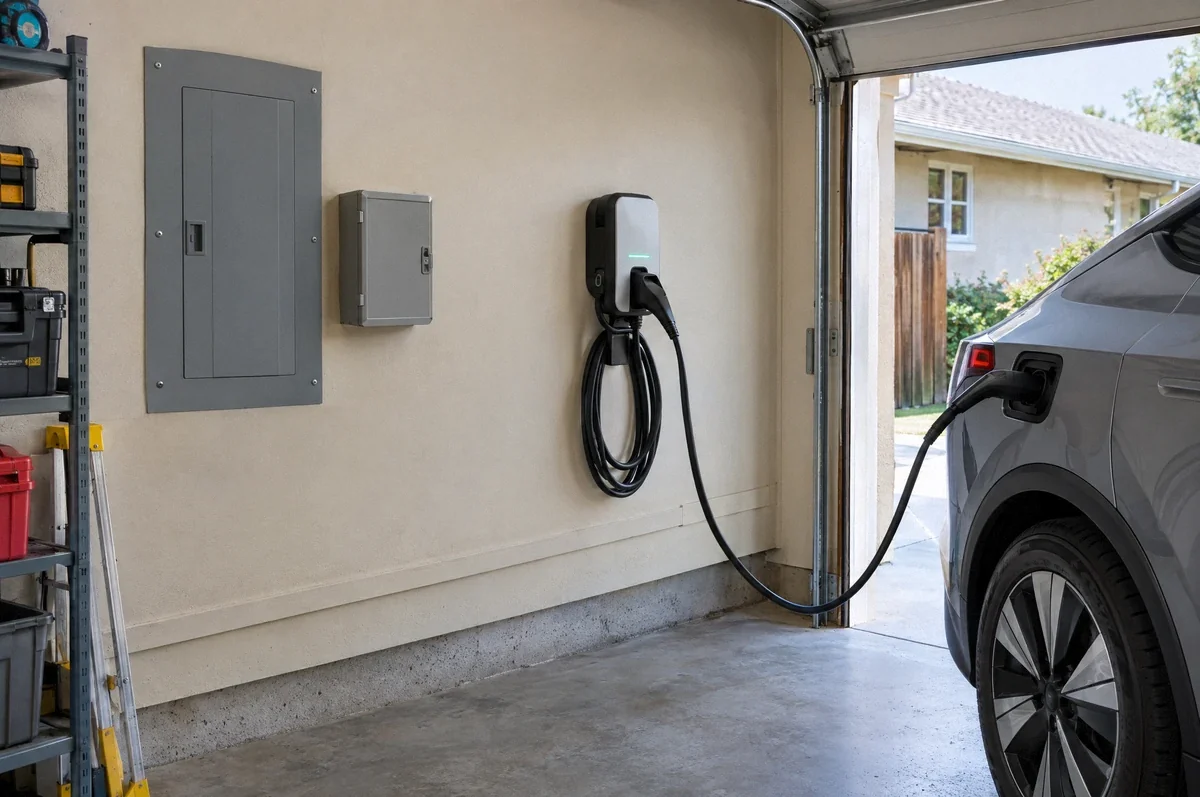
EV Charging
Can a 100-Amp Panel Handle an EV Charger?
A 100-amp label is a starting fact. Demand, equipment condition, circuit space, and charging needs determine the installation.
Read the guide