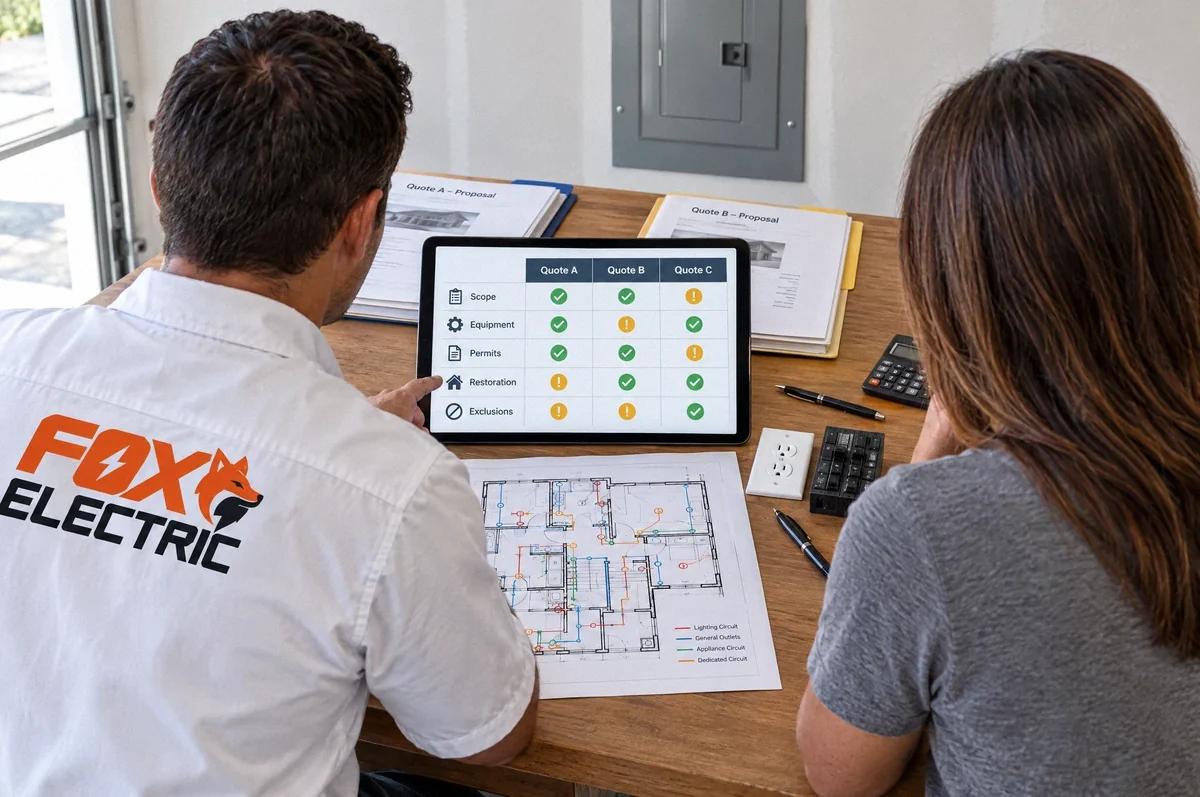
You cannot judge an electrical quote by the total alone. Two numbers can describe different equipment, access, permits, repair work, and responsibility. A fair comparison starts by making the scope visible, then checking the contractor and the assumptions behind the price.
California's Contractors State License Board recommends obtaining at least three written bids and comparing them using the same plans, specifications, and scope. It also warns against automatically accepting a bid that is substantially lower than the others. The goal is not to force every contractor into the same number. It is to understand why the numbers differ.
Confirm the contractor first
For electrical contracting in California, verify the business and license through CSLB. The C-10 classification covers electrical contracting work. Check that the license is active and that the business name and classification match the proposal. A license number printed on a bid is useful only after it is verified.
California requires a written home improvement contract for qualifying projects over $500. CSLB says the agreement should clearly describe the work, materials, price, payment schedule, who obtains permits, and expected timing. Changes should be documented through written change orders before the changed work begins.
Normalize the scope
Put each proposal into the same checklist:
- equipment manufacturer, model or performance specification;
- circuit rating, conductor and wiring method;
- route length and access assumptions;
- panel, grounding, labeling, or service work;
- permit application, fees, inspection, and utility coordination;
- drywall, paint, trench, concrete, or finish restoration;
- testing, commissioning, cleanup, and disposal;
- allowances, exclusions, and conditions that trigger a change order.
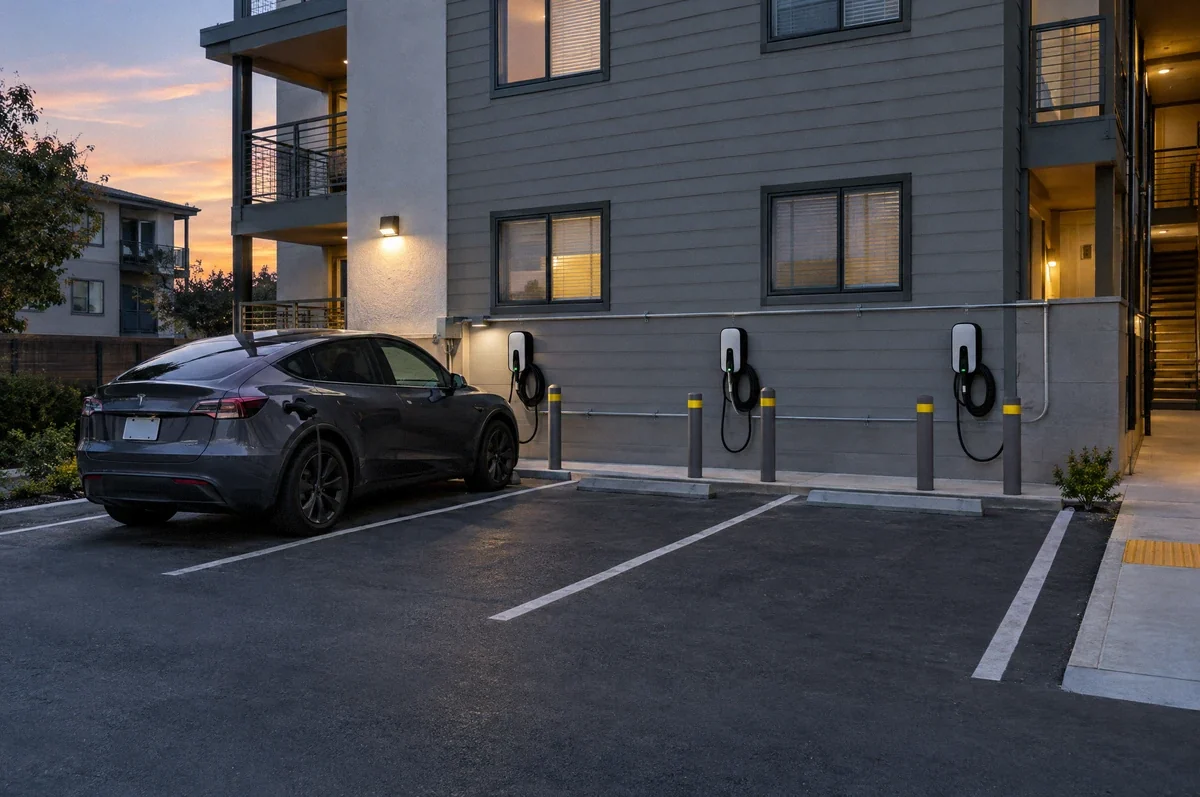
A quote for an electric vehicle charger installed beside the panel is not comparable to one that includes a long concealed route, load-management equipment, trenching, and permit coordination. A panel replacement is not the same as a service-capacity upgrade that requires utility review. Ask each contractor to price the same result.
Ask what evidence supports an upgrade
If a proposal includes a larger service, new panel, full rewire, or extensive corrective work, ask what observed condition or calculation supports it. A 100-amp service is not automatically inadequate. Capacity planning may require a code load calculation, review of planned loads, equipment settings, and sometimes an allowed measured-load method. Breaker spaces and service capacity are separate questions.
For troubleshooting, a contractor may need paid diagnostic time before defining a repair. That is different from a free estimate for a clear installation. A responsible proposal should state whether diagnosis is included, credited toward repair, or billed separately.
Read unusually high and low bids carefully
A higher price can reflect better-defined scope, difficult access, named equipment, permits, restoration, or contingency for known conditions. It can also include unnecessary work. A lower bid may be efficient and complete, or it may omit tasks that appear later. Price alone does not reveal which is true.
Ask direct questions: What is excluded? Who repairs openings? What happens if the planned route is blocked? Is utility work included? What inspection corrections are within the original scope? Which product substitutions are allowed? When are payments due? The written answers are more valuable than a sales explanation that does not appear in the contract.
Red flags in the paperwork
- The contractor identity or license cannot be verified.
- The scope uses vague phrases such as "bring to code" without defining the work.
- A required permit is intentionally omitted without confirmation from the building department.
- Major assumptions are verbal, or the contractor resists written change orders.
- The payment request conflicts with CSLB's home improvement contract rules.
- The proposal promises a diagnosis without testing or bases replacement only on the home's age.
Request a comparable proposal
Fox Electric prepares electrical proposals for defined work in the San Francisco Bay Area. Call (650) 550-0719 or send your project details. For visit types, read estimate versus inspection. For panel work, review our panel upgrade service.