Finding knob-and-tube wiring in a Bay Area home is a reason to assess the electrical system, not enough information to specify a whole-house rewire. The important questions are whether it remains energized, what it supplies, its condition, and whether remodeling, insulation, or new equipment will affect it. Visible abandoned sections and active circuits can exist in the same attic.
A useful assessment separates confirmed findings from concealed areas that have not been examined. Building age, a few ceramic insulators, or a new panel cannot establish the condition of every circuit in the house.
Recognizing the wiring without disturbing it
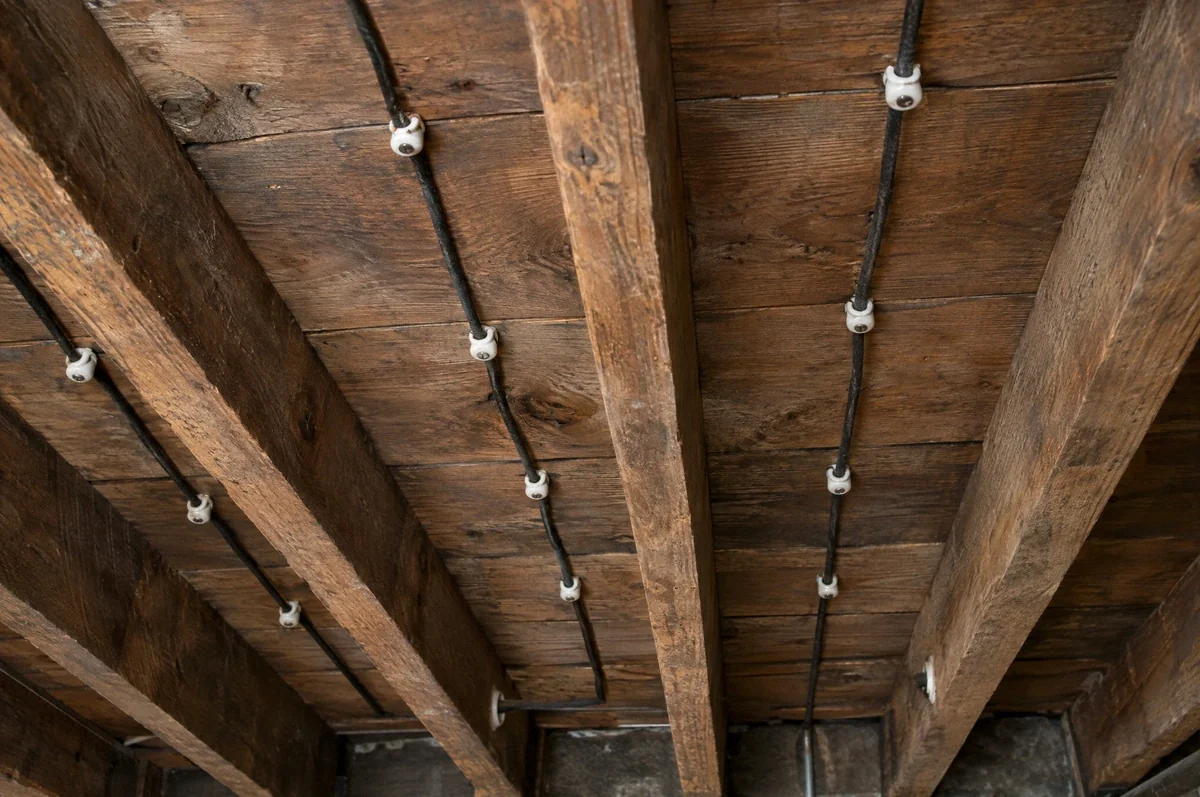
Knob-and-tube is an early wiring method using separate insulated conductors. Ceramic knobs support the conductors, and ceramic tubes protect them where they pass through framing. It generally lacks the equipment grounding conductor found in modern grounded branch-circuit cable.
“Cloth wiring” describes an appearance rather than one complete electrical system. Fabric coverings occur on different older wire and cable constructions. Some may include a grounding path; others do not. A photo showing a fabric jacket cannot establish conductor condition, grounding continuity, or the extent of the system.
Older homes can contain several generations of work. Original lighting circuits may remain even after newer kitchen or garage circuits were installed. Ceramic supports may remain after conductors were abandoned. The electrician needs to trace and test the actual wiring rather than count visible knobs.
Do not enter a cramped attic or crawlspace just to search for it. From a normal safe access point, photographs of visible conditions may help the initial discussion. Do not pull conductors, unwrap insulation, move splices, or assume an old wire is dead because it appears unused.
What makes an existing circuit concerning
The condition of conductor insulation and connections matters. Heat, physical disturbance, aging materials, and unsuitable alterations can leave damaged insulation or unreliable splices. Added loads may also create a circuit arrangement that no longer suits the way rooms are used.
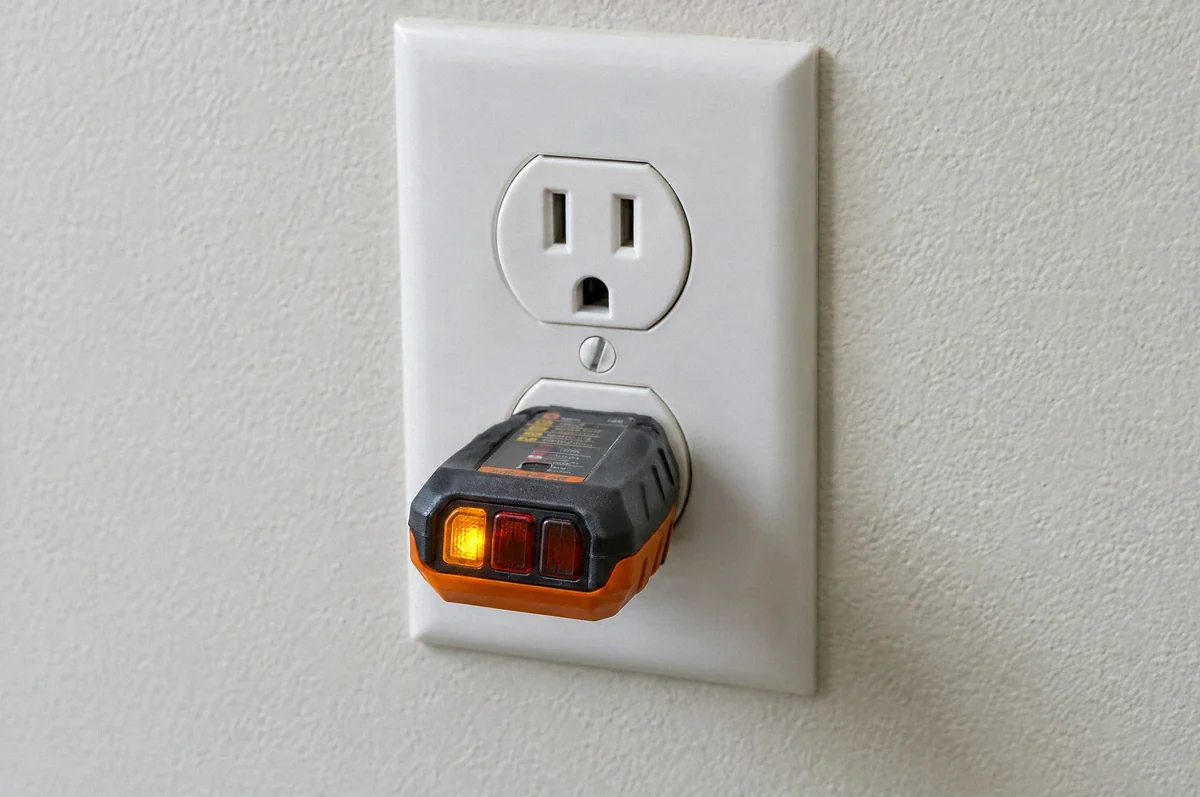
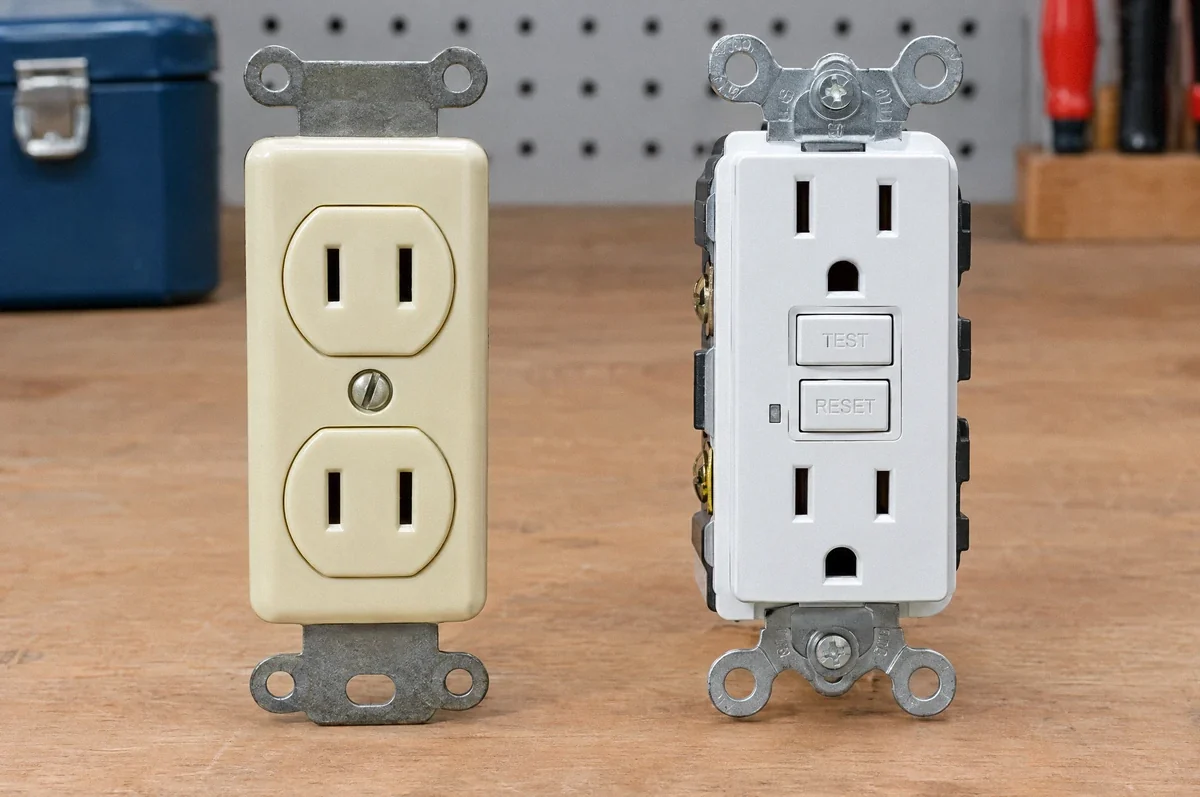
The absence of an equipment grounding path affects receptacles and equipment requiring grounding. Installing a three-prong face does not add that path. There are specific replacement options for two-prong outlets, including qualifying GFCI arrangements, but those do not repair deteriorated wiring or provide an equipment ground.
Circuit protection is another separate question. The breaker or fuse must be suitable for the conductors and the circuit arrangement. A larger protective device installed to reduce trips can expose wiring to excessive current. CPSC’s Guide to Home Wiring Hazards identifies oversized circuit protection, damaged insulation, and abnormal heat among conditions needing professional attention.
There is no need to assume that an older circuit is overloaded solely because it predates modern appliances. The actual connected load and installation need evaluation. Equally, years without a noticeable problem do not prove that all concealed wiring remains in good condition.
Address insulation before adding it
Insulation work can change the conditions surrounding old conductors and may disturb them during installation. Do not cover suspected active knob-and-tube with loose fill, batts, or foam while waiting for an electrical assessment.
The local process matters. Menlo Park’s knob-and-tube safety requirements identify restrictions on insulation surrounding concealed knob-and-tube conductors and require a certification submission for review when wiring is proposed to remain with insulation work. That is a local approval process, not permission for a homeowner to cover wiring after a casual visual check.
For any address, have the electrical and insulation contractors coordinate with the permit authority before the insulation is installed. The outcome may require replacement in the affected areas or another specifically approved scope. Do not generalize one city’s process to every Bay Area jurisdiction.
If insulation already surrounds suspected active wiring, leave it undisturbed and explain the condition when requesting assessment. Pulling insulation away can disturb fragile conductors and does not by itself establish that the circuit is safe.
What the written assessment should answer
Ask for findings that support a decision rather than a simple “old wiring present” notation:
- Which circuits or loads are confirmed to use active knob-and-tube, and which visible remnants are confirmed abandoned?
- What deterioration, overheating, unsuitable splices, or other alterations were found in accessible areas?
- Which receptacles have an effective grounding path, and which remain ungrounded?
- Does the circuit protection match the wiring and configuration?
- What areas could not be inspected or traced without additional access?
- How would planned insulation, renovation, or equipment affect the existing system?
- Can proposed phases end with clearly defined, safe, and appropriately protected circuits?
A visual inspection cannot see through finished walls. The report should describe where selective access or additional testing may change the scope. For a purchase, share the home inspector’s report and the planned renovation scope before commissioning electrical inspection work.
Full replacement and phased replacement
A full rewire may be practical when active old wiring is widespread, condition problems are substantial, or major renovation already provides access. It allows coordinated circuit planning, grounded wiring, appropriate protective devices, and receptacles located for the intended use.
Phased replacement can be reasonable when the system can be divided into clear sections and immediate hazards are addressed first. One phase might serve the kitchen and laundry, while another addresses bedrooms and lighting during a later renovation. The phase boundaries must follow the electrical circuits, which may not follow room boundaries.
Each phase needs a defined endpoint, suitable connections, identification of remaining active wiring, and required inspections. It cannot rely on leaving an uncertain energized remnant concealed between completed areas. Ask how old conductors will be disconnected, identified, and removed or left in place where permitted.
A promise to remove every inch of concealed old wire can also be misleading without a corresponding access scope. The important outcome is that abandoned wiring cannot become energized and the new system is properly installed and documented. See our broader whole-home rewiring guide for comparing project scopes.
Rewiring does not automatically require a larger service
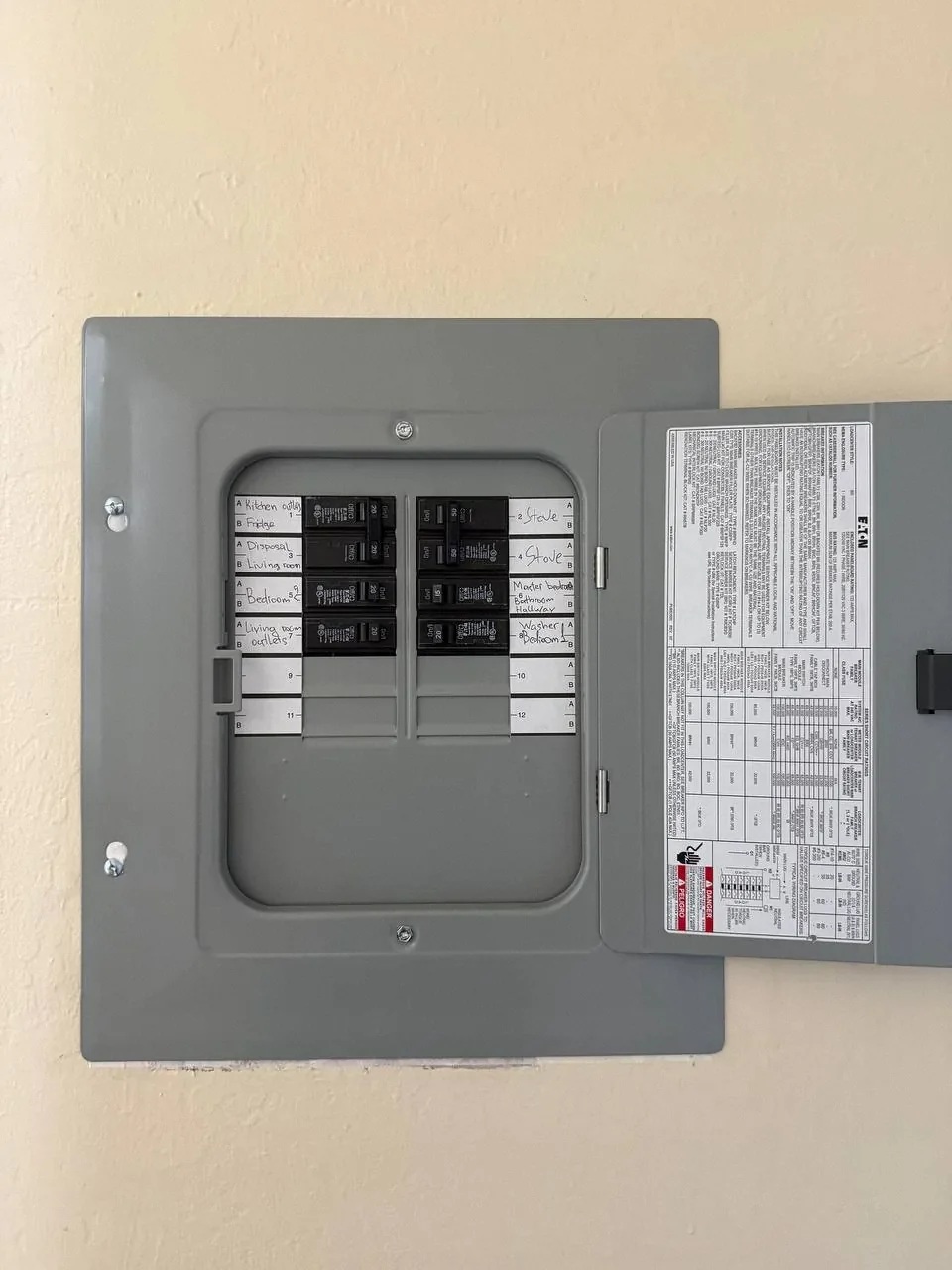
Branch-circuit replacement and service capacity are different questions. The existing panel needs assessment for condition, rating, breaker compatibility, and available circuit positions. The planned loads need an appropriate load calculation.
A panel upgrade may be useful or necessary, but the presence of knob-and-tube alone does not prove it. A sound panel with suitable capacity might remain while branch circuits are replaced. A defective or unsuitable panel may need work even if the house has mostly newer wiring.
Keep these decisions separate in the estimate. Ask which finding supports panel work and whether it is necessary for the current scope or proposed for future equipment.
Plan access, outages, and restoration
A rewire includes more than installing cable. Ask which rooms need openings, how finished surfaces will be protected, and who will restore plaster, drywall, paint, cabinets, or flooring. A bid excluding restoration cannot be compared directly with one that includes it.
Discuss occupied-room access and the expected outages at each stage. Remaining in the home may be possible, but it should follow the actual sequence, safe access, and essential-power plan rather than a general promise. Do not assume every rewire can be completed with a few small holes or within a fixed number of days.
Substantial rewiring normally involves local permits and inspections. California’s 2025 Building Standards Code took effect January 1, 2026; requirements for the existing building depend on the proposed work and local rules. The California Building Standards Commission provides the current statewide code reference.
Insurance and a practical next step
Do not treat a contractor’s general statement as an insurance determination. Ask the insurer in writing what documentation it needs and whether an inspection, partial replacement, or full replacement would affect its decision for the particular property. A contractor should document work performed without promising policy acceptance, premiums, or a resale result.
Fox Electric evaluates older-home wiring and provides whole-house rewiring across the Bay Area and in the city of Santa Cruz. Request an assessment with the property details, any existing inspection report, and planned insulation or remodeling. The next decision should follow the active wiring and its condition, with a scope that explains access, circuit changes, and unresolved concealed areas.