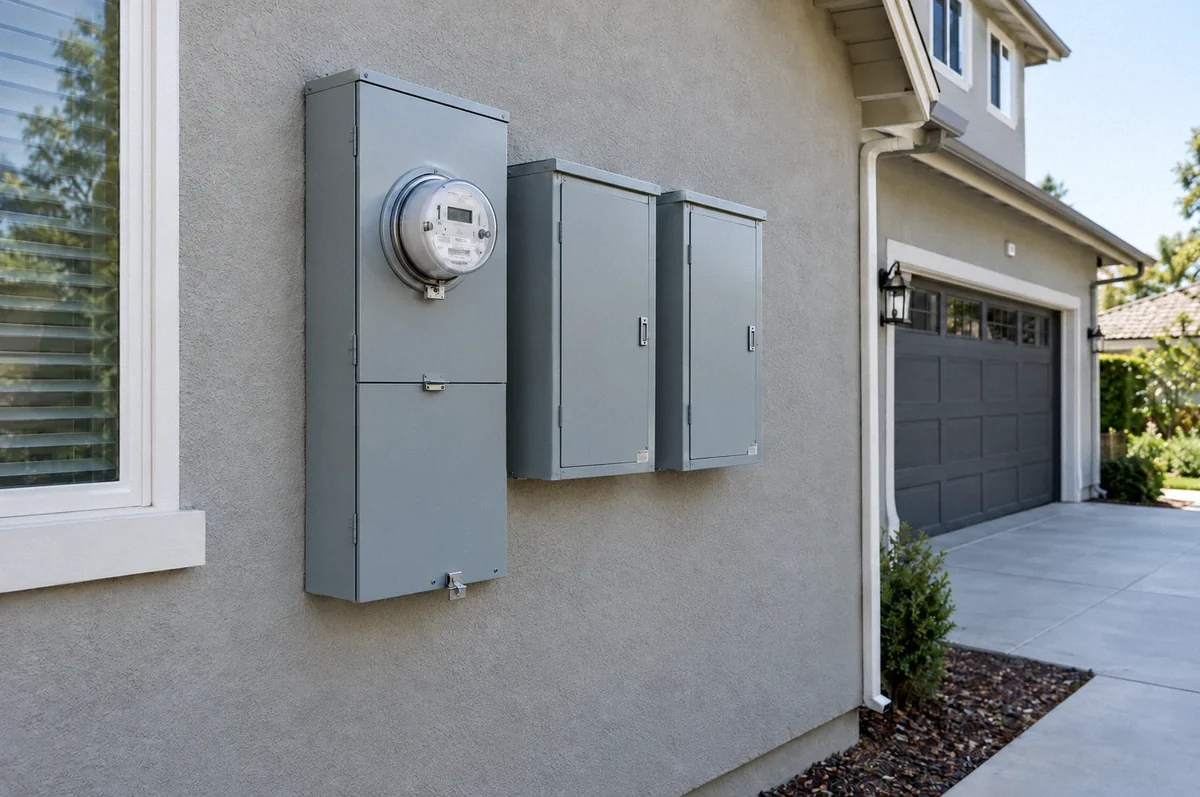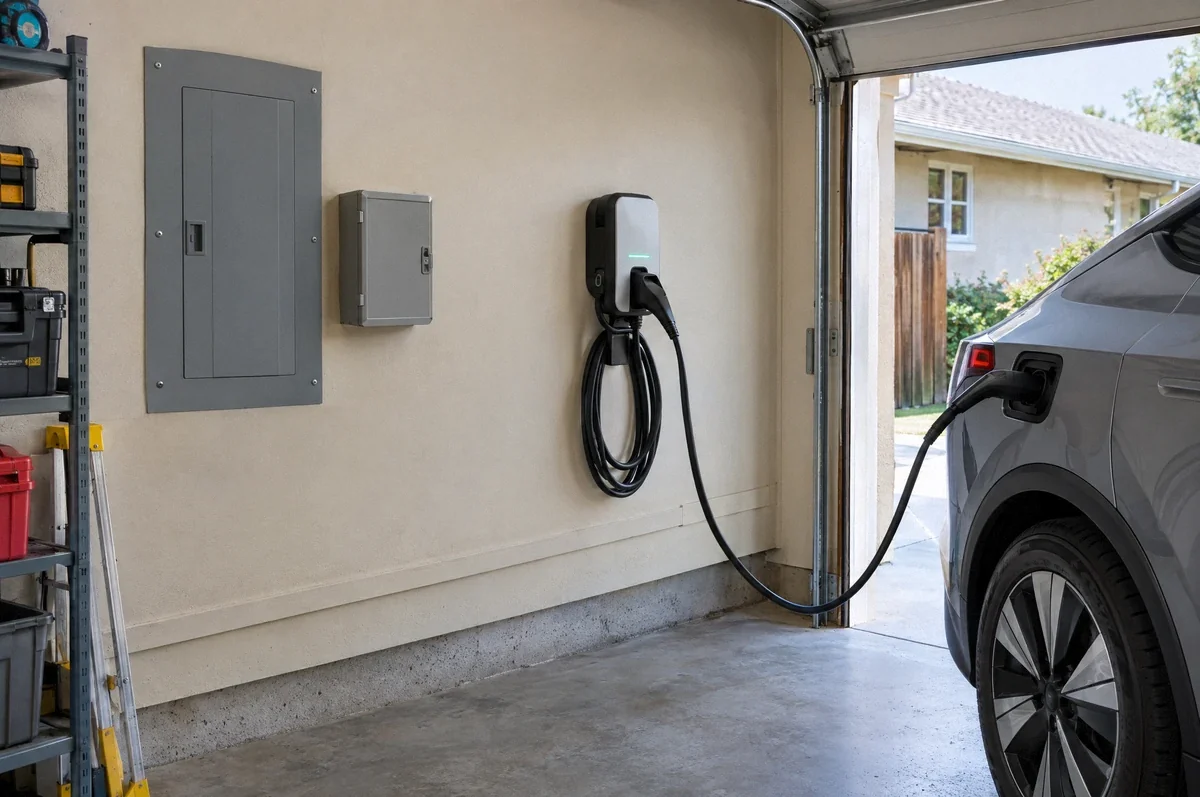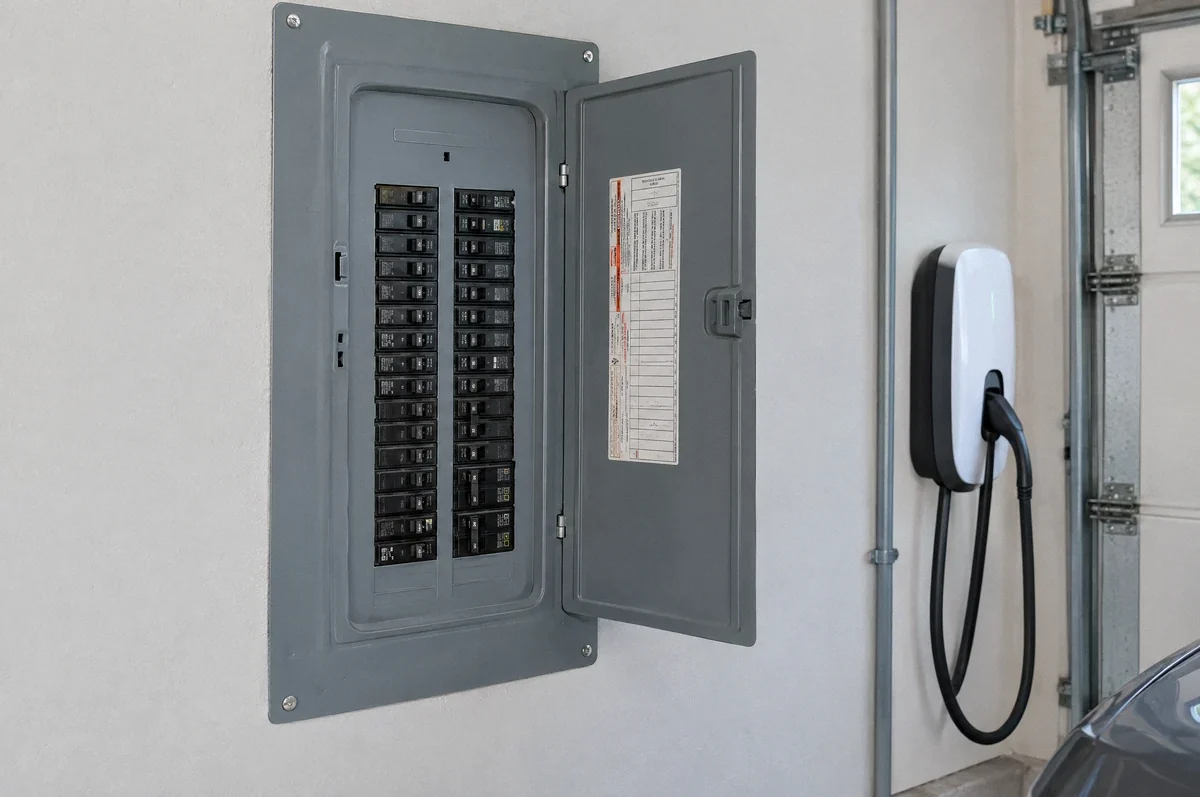
Repeated breaker trips, flickering lights, damaged equipment, and a panel with no spare circuit spaces are reasons to investigate the electrical system. They do not all mean the home needs a larger service. The right outcome may be a circuit repair, a replacement panel at the same amperage, additional circuit space, or a service upgrade supported by a load calculation.
Some symptoms require an immediate response. Smoke, flame, active arcing or sparking, or a strong burning odor at the panel can indicate a fire hazard. Keep away from the equipment, leave the area when there is a fire concern, and call 911. Do not approach a damaged or sparking panel to switch it off.
1. A breaker trips repeatedly
A breaker may trip because of an overload, a short circuit, a ground fault, an appliance defect, or another problem. Protective breakers that detect arcing or leakage current have additional reasons to operate. A recurring trip needs diagnosis rather than a larger breaker or another reset.
Which breaker trips matters. A kitchen branch circuit serves particular outlets and appliances. If the toaster and microwave overload that one circuit, increasing the home’s main service rating does not increase the capacity of the kitchen wiring. A suitable additional circuit may be the relevant improvement.
A main-breaker trip affects a wider portion of the installation, but even that is not proof that the service is simply undersized. The electrician still needs to distinguish load from equipment or connection problems. Record which loads were operating, whether the problem is new, and whether only one area lost power. Do not reproduce the failure deliberately.
The Electrical Safety Foundation International includes frequent trips and dimming lights among electrical warning signs that deserve evaluation. Its guidance does not make a panel upgrade the automatic remedy for every symptom.
2. Lights flicker, dim, or become unusually bright
A single flickering LED may involve the lamp, driver, or dimmer. A brief change when a motor starts may have another explanation. Widespread flickering, sudden brightening in some rooms while others dim, or partial loss of power can indicate a serious connection or supply problem and deserves prompt contact with an electrician and, where appropriate, the serving utility.
Do not put all flickering in a “plan an upgrade sometime” category. The pattern and associated symptoms determine urgency. New heat, odor, buzzing, or repeated equipment failures make the concern more immediate.
Useful observations are which rooms are affected, whether neighbors have the same problem, and whether the change occurs when particular equipment starts. Our flickering lights guide explains these distinctions without asking you to probe wiring or open the panel.
3. There is heat evidence, a new sound, or a burning odor
Scorching, melting, discoloration, crackling, or a new persistent buzz requires attention. Avoid touching the panel to locate a hot breaker or moving closer to investigate a sound. A visual assessment from a safe position is enough to request help.
The claim that every healthy breaker is cold is inaccurate. Breakers generate some heat during normal operation, and temperature must be assessed against the equipment, loading, ambient conditions, and manufacturer limits. Schneider Electric’s operating-temperature bulletin explains why touch alone does not establish whether a breaker is operating abnormally.
That distinction is not a reason to dismiss a new symptom. Homeowners cannot reliably separate normal temperature rise from a deteriorating connection by feel. Report the change and let a qualified electrician determine the cause. Active fire symptoms require the emergency response described at the start of this article.
4. The panel has water damage or visible deterioration
Water entry, significant corrosion, a damaged enclosure, missing protective pieces, or an insecure panel door can expose equipment to conditions it was not designed to tolerate. A new panel may be needed, but the source of the damage needs correction too.
Replacing a corroded enclosure while leaving an active leak does not address the whole problem. A proposal should state whether weatherproofing, wall repair, drainage, or another trade’s work is required before the electrical equipment can be protected properly.
Do not touch wet equipment or enter standing water near electrical equipment. Do not remove covers to see how far corrosion extends. The CPSC home wiring hazards guide provides broader context on warning signs and qualified assessment of existing wiring.
5. There are no approved positions for new circuits
A full panel is a circuit-space problem until a load calculation establishes whether capacity is also constrained. Counting breaker handles or adding the amperages printed on them does not measure the demand on the whole service.
Some panels accept specific tandem or quad breakers, which provide more circuit poles in a limited number of spaces. Others do not, and required protective breaker types may limit the available arrangement. An electrician must check the exact labeling, compatible components, and circuit limits rather than installing whichever breaker physically fits.
A subpanel may provide space while retaining the existing service. A panel with more positions is another possible solution. Neither change, by itself, increases the current the incoming service can supply.
6. An inspection identifies questionable connections or legacy equipment
An inspector may report multiple wires under a terminal, incompatible breakers, damaged connections, or an old panel family. Ask for the exact observation and its basis. The homeowner should not remove the protective cover to confirm it.
Two conductors under one breaker terminal are not universally prohibited. Certain terminals are rated for that arrangement, with limits on conductor size, material, and breaker type. Schneider Electric documents specific QO models that accept two conductors. That is an example of why the actual product instructions matter, not permission to modify a breaker yourself.
An incorrect termination may require a targeted correction. Extensive alterations, damaged bus connections, or legacy equipment with significant reliability concerns may support full replacement. Our Federal Pacific and Zinsco guide separates equipment identification from claims that cannot be established by a photograph.
A fuse box also warrants assessment of its condition, fuse sizes, and suitability for present needs. Age alone does not diagnose a failure, and a new panel does not automatically replace old branch wiring throughout the house.
7. Your planned equipment changes the home’s electrical demand
An EV charger, heat pump, kitchen remodel, or ADU is a reason to evaluate the service before purchasing equipment. The calculation needs actual specifications, including backup heating elements and the proposed charging rate. It should distinguish work being installed now from possible future additions.
A 100A service can remain suitable for some electrification projects. PG&E’s guide to avoiding an unnecessary panel upgrade identifies equipment selection and distribution options that may help. Approved automatic load management is another design question when demand is constrained.
Use a load calculation to decide whether the proposed load fits, then check panel space and condition separately. A 200A rating is not a guarantee that every future combination of appliances will fit either.
What a useful recommendation should contain
The assessment should identify the equipment, describe observed defects, and explain the proposed remedy. If more service capacity is recommended, ask for the calculation inputs and result. If replacement is based on damage or maintainability, those reasons should be stated without implying that the load calculation found an overload.
The proposal should also identify the final service rating, included circuits, local permit requirements, utility involvement, and exclusions such as trenching or wall restoration. Utility requirements follow the actual address; a Bay Area project should not assume PG&E is the provider before checking.
For active symptoms, arrange diagnosis before planning new loads. For a remodel, bring the equipment list while the scope is still flexible. Contact Fox Electric for a panel assessment that connects the work being recommended to the condition, capacity, and circuit-space needs of your home.