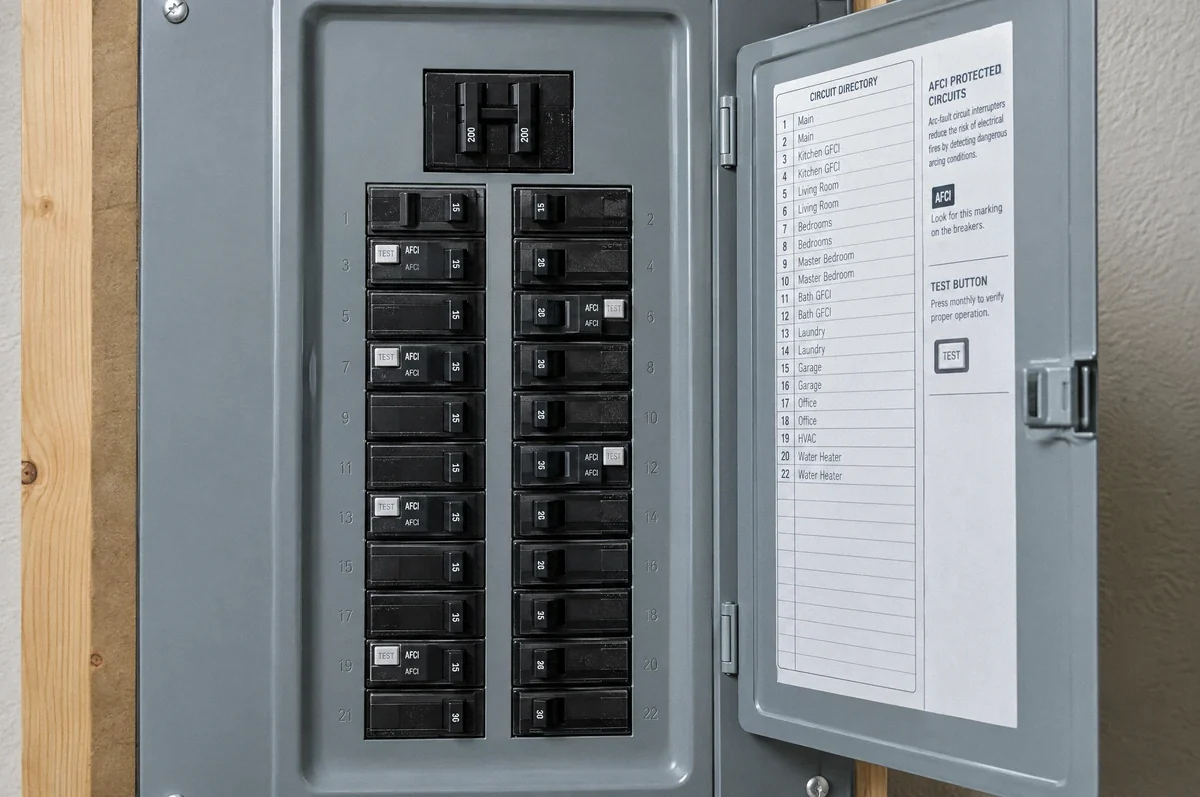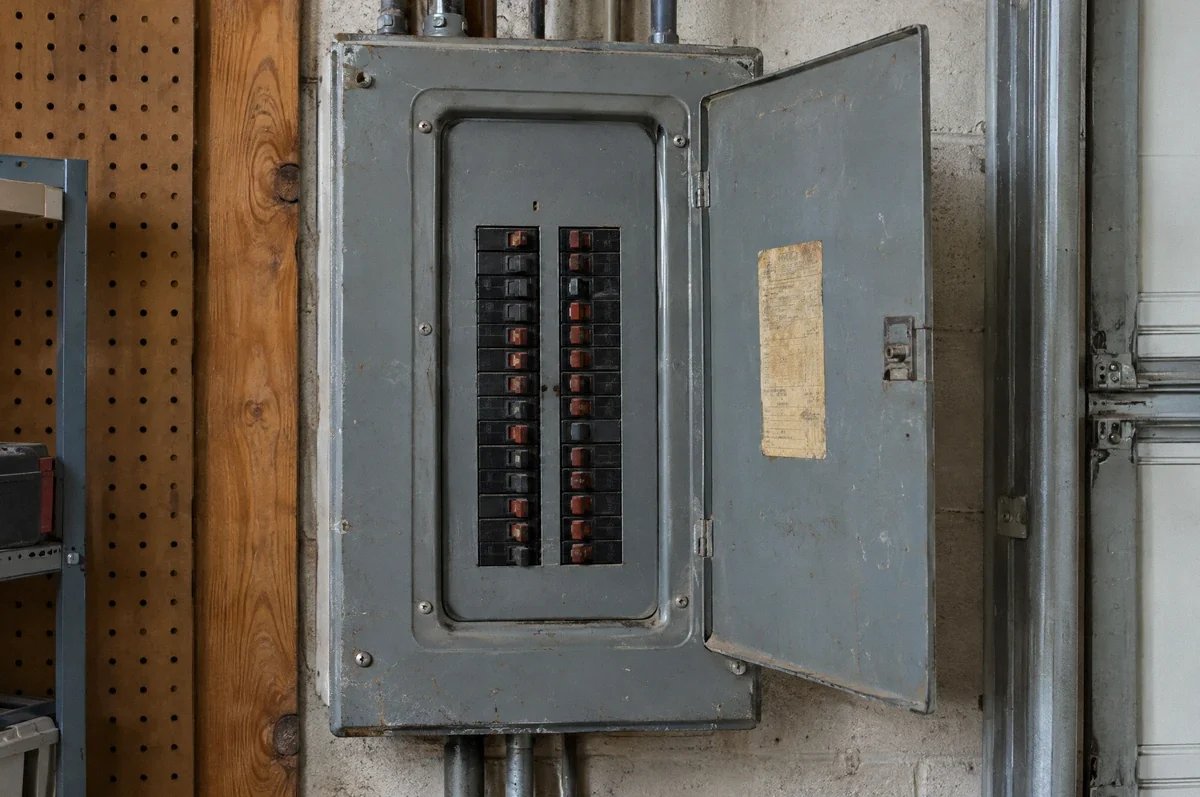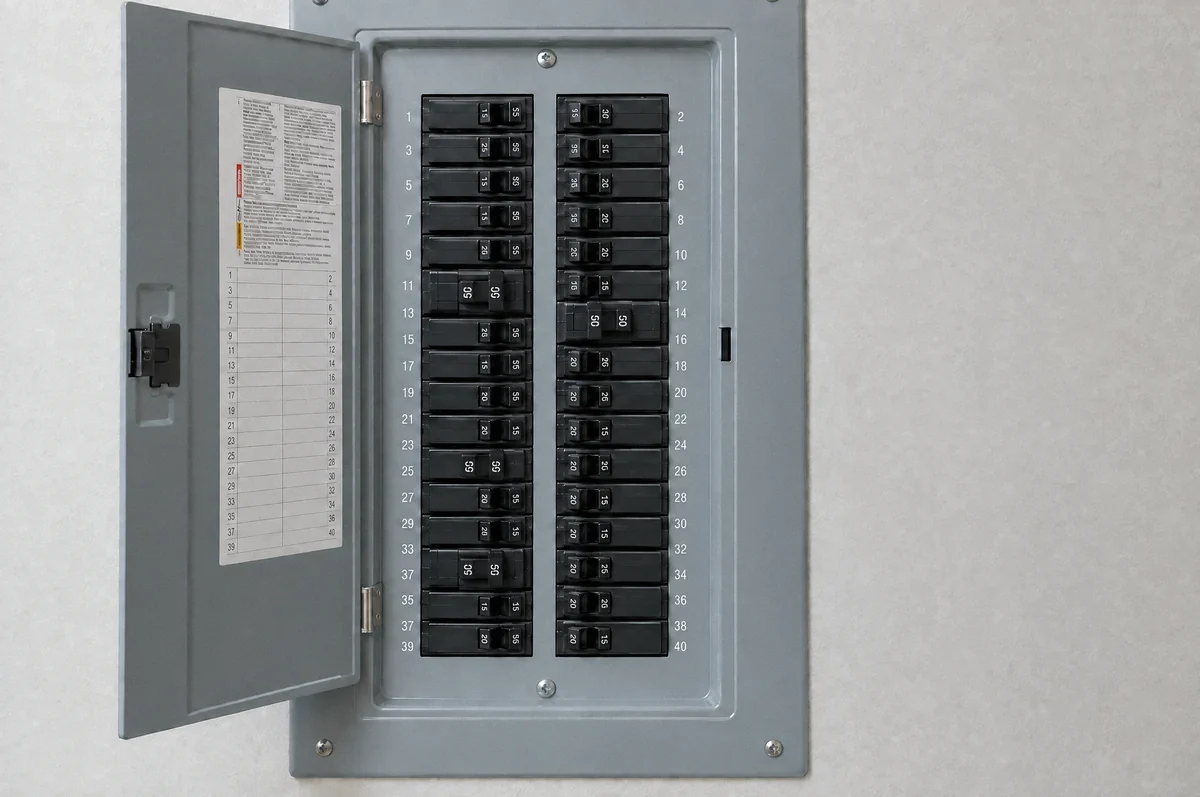
A breaker that trips is opening the circuit in response to a condition it detects. The cause may be an overload, short circuit, ground fault, arc-fault condition, damaged appliance, loose connection, wiring problem, heat, or a defective protective device. The pattern provides clues, but it does not prove the diagnosis.
Do not solve repeated trips by installing a larger breaker. The breaker rating must protect the conductors and equipment. Increasing it without an approved design can allow wiring to overheat.
1. The circuit is overloaded
An overload occurs when connected loads draw more current than the circuit is intended to carry for the relevant time. Portable heaters, kettles, hair dryers, microwaves, air conditioners, and other heating or motor loads can expose an overloaded shared circuit.
From a safe position, note which devices were operating and whether the trip occurs only with a particular combination. Unplugging optional portable loads can provide useful information. It is not a permanent fix when the circuit regularly cannot support normal use. A new dedicated circuit or a broader load plan may be appropriate.
2. A short circuit or ground fault is present
A short circuit is an unintended low-impedance connection between conductors. A ground fault involves current taking an unintended path to ground or grounded parts. Damaged cords, failed equipment, moisture, or wiring damage are possible causes. These conditions can be dangerous and require diagnosis.
If the breaker trips immediately, there is visible damage, or water is involved, leave the circuit off. Do not keep resetting it or handle wet equipment.
3. GFCI or AFCI protection detected a condition
A ground-fault circuit interrupter, or GFCI, reduces shock risk by responding to current leakage. An arc-fault circuit interrupter, or AFCI, responds to certain arcing patterns associated with fire. A dual-function device performs both roles.
A trip may come from the protective device in the panel or from an upstream receptacle that also protects downstream outlets. The source may be equipment, moisture, wiring, shared-neutral configuration, a loose connection, or the device itself. Do not bypass the protection simply because the trip seems inconvenient.
4. An appliance or cord has a fault
If a trip consistently follows use of one appliance, stop using that appliance until it is evaluated. A heater, disposal, refrigerator, charger, power strip, or tool may have an internal fault or damaged cord. Moving it to another circuit can transfer the hazard and complicate diagnosis.
5. A connection or protective device needs attention
Loose or deteriorated connections can generate heat and intermittent symptoms. A breaker can also be damaged, incorrectly installed, incompatible with the panel, or affected by heat. Replacement requires the correct listed device and an evaluation of why it tripped. Breakers are not interchangeable merely because they fit physically.
6. The symptom may be upstream
If multiple circuits, half the home, or the entire property lose power, the issue may not be one branch breaker. Service equipment, utility supply, or another upstream connection may be involved. Note whether neighbors are affected and contact the serving utility when an outage appears broader. Treat fallen conductors and damaged service equipment as hazardous.
What you can safely document
- which rooms, outlets, or equipment lost power;
- what was running immediately before the trip;
- whether it trips instantly, after several minutes, or only in wet weather;
- any visible device label or indicator that can be read without removing a cover;
- heat, odor, buzzing, discoloration, moisture, smoke, or sparking.
Do not remove the panel cover, touch damaged equipment, defeat an interlock, or perform energized tests. If there is smoke, fire, active arcing, or a strong burning odor with heat, leave and call 911. For a repeatedly tripping circuit without those emergency signs, leave it off and arrange professional troubleshooting.
Does this mean the panel is too small?
Not necessarily. A branch-circuit overload can exist even when the overall service has capacity. A fault can trip a breaker regardless of service size. Panel replacement, additional circuits, and service upgrades solve different problems. A load calculation and equipment review should support any capacity recommendation.
Schedule troubleshooting
Fox Electric provides electrical troubleshooting in the San Francisco Bay Area. Call (650) 550-0719 or send the trip pattern and affected equipment. For protective devices, read our GFCI and AFCI guide. For visit types, see estimate versus inspection.