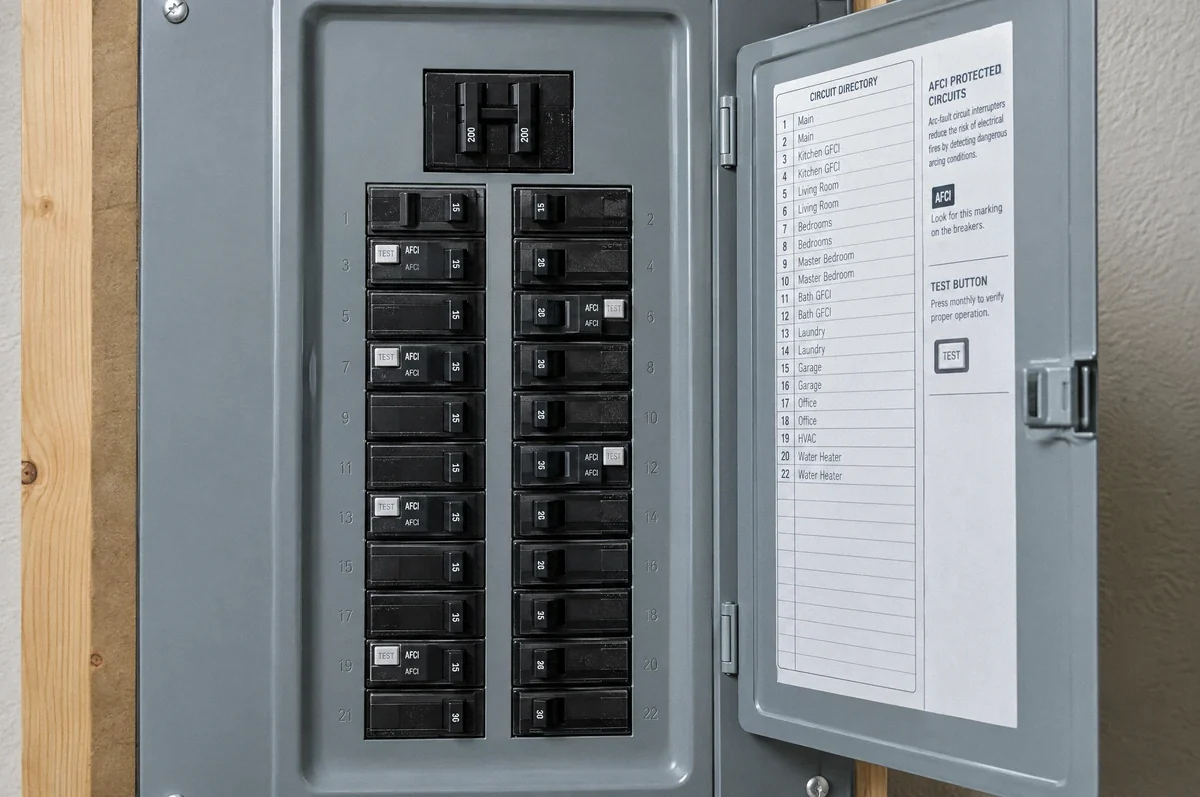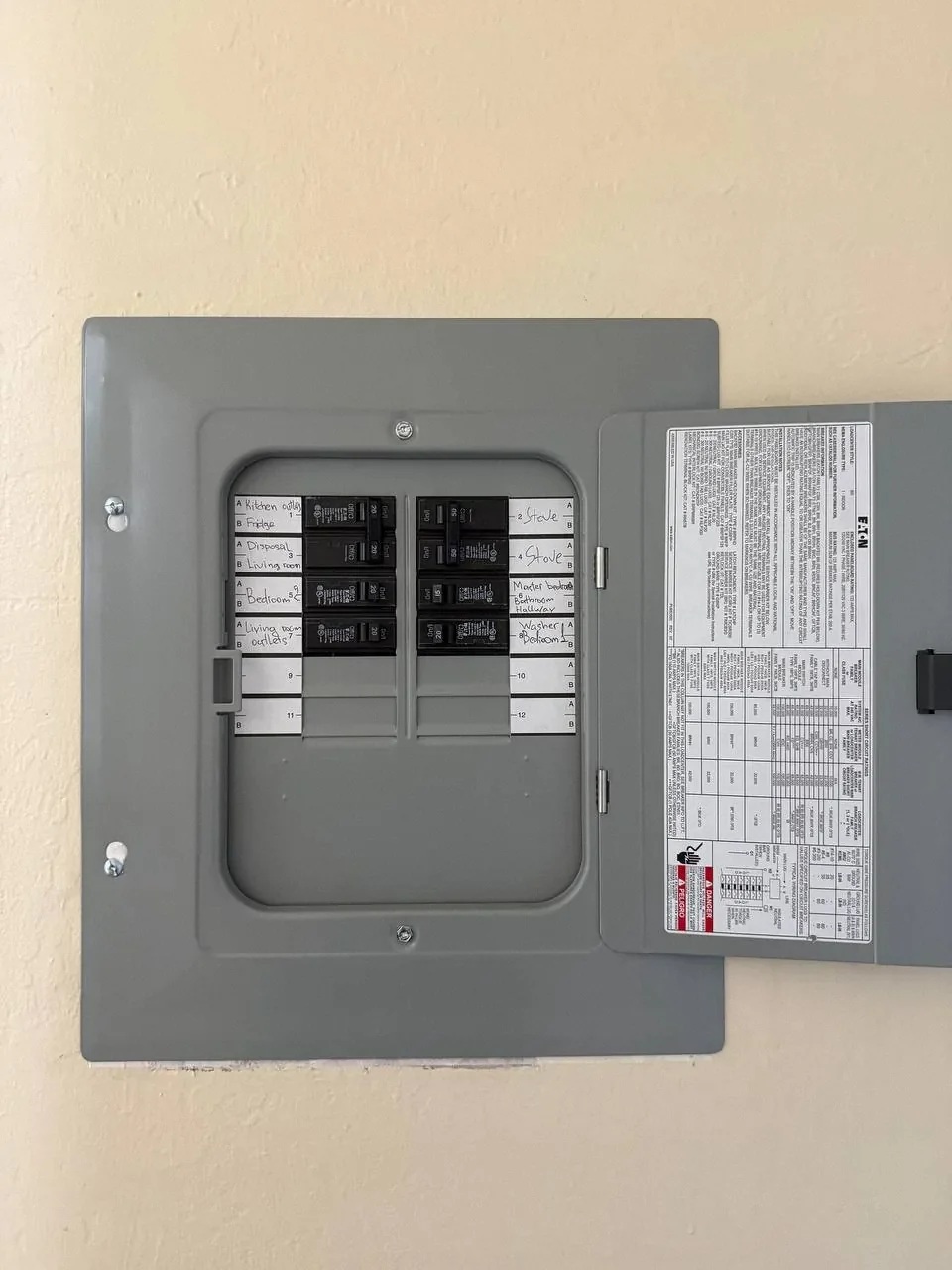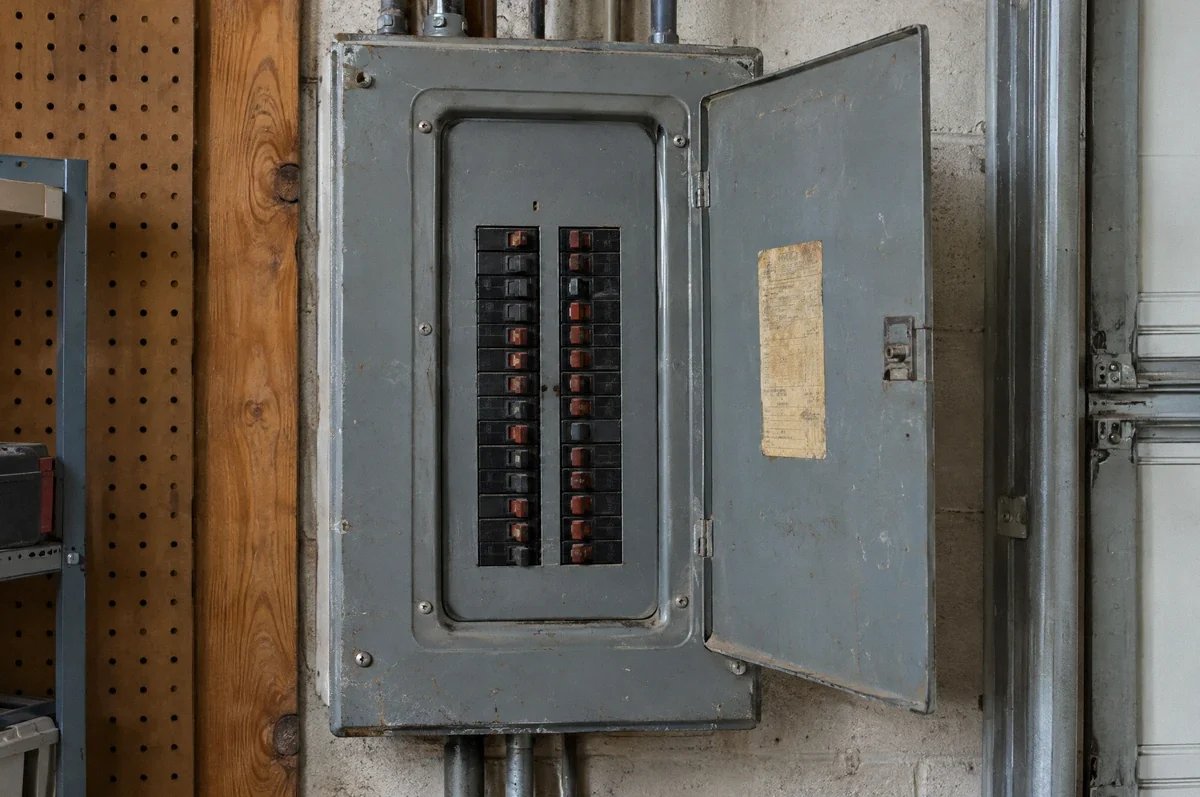
Federal Pacific Electric Stab-Lok and Zinsco panels deserve a careful electrical assessment when they are identified in a home. The assessment should establish the exact equipment, its condition, the suitability of its components, and the reasons for recommending replacement. A brand name is useful evidence; a photograph or the fact that the lights still work cannot establish that the installation is safe.
For owners of older Bay Area homes, the practical questions are whether there is an urgent defect, whether the existing equipment can be responsibly maintained, and what a replacement would include. A larger service is a separate decision. Replacing a legacy panel does not automatically require moving from 100 amps to 200 amps.
What a circuit breaker is supposed to do
A circuit breaker interrupts electricity when specified abnormal current conditions occur. Its operating time depends on the amount and type of overcurrent. A modest overload and a high-current short circuit do not have the same trip time.
The bus is the conductive assembly inside the panel that supplies the breakers. Both the breaker and its connection to that bus matter. A poor connection can overheat without drawing enough current to operate an ordinary breaker, while a breaker that fails to open under an overload can leave circuit wiring exposed to excessive current.
That is why a panel assessment considers the entire assembly. Replacing one visible component does not establish the condition of the hidden connection beneath it, the enclosure, or the remaining breakers.
What the CPSC record says about Federal Pacific
The U.S. Consumer Product Safety Commission investigated certain Federal Pacific Electric Stab-Lok residential breakers. Its testing confirmed failures to meet some UL calibration requirements. In 1983, the Commission closed the investigation, explaining that the available data did not establish a serious injury risk and that further investigation would require additional resources. The agency’s later clarification states that it closed the matter without determining the safety of the breakers or the accuracy of the manufacturer’s position. See the CPSC investigation notice and clarification.
This record supports taking the equipment seriously. It does not support saying that CPSC recalled every FPE panel, certified every installed breaker as safe, or proved that each breaker will fail. An honest replacement recommendation should not depend on any of those claims.
Nor does the absence of a previous trip or fire establish reliability. A homeowner cannot verify protective performance by deliberately overloading a circuit or repeatedly operating a breaker. Those actions can introduce a hazard without answering the underlying question.
Zinsco identification requires its own assessment
Zinsco and some related Sylvania equipment are often discussed alongside FPE, but they are different product families. Do not apply the FPE investigation findings to Zinsco as though they concern the same equipment.
The electrician should document the actual panel and breaker types, visible heat damage, corrosion, alterations, and whether appropriate replacement components exist for that specific assembly. A broad claim that every Zinsco breaker is fused to its bus, or that a damaged bus connection necessarily prevents the internal trip mechanism from moving, goes beyond what visual identification establishes.
The word “Sylvania” alone also needs context. Product branding changed over time, and not every enclosure with a related name establishes the same internal construction. Missing labels or mixed replacement parts make identification more difficult, not less necessary.
What you can document safely
Photograph accessible exterior labeling and the surrounding installation only when there are no warning signs. An ordinary hinged door may expose labels and breaker handles while the protective metal cover remains in place. Do not remove that protective cover, reach through openings, or open utility-sealed compartments.
Useful information includes the visible manufacturer name, model number, main-breaker marking if accessible, and an inspection or insurance notice that mentions the equipment. Include a wide photograph so the electrician can understand the location and available access.
Colored handles, stripes, and the age of the house are clues, not proof. A written assessment should name the evidence used to identify the equipment and note anything that remains unconfirmed.
Symptoms that change the urgency
Smoke, flame, active arcing or sparking, or a strong burning odor at electrical equipment warrant keeping away and treating the situation as a possible fire. Leave the area and call 911 when there is active fire or an immediate fire concern. Do not approach a suspect panel to operate the main breaker.
Visible scorching, water entry, unusual sounds, or repeated loss of power also need prompt professional assessment. Do not repeatedly reset a breaker that trips. The CPSC home wiring hazards guide describes warning signs and the importance of qualified evaluation; it is not a homeowner procedure for testing an energized panel.
A report identifying legacy equipment without an active symptom is a reason to arrange assessment and replacement planning. It is not a basis for promising that waiting any fixed number of days is safe.
When full replacement is the stronger proposal
Full replacement is often considered when there are documented reliability concerns, damaged bus connections, extensive deterioration, incompatible alterations, or no acceptable way to maintain the assembly. It allows the enclosure, bus, breakers, and installation details to be addressed together.
A breaker-only proposal needs a specific explanation of the component’s approval for that panel and why the remaining equipment is suitable. Physical fit is insufficient. UL’s circuit breaker certification guidance explains that investigation of a certified replacement breaker concerns the breaker and associated parts. It does not amount to certification of the condition of an old installed panel.
There is also no reason to assume every replacement part offered for legacy equipment is used, counterfeit, or unavailable. The relevant question is whether a documented, appropriate part solves the actual problem. If the bus or enclosure is damaged, replacing a breaker alone does not repair it.
Size the replacement for the property
The replacement should be evaluated for present loads and realistic additions such as an EV charger, heat pump, or ADU. A load calculation determines demand; a circuit schedule establishes how many suitable breaker positions are needed.
Keeping the existing service rating may be appropriate where the load fits and the service remains suitable. A 100A-to-200A upgrade may be worth incorporating when the future project requires it. The recommendation should explain the difference in scope, utility involvement, cost, and schedule rather than treating the larger rating as mandatory.
Insurance, sale, and project records
Ask the specific insurer or broker, in writing, what equipment or documentation it requires and whether there is a deadline. Replacement does not guarantee coverage, a lower premium, or acceptance by every carrier. A purchase inspection likewise identifies a negotiation or repair issue without determining the entire property’s condition.
Keep the assessment, agreed scope, equipment information, permit, inspection records, photographs, and invoice together. If a replacement is required for underwriting, have the insurer confirm which completion documents it wants before work begins.
Panel replacement also needs the applicable local permit and inspection process. For example, San Mateo County’s permit guidance includes electrical service upgrades for properties within its jurisdiction. Confirm the authority for the actual address and the serving utility’s requirements if meter or service work is involved. The panel project timeline guide explains those separate milestones.
For an identified FPE or Zinsco installation, contact Fox Electric to arrange a safety assessment and, where warranted, a panel replacement proposal. Include the available labels and the specific concern so the assessment can address the equipment you actually have.