A single light flickering at a low dimmer setting can have a very different cause from lights suddenly brightening in one room while dimming in another. Heat, odor, crackling, and changing voltage make the distinction more urgent. Do not decide that a symptom is harmless solely because the lights recover or the breaker has not tripped.
If there is smoke, fire, active arcing, or a strong unexplained burning smell suggesting a developing fire, leave the area and call 911. Do not search inside walls or approach a smoking panel to switch it off. For a hot, discolored, buzzing, or damaged outlet without an active fire, stop using the circuit and arrange urgent electrical help. Operate its breaker only if the panel and route to it are safe.
What the pattern can tell you
| What you observe | What it may suggest | Appropriate next step |
|---|---|---|
| One LED flickers only near the bottom of a dimmer’s range | Bulb and dimmer performance or compatibility | Check model information and manufacturer guidance if there are no damage symptoms |
| Lights dip briefly when the air conditioner (AC) starts | A voltage drop during starting; its source still matters | Document whether it is new, severe, worsening, or affecting other equipment |
| Several rooms flicker, or some lights brighten as others dim | A supply, service, or neutral problem among the possibilities | Seek prompt electrical and utility assessment; treat dramatic changes as urgent |
| An outlet becomes hot, crackles, smells, or shows scorch marks | A failing connection, damaged device, or other fault | Stop use and arrange urgent help |
| Smoke, active arcing, fire, or a suspected developing fire | Immediate danger | Leave and call 911 |
This table organizes observations. It cannot diagnose concealed wiring or establish that equipment is safe to continue using.
Flicker at one bulb or dimmer
LED lamps contain electronic components whose performance must suit the control operating them. A dimmable LED label does not guarantee smooth operation with every dimmer. Flicker at a particular setting can result from the lamp’s dimming range or the dimmer’s configuration.
Lutron’s LED flicker troubleshooting guidance recommends checking compatible lamps and describes low-end adjustment for the applicable controls. Use instructions for the exact product; the adjustment procedure is not universal.
You can record the bulb model, dimmer model if visible, and setting where the issue occurs. For an accessible replaceable bulb, switch the light off, allow it to cool, and follow the fixture instructions when changing it. Do not work from an unstable position or open a ceiling fixture to investigate its wiring.
A new bulb does not rule out a defective socket or connection. Flicker at full brightness, a problem that worsens, or any associated noise, heat, or odor needs evaluation. See smart lighting and dimmer planning when the question is product compatibility rather than a suspected fault.
Why lights dim when the AC turns on
A compressor or other motor can draw increased current during starting. Voltage can fall briefly along the wiring and supply feeding the loads. The affected lights do not have to share the AC’s individual branch circuit; their supply paths meet farther upstream.
A mild, unchanged momentary dip has a different urgency from lights that dim deeply, pulse repeatedly, remain dim, or brighten abnormally. It still does not establish that the installation is satisfactory. A new or worsening pattern deserves investigation, especially if it coincides with hard starting, equipment shutdowns, or changes in other rooms.
Record when the event occurs and whether it affects one light, one group, or much of the house. Do not repeatedly start the AC to demonstrate it. The electrician may need to coordinate with a heating and cooling technician and the utility to distinguish equipment starting behavior from voltage drop, a loose connection, or a service problem.
A larger panel is not a diagnosis. A load calculation evaluates the planned electrical demand. It does not locate an intermittent connection or prove that a voltage disturbance comes from inadequate service capacity.
Bright lights in one room and dim lights elsewhere
A neutral is a normal current-return conductor. In a typical residential 120/240-volt supply, a loose or interrupted shared neutral can let the two groups of 120-volt loads experience abnormal voltages. Some lights may brighten while others dim, and connected equipment can be damaged.
This pattern is a serious clue, not something to reproduce with appliances. Power Monitors, a manufacturer of power-quality instruments, explains the relationship between neutral faults and voltage imbalance. Measurements and circuit tracing are needed to establish the location and cause.
Stop using affected equipment and seek urgent assistance from the electricity provider and an electrician. Do not touch service wires, meter equipment, grounding connections, or exposed metal to investigate. If safely accessible normal controls can be operated without approaching suspect equipment, follow the responding professional’s guidance about shutting down loads or power.
PG&E identifies partial power, high or low voltage, and flickering lights as reasons to report a voltage problem. Use your actual electricity provider. Homes served by municipal utilities, including Palo Alto or Santa Clara, should contact that utility rather than assume PG&E is responsible.
A warm charger is different from a heating receptacle
Some electronic controls and power adapters generate heat during normal operation. That does not justify dismissing an outlet or plug connection that is becoming warm under load. A loose contact can create localized heat while the circuit current remains below the level that would trip a standard breaker.
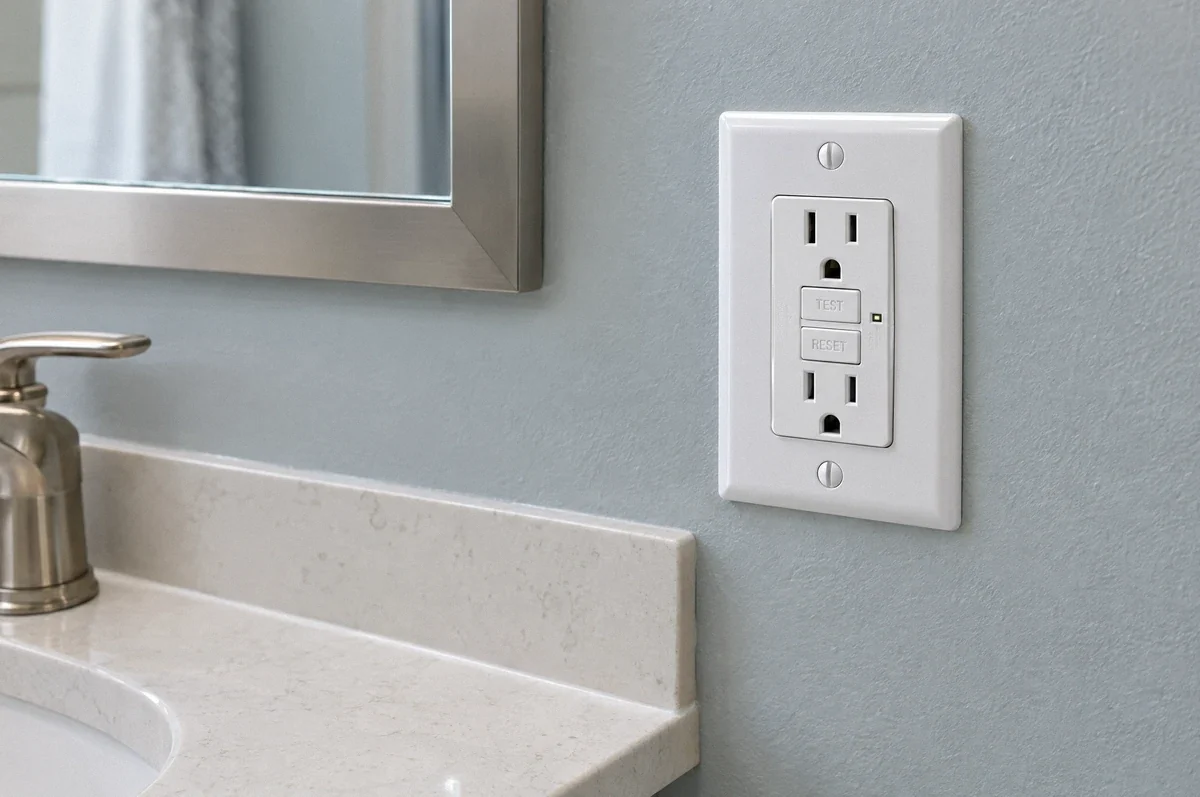
Do not test a suspect outlet’s temperature with your hand. If you have noticed heating, a loose plug fit, discoloration, or an odor, stop using the location and have it checked. A space heater’s high draw is not an explanation that makes a hot plug or receptacle acceptable.
The CPSC Guide to Home Wiring Hazards identifies hot receptacles, unusual sounds, odors, and loose plug connections as warning signs. It also explains why an unused outlet may heat when current to another outlet passes through its connections. Unplugging the nearest appliance therefore does not necessarily isolate the damaged point.
What a spark does and does not tell you
A brief small flash can occur as a plug makes or breaks contact with a load. That differs from sustained arcing, repeated popping, a large flash, scorch marks, or sparks from a loose receptacle. Do not keep inserting a plug to determine which condition you have.
Turn appliances off using their normal controls before unplugging them when safe. A damaged plug, unstable connection, or repeated spark needs assessment. Do not bend plug blades, push objects into the outlet, or cover scorch marks with a new wallplate.
If the outlet has already lost power, use the dead-outlet guide only for safe external observations. A dead-looking receptacle can still have energized wiring behind it.
Older wiring adds questions, not an automatic verdict
The condition and installation history matter more than a building’s age alone. An older house can contain new circuits alongside deteriorated original wiring. A newer panel does not prove that every branch circuit was replaced.
Older solid aluminum branch-circuit wiring deserves specific assessment when present. The concern centers on compatible, reliable connections and the condition of the installation. It should not be confused with every modern use of aluminum conductors. CPSC’s Repairing Aluminum Wiring guidance addresses permanent repair approaches; simply replacing device faces is not a complete repair strategy.
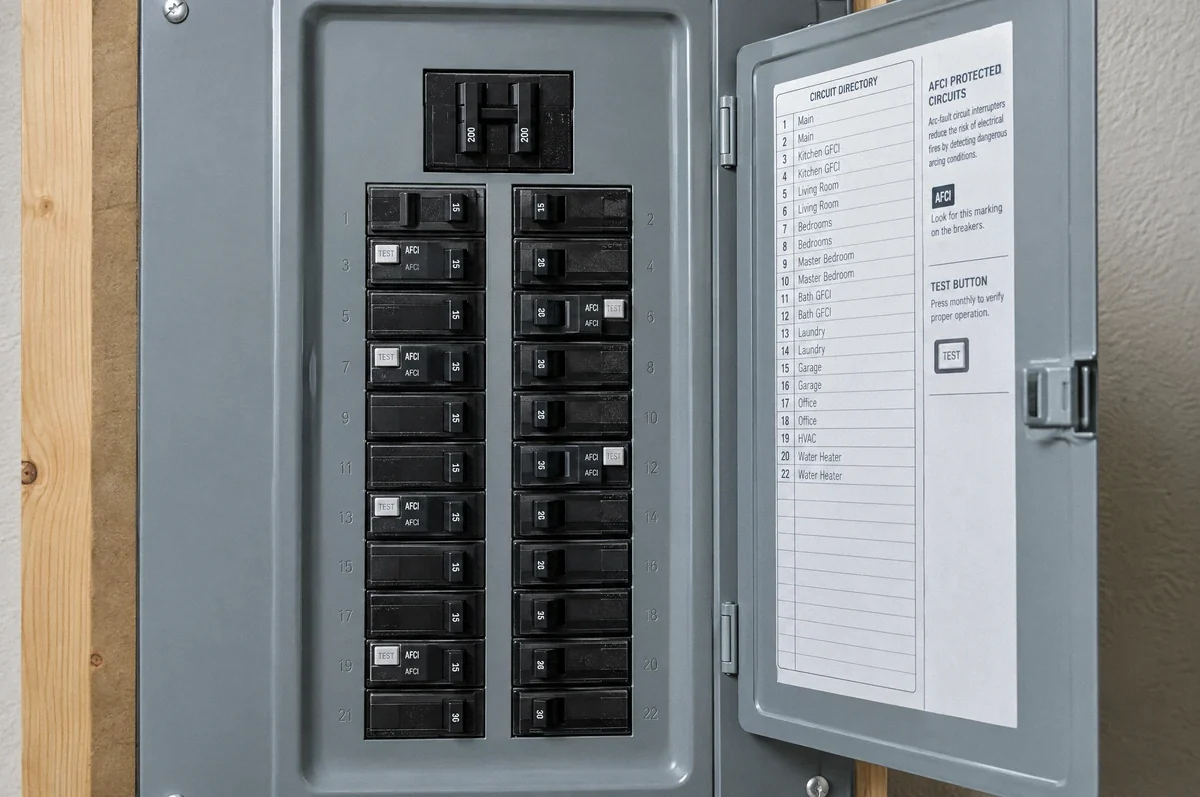
Other symptoms may require evaluation of knob-and-tube wiring or a recurring AFCI breaker trip. Those are distinct investigations. None automatically proves that the home needs a larger electrical service.
Describe the symptom before requesting the repair
Useful details include the first occurrence, affected locations, associated equipment, recent electrical or HVAC work, and whether a utility outage or storm preceded the problem. Do not delay an urgent call to collect photos or reproduce the event.
Fox Electric provides electrical troubleshooting and emergency electrical service in the Bay Area and the city of Santa Cruz. Describe heat, odor, brightening, or partial power when arranging help. For a non-emergency diagnosis, send the property and symptom details. An online form is not a substitute for calling 911 when fire is suspected.