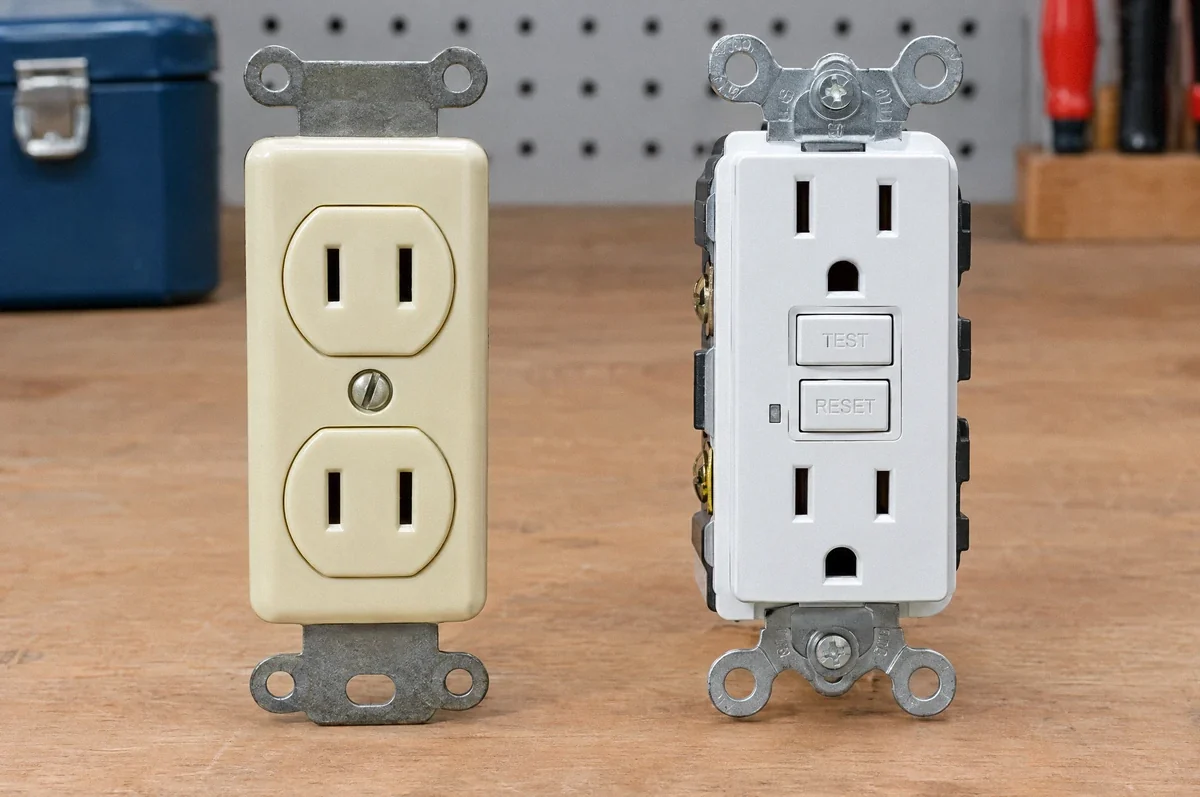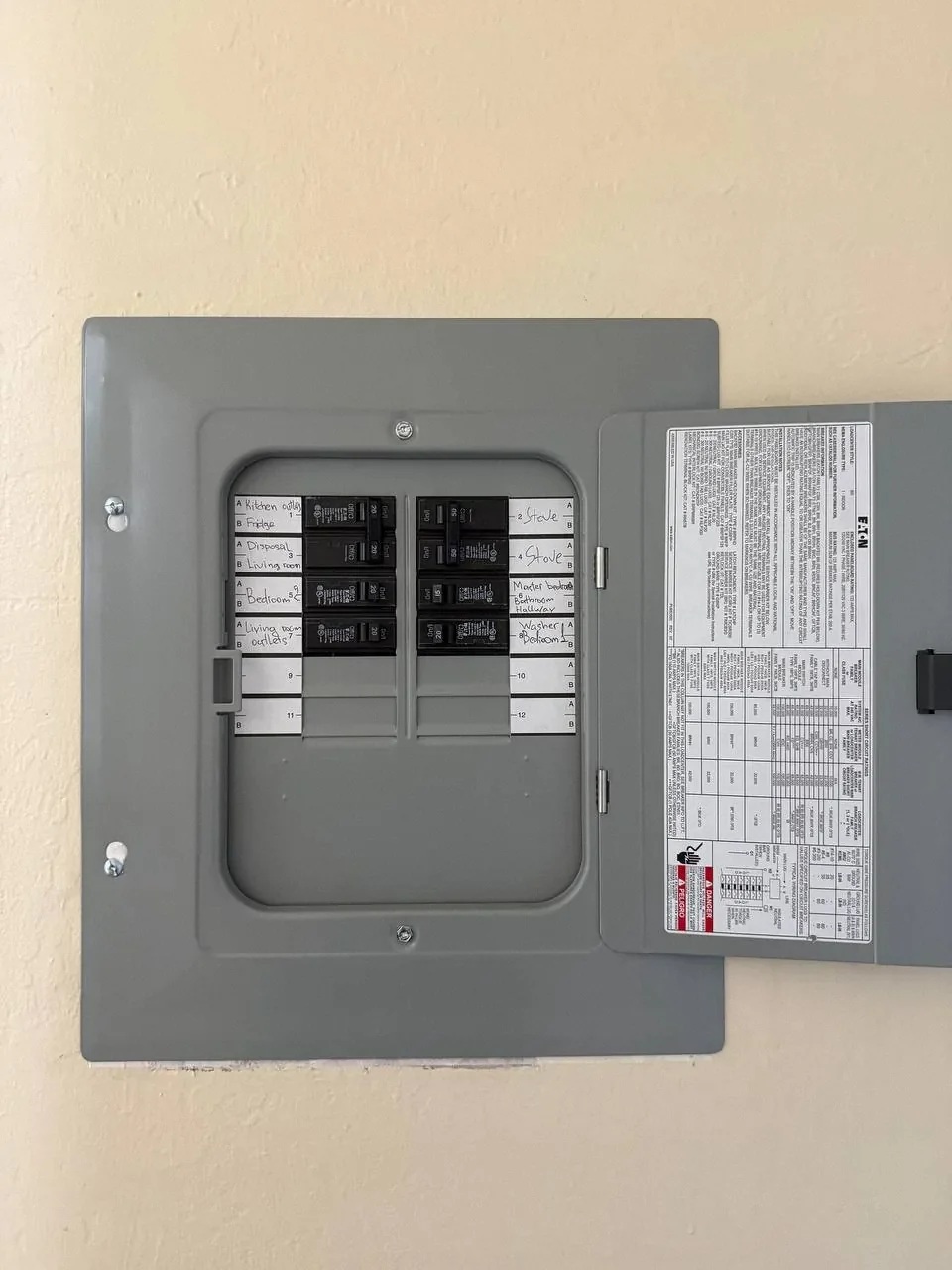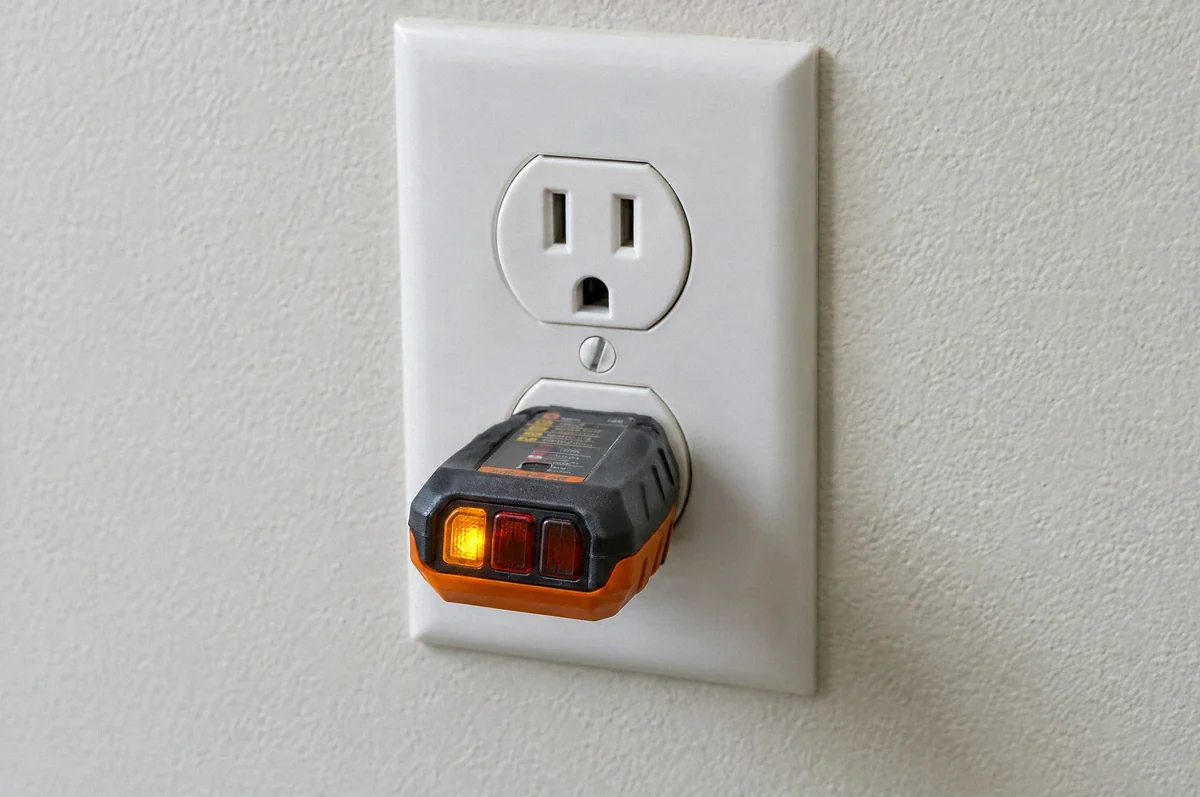
An outlet tester displaying “open ground” indicates that it has not detected the expected equipment grounding connection at that receptacle. The outlet may still power a lamp or computer. What the reading does not establish is whether the circuit never had a ground, an existing grounding connection has failed, or other wiring conditions are affecting the tester.
Have the condition evaluated before relying on that outlet for equipment requiring grounding. A three-prong face, a successful lamp test, or a green light on a power strip does not prove that the grounding path is effective.
What the ground does
A typical grounded household receptacle provides a hot connection, a neutral connection, and an equipment grounding connection. Hot and neutral carry the normal operating current of a 120-volt appliance. The equipment grounding path connects exposed conductive parts to the electrical system’s fault-clearing path.
If a hot conductor contacts an appliance’s grounded metal enclosure, that path helps carry fault current back to the source so the protective device can operate. The purpose is not simply to send unwanted electricity into soil. A ground rod in the yard is not a substitute for the required equipment grounding path to a receptacle.
The path may include a grounding conductor or an approved, continuous metal wiring method. It is therefore inaccurate to assume every grounded outlet must have an obvious third wire visible behind it. It is equally inaccurate to assume any metal box or old armored cable automatically supplies a suitable ground. Those conditions require verification.
A three-light tester is a screening tool
Small plug-in testers identify certain common wiring patterns. They are useful for flagging a receptacle that needs attention, but they are not comprehensive electrical inspections.
Klein Tools specifically states that its three-light RT500 tester does not establish the quality of a grounding connection and does not identify every combination of defects or a reversal of neutral and grounding conductors. A “correct” display therefore has important limits. Read the limitations for the actual tester being used. Klein Tools: receptacle tester specifications.
A misleading neutral-to-ground connection at a receptacle can also make a simple test appear reassuring while creating an unsafe arrangement. This is often called a bootleg ground. Do not connect the receptacle’s grounding terminal to its neutral to change a tester reading. The normal return conductor and the equipment grounding path have different functions within branch-circuit wiring.
Treat unusual tester displays as information to give an electrician. Do not move meter probes among receptacle slots or exposed wires to settle conflicting readings yourself.
Three situations that look similar from the room
Original ungrounded wiring. Some older circuits have hot and neutral conductors but no equipment grounding conductor or qualifying metal path. A later three-prong receptacle does not add what is missing in the wiring. This is one reason the condition is encountered during inspections of older Bay Area homes.
A grounding path that has been interrupted. A circuit intended to be grounded can lose continuity at a device, splice, box, or another part of its route. The correct repair is to locate and restore the defective path. Adding GFCI protection does not justify leaving a repairable required grounding connection broken.
An approved ungrounded replacement arrangement. An existing ungrounded receptacle may have been replaced using GFCI protection and the required markings. That receptacle remains ungrounded by design, so an open-ground indication can be consistent with the labeled arrangement. It is not evidence by itself that the GFCI failed.
The distinction matters when reviewing a home inspection report. “Open ground” is the observation. The electrician’s report should add the circuit condition, the protection present, the suitability for connected equipment, and the proposed correction.
What GFCI protection changes
A ground-fault circuit interrupter, or GFCI, detects an imbalance between outgoing and returning current. It can reduce ground-fault shock risk without an equipment ground. It cannot install a missing grounding path, fix deteriorated insulation, or guarantee protection from every electric shock.
Leviton’s guidance on ungrounded receptacles explains that GFCI replacement is an available option for existing two-slot outlets without grounding. The detailed choice still depends on the applicable replacement rules and the equipment using that outlet.
The replacement GFCI must carry the required “No Equipment Ground” marking. Ordinary grounding-type receptacles supplied through GFCI protection on the qualifying ungrounded replacement circuit require both “GFCI Protected” and “No Equipment Ground” markings. San José’s electrical project guidance describes labeled replacement options. Ask the contractor to document the arrangement rather than relying on stickers alone.
For planning the actual replacement, see two-prong to three-prong outlet options. For a device that repeatedly interrupts power, use the separate GFCI tripping guide.
What about computers and surge protectors?
A missing ground can affect equipment safety and the operation of protective products. Follow the manufacturer’s grounding instructions for the computer, appliance, uninterruptible power supply, and surge protector. A GFCI replacement exception for the receptacle does not override those instructions.
It is too broad to say that every surge protector loses all protection without ground. Surge protective devices can use several protection modes, including between line and neutral as well as connections involving ground. NEMA’s surge protection FAQ explains those modes. That does not make an ungrounded supply an approved installation for a product requiring a grounded outlet.
A light labeled “protected” may indicate the status of internal components. A separate grounding or wiring indicator may report something else. Read the exact product instructions, and do not use either light to dismiss an open-ground finding. Restoring the proper grounding path and selecting surge protection are related but separate tasks.
How the repair scope is chosen
If the circuit has a valid grounding path with one defective connection, the work may be localized. It should include verification that the repaired path is effective, not merely that the outlet now powers a device.
If the circuit never had a ground, a contractor can assess whether an allowable grounding-conductor retrofit, a new grounded circuit, or a properly labeled GFCI replacement is appropriate. A retrofit must terminate at a point permitted for that installation. A nearby pipe, another outlet’s convenient screw, or a separate ground rod is not a shortcut to select by appearance.
Widespread old wiring may justify a coordinated whole-house rewiring assessment, especially when access will already be available during remodeling. The existence of one open-ground outlet does not establish that the whole house must be rewired or that the service needs upgrading.
For suspected original circuits, the knob-and-tube assessment guide explains why active, abandoned, and later wiring must be separated in the report.
What to do before the visit
Keep a list of affected outlets and record the tester model and display. Note whether the outlet has GFCI markings and whether it was recently replaced. Do not remove faceplates, add adapters, cut off a plug’s grounding pin, or continue using equipment that requires a grounded supply at that location.
An open-ground indication alone is not proof of an active fire. If it accompanies a shock, burning smell, heat, or sparking, stop using the equipment and follow the appropriate urgent response instead of continuing tests.
Fox Electric can evaluate the grounding condition and explain suitable outlet repair options. Send the inspection finding or outlet details so the visit can address the actual circuit rather than just the tester’s label.