A GFCI outlet that repeatedly trips needs its cause identified. It may be detecting leakage from an appliance or damp wiring, protecting other outlets elsewhere in the house, or refusing to reset because its incoming power is off. Replacing the receptacle without checking those possibilities can leave the original problem unresolved.
If the outlet is wet, damaged, discolored, unusually hot, or accompanied by a burning smell, stop using it. Do not reset it or touch a wet plug. Smoke, active arcing, fire, or a strong unexplained burning smell calls for leaving the area and calling 911. The checks below apply only to dry, intact equipment with no warning signs.
What a GFCI detects
A ground-fault circuit interrupter, or GFCI, compares the current leaving on the hot conductor with the current returning on the neutral. A difference can indicate that electricity is taking an unintended path. The device interrupts power quickly to reduce the risk of a serious ground-fault shock.
That protection has limits. A GFCI does not prevent every shock, and a receptacle GFCI does not replace the circuit breaker’s protection against excessive current. Contact between hot and neutral can cause injury without the imbalance the GFCI detects. Its presence never makes wet equipment safe to handle. See the Consumer Product Safety Commission’s GFCI fact sheet.
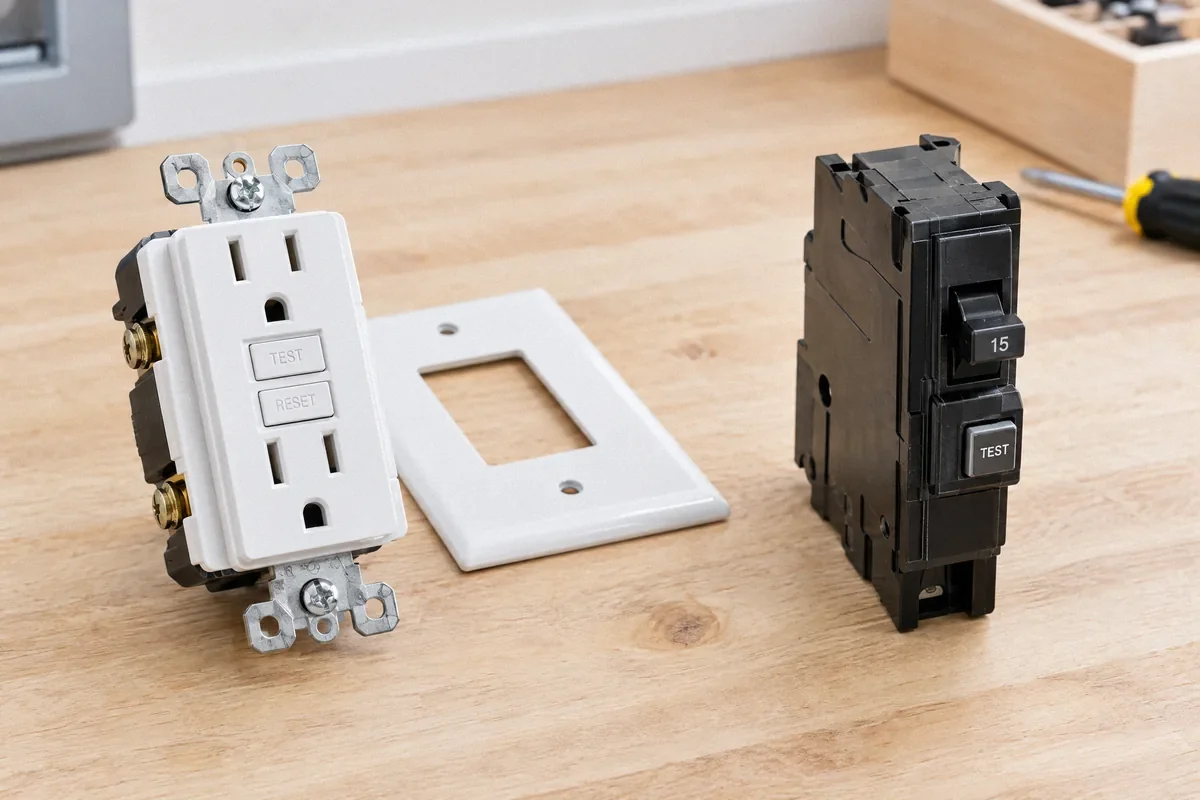
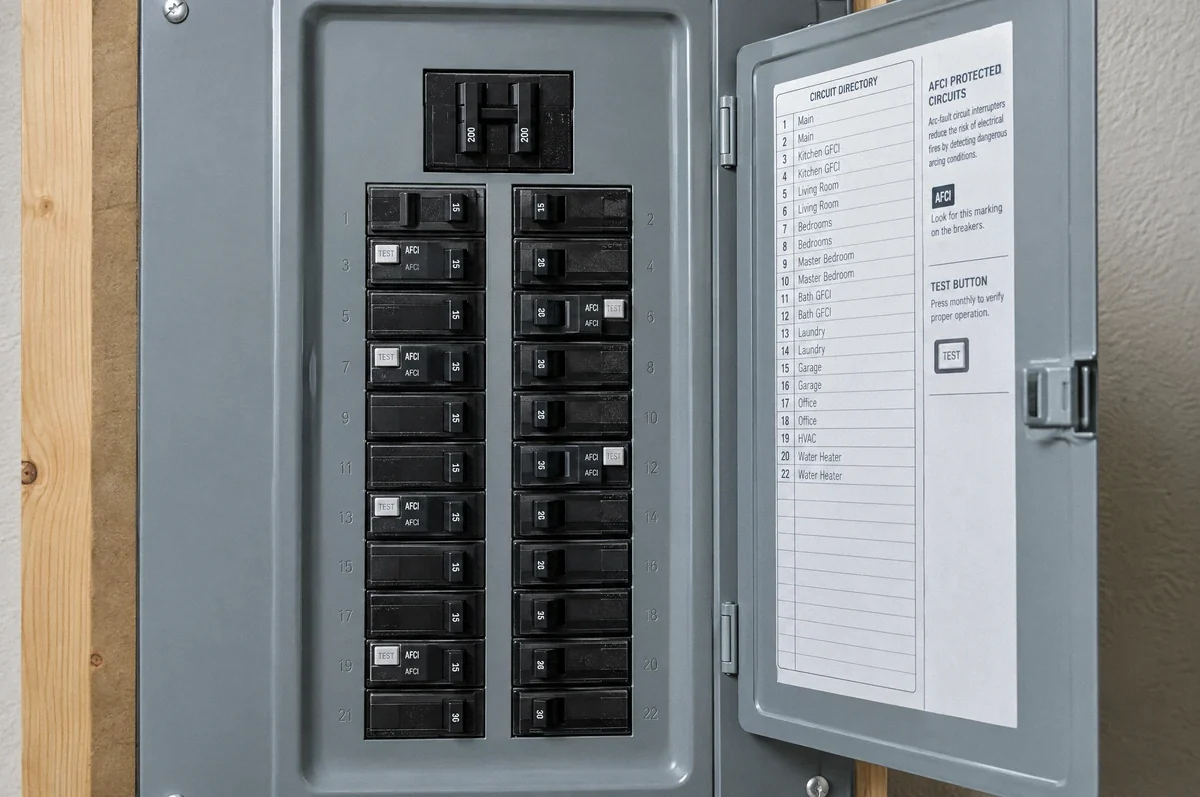
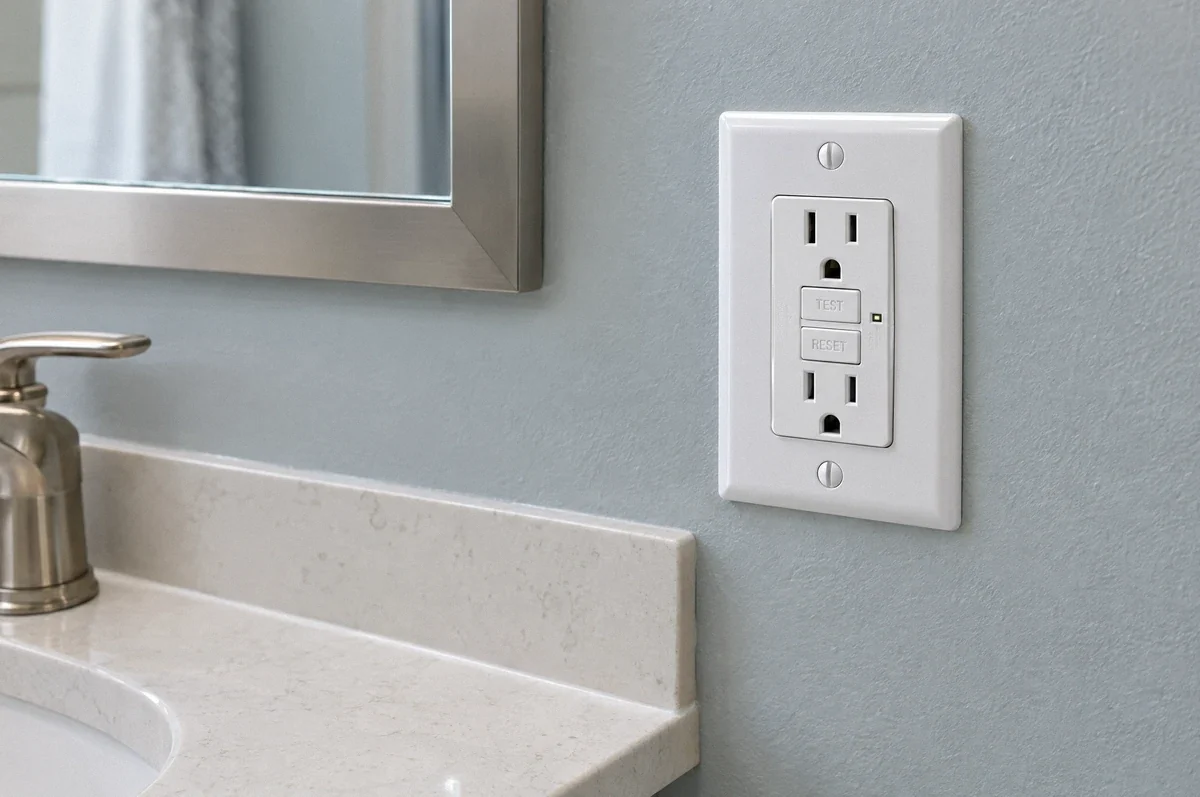
GFCI protection may be in a receptacle with TEST and RESET buttons or in a breaker at the panel. An arc-fault circuit interrupter, or AFCI, addresses a different hazard: certain dangerous arcing conditions. Some devices provide both. If the breaker is what trips, our AFCI troubleshooting guide explains why identifying its protection type matters.
Common causes, without assuming the device is defective
An appliance or cord may leak current. A heater, refrigerator, power tool, or other appliance can develop an insulation fault. The timing is useful: a trip when a compressor starts is different from a trip that occurs with accessible appliances unplugged. Neither observation proves which component has failed.
Moisture may reach electrical parts. Outdoor receptacles, connected cords, irrigation equipment, and damp locations deserve attention after rain or a leak. A closed cover is useful protection, but its appearance does not establish that the box or plug connection stayed dry.
The fault may be beyond the visible outlet. Some GFCIs also protect receptacles connected to their protected output. Those outlets can be in different rooms. A garage GFCI trip may therefore interrupt more than the garage receptacle. Conversely, outlets merely located farther along a wall are not automatically protected. The wiring arrangement determines coverage, as illustrated in Leviton’s GFCI instructions.
The installation or GFCI may need repair. Incorrect connections, damaged wiring, or failure of the protection device can prevent normal operation. Certain modern GFCIs deliberately lock out when they cannot provide protection. There is no universal age at which a device must start nuisance tripping, and a refusal to reset does not by itself establish that it has worn out.
Multiple connected devices can contribute leakage, but calling the result harmless is premature. An electrician must distinguish equipment leakage within the applicable limits from a damaged appliance or circuit.
Safe observations before a service visit
Start by recording what happened, before pressing buttons. Note which outlets stopped working, what equipment was running, and whether the event followed rain, cleaning, a plumbing leak, or recent electrical work. A photo of the intact outlet face and its visible indicator can help identify the model.
For a dry, undamaged installation with no heat, odor, sparking, or shock history:
- Turn off and unplug accessible appliances on the affected outlets, using their normal controls and plugs. Do not move heavy appliances or reach into unsafe spaces to find every connection.
- Look for the associated GFCI, including a nearby bathroom, garage, or exterior location. Use the circuit directory or existing protection labels where available.
- If you understand the device’s instructions, attempt one reset with the accessible loads unplugged. If it immediately trips or will not reset, stop.
- Record whether power returned and which outlets remain unavailable. Leave any appliance associated with the trip out of service until its condition is assessed.
Do not intentionally plug a suspect appliance into several other outlets to reproduce a fault. A change in tripping behavior would not make the appliance safe. Likewise, a GFCI that holds with equipment unplugged has provided a clue, not a certificate that the fixed wiring is sound.
Keep the faceplate and panel’s screwed cover in place. Homeowner observation ends before removing a receptacle, probing slots with meter leads, or changing wiring. Electrical troubleshooting can continue with the circuit appropriately isolated and tested.
Why it will not reset
A GFCI needs an appropriate incoming supply to operate. Loss of power upstream can make a healthy device appear dead. An upstream breaker or another protective device may be open, or a connection may have failed. Modern devices can also prevent resetting after internal failure or incorrect installation. Leviton’s GFCI support page specifically notes that its devices will not reset without circuit power.
The position or color of an indicator is model specific. A red light on one product does not necessarily mean the same thing on another. Use the model’s instructions rather than a universal color chart from the internet.
If several ordinary outlets are dead while no breaker appears tripped, read outlets not working with the breaker on. Do not cycle unrelated breakers to search for a reset or assume that a dead-looking receptacle has no energized conductors behind it.
Outdoor trips after rain
A recurring rain-related trip is a reason to inspect the electrical installation and the route by which water reaches it. The repair might involve a damaged cord, failed weather protection, water entering a box, or connected equipment. Installing a new GFCI alone does not seal those paths.
Do not use a hair dryer, heat gun, or other appliance to dry a receptacle, and do not regard a dry-looking faceplate as evidence that its interior is ready to energize. Leave affected equipment unused and have water damage assessed. For future work, include appropriate receptacles, covers, boxes, and cable entries in the scope for outdoor lighting and electrical equipment.
Older ungrounded circuits
A GFCI can provide ground-fault shock protection without an equipment grounding conductor. It does not create one. Some replacement arrangements on existing ungrounded circuits are permitted with appropriate protection and labeling; they are different from new grounded wiring.
Do not attribute recurring trips simply to the house having two-wire circuits. The fault still needs diagnosis. Our guide to two-prong outlet replacement explains the distinction between a grounded receptacle and an approved, labeled GFCI replacement that remains ungrounded.
Testing and the repair scope
Follow the manufacturer’s routine TEST and RESET instructions, including its testing interval. An automatic self-test feature does not mean every model’s user test can be skipped. Routine testing is for equipment in normal condition, not a reason to re-energize an outlet already showing damage.
Ask the electrician to explain what caused the interruption, which outlets the device protects, and whether the appliance, wiring, weather protection, or GFCI needs repair. If the fault is intermittent, the report should identify what was confirmed and what still requires observation. That is more useful than replacing parts until the symptom temporarily disappears.
Fox Electric evaluates recurring GFCI problems across the Bay Area and the city of Santa Cruz. Request an outlet diagnosis with the affected locations, the timing of the trips, and any visible device information. For heat, smell, or sparking, describe those symptoms when arranging service; an online request is not an emergency response channel.