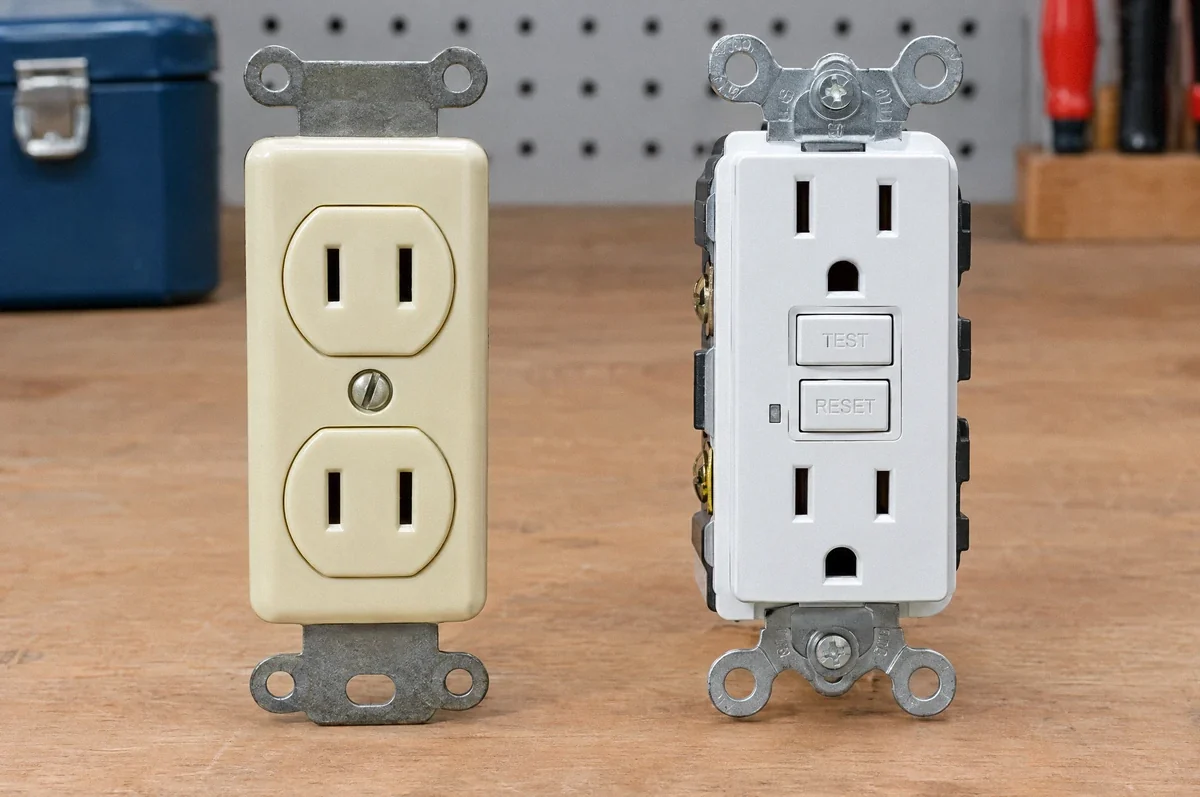
You can often improve an older two-prong outlet without rewiring the entire home, but the replacement must match the wiring behind it. A verified equipment grounding path allows a grounded receptacle. Where no such path exists, specific replacement provisions allow a ground-fault circuit interrupter (GFCI) receptacle or GFCI-protected three-prong receptacles with the required labels. Those options improve ground-fault shock protection while leaving the circuit ungrounded.
The starting point is an assessment of the existing circuit and the equipment you intend to use. Buying a three-prong receptacle because a new appliance’s plug will fit skips both questions.
Two slots are a clue, not a complete wiring survey
Older homes may contain original two-wire circuits, later grounded cable, approved metal wiring methods, and work from several remodels. A two-slot receptacle may be on a circuit without grounding. In some installations a suitable grounding path may already exist, but it has to be verified.
Conversely, a three-slot outlet is not proof of grounded wiring. Someone may have changed the device without properly addressing the missing ground. Or the outlet may be a correctly protected and labeled ungrounded replacement.
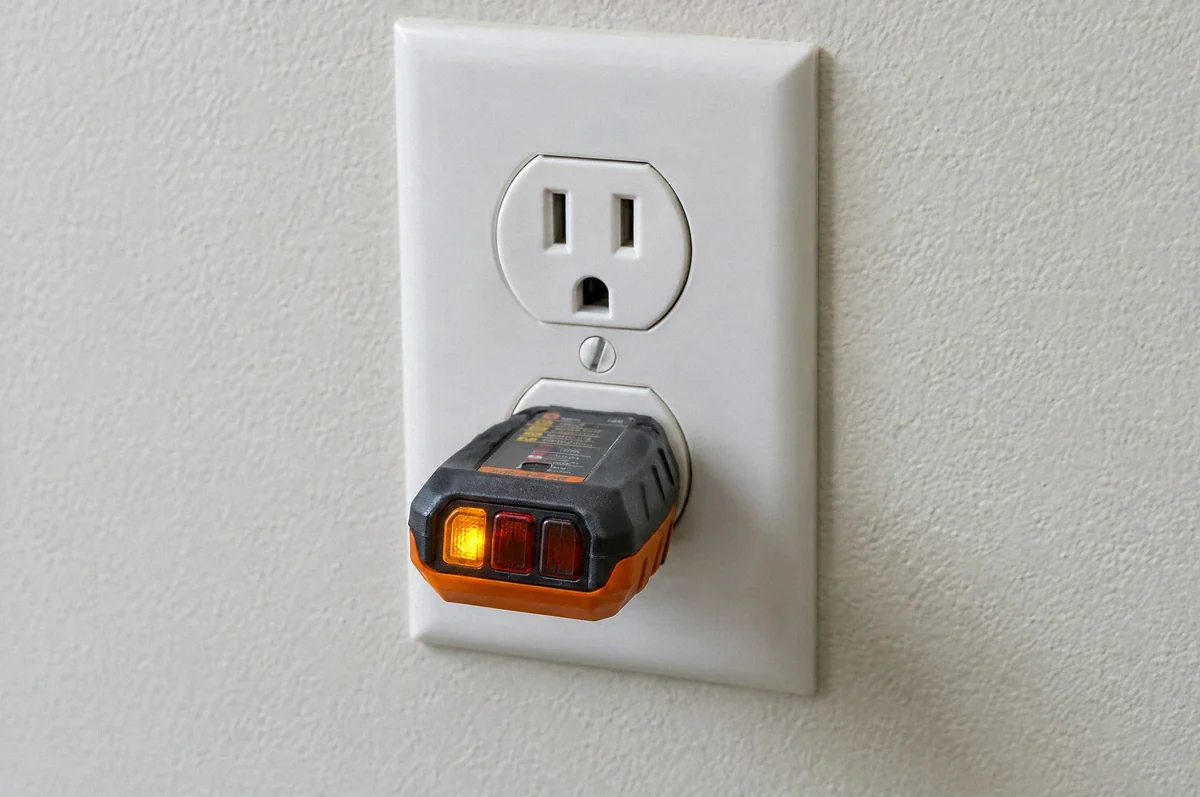
An electrician should identify the wiring method, its condition, and whether the path can perform its grounding function. A basic tester is useful screening, but a favorable light pattern cannot establish all of that. See what an open-ground reading means before treating outlet appearance or a tester result as conclusive.
Compare the replacement choices
| Approach | What it provides | What still needs attention |
|---|---|---|
| Verified existing ground or new grounded wiring | An equipment grounding path for the replacement receptacle | Circuit condition, capacity, and all protection required for the location and scope |
| GFCI receptacle on qualifying existing ungrounded wiring | Ground-fault shock protection at the protected location | No equipment ground; required marking and equipment suitability |
| Three-prong replacement supplied through GFCI protection | Ground-fault shock protection for the verified protected outlets | No equipment ground; required labels at each replacement outlet |
| Like-for-like non-grounding replacement where permitted | A replacement that does not imply grounding exists | Other location-specific replacement requirements may still apply |
These are planning options rather than wiring instructions. A non-grounding replacement is not a way to avoid GFCI or other protection that the applicable replacement rules require. Leviton lists both non-grounding and protected replacement arrangements in its non-grounding receptacle guidance.
When you need an actual equipment ground
The equipment ground connects exposed conductive parts to the system’s fault-clearing path. It is separate from the neutral, which carries normal return current on a typical 120-volt branch circuit. Adding a third slot to an outlet cannot create that path.
New grounded wiring may be appropriate when the planned appliance requires grounding, the existing circuit is damaged or insufficient, or the remodel already provides access. A qualifying grounding-conductor retrofit may also be possible without replacing the entire circuit. The allowed route and termination require assessment; do not assume the only choices are a GFCI or a complete house rewire.
Do not connect neutral to ground at a receptacle, attach a wire to an arbitrary water pipe, or install a stand-alone rod as an outlet ground. Those changes can create an unsafe appearance of compliance. Approved grounding methods form a coordinated part of the electrical system.
For a home office, appliance station, or other specific destination, a new dedicated circuit may solve both the grounding need and a verified load or manufacturer requirement. It should be justified by that use, not by a blanket claim that every computer needs its own circuit.
What the GFCI option provides
A ground-fault circuit interrupter, or GFCI, compares outgoing and returning current and disconnects power when it detects the relevant imbalance. That function does not depend on a separate equipment grounding conductor. It reduces the risk of ground-fault shock without making all electrical contact safe.
A GFCI receptacle used as the permitted ungrounded replacement needs a “No Equipment Ground” marking. Ordinary three-prong replacements supplied through GFCI protection need both “GFCI Protected” and “No Equipment Ground” markings. Leave these visible after installation. The exact protected arrangement must also be verified; placing a GFCI somewhere in a room does not protect every outlet in that room. See San José’s electrical replacement guidance.
GFCI protection does not repair brittle insulation, overloaded wiring, a defective receptacle connection, or an appliance fault. If the replacement immediately trips, the next step is GFCI troubleshooting, not removing the protection.
The appliance instructions still matter
The receptacle replacement rules and the connected product’s installation instructions address different questions. A code-permitted ungrounded GFCI arrangement does not establish that every three-prong appliance is suitable for it.
For example, GE Appliances’ refrigerator electrical guidance calls for an individual, properly grounded supply and specifies its circuit requirements. Check the instructions for the model you own rather than generalizing that statement to every refrigerator or using the receptacle’s new shape as proof that the supply is acceptable.
The same review applies to surge protectors and uninterruptible power supplies. Do not assume all surge protection disappears without ground, but do not ignore a product’s grounding requirement either. A GFCI does not add surge protection or a missing grounding conductor.
Tell the electrician what will be plugged in. A project described as “replace six outlets” is less useful than “provide compliant supplies for the refrigerator, workstation, and remaining general-use outlets.”
Adapters and grounding pins
A three-to-two adapter changes which plug fits. It does not create grounding in an ungrounded electrical box. A metal tab or cover screw is not evidence of a verified grounding path, so it is not a solution to an unknown circuit condition.
Never cut off a grounding pin or modify a plug to fit. If the equipment requires a grounded receptacle, provide the appropriate supply. Likewise, replacing every visible outlet with a modern face can conceal rather than resolve the underlying condition if the project omits inspection, protection, and labeling.
What to include in the electrical scope
Ask for a location-by-location plan identifying which outlets will be grounded, which will remain ungrounded with GFCI protection, and which require new wiring. Include the testing and labeling in that plan.
Other replacement requirements can apply to ground-fault protection, arc-fault protection, tamper resistance, and weather resistance. The rules depend on location and scope. California’s 2025 Building Standards Code took effect January 1, 2026; the actual local authority applies it to the project. Refer to the California Building Standards Commission, then confirm the permit and inspection requirements for the address.
Also identify access and finish repair. Running a new cable through an open wall differs from reaching an outlet across a finished room. Ask who handles plaster, drywall, paint, and any special access. Opening walls for another renovation may make coordinated wiring work practical, but it does not eliminate all electrical labor.
Does this mean a whole-house rewire?
One outlet replacement does not determine the condition of every circuit. A targeted correction may be adequate where the rest of the wiring is suitable. A broader plan becomes more useful when many circuits have deterioration, undocumented modifications, insufficient capacity for their intended loads, or no practical grounding solution for required equipment.
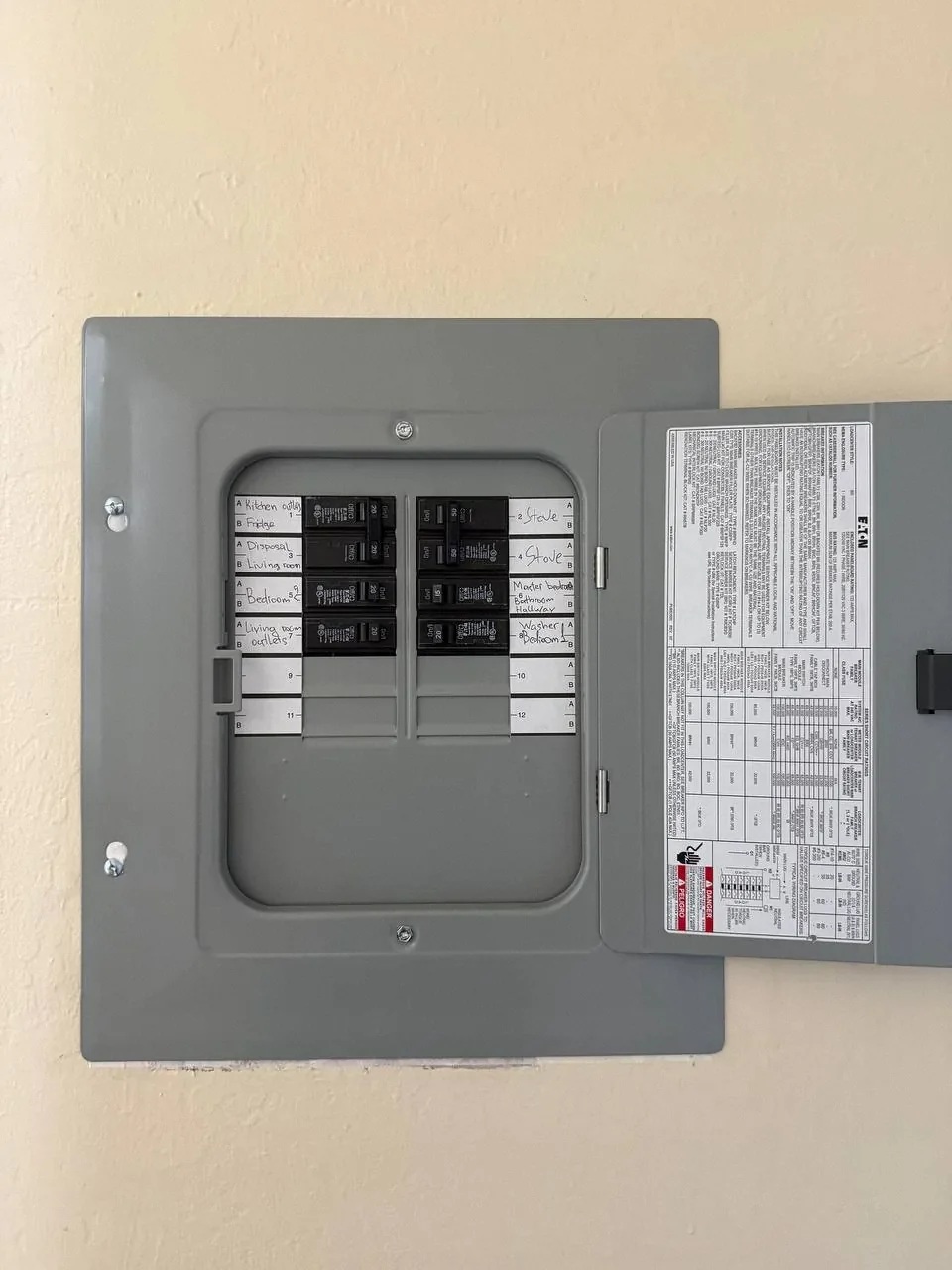
For that decision, review knob-and-tube and old wiring assessment alongside a whole-house rewiring evaluation. Panel condition and service capacity should be evaluated separately rather than added to the project automatically.
Fox Electric provides outlet and switch work throughout the Bay Area and in the city of Santa Cruz. Request an outlet replacement assessment with the locations, the equipment you want to use, and any inspection findings. That allows the recommendation to address what the upgraded outlets actually need to do.