
Alameda County
EV Charger Installation in Fremont, CA
A standalone home charger and a charger installed with solar or battery storage follow different permitting paths in Fremont.
Free estimate →Choose the Fremont Permit Path Before Bundling Energy Projects
A standalone home charger and a charger installed with solar or battery storage follow different permitting paths in Fremont. Fox Electric helps define the complete electrical scope before equipment is ordered or a construction date is promised. The project should identify the charger circuit, existing energy systems, parking location, and any service changes so the application matches what will actually be installed.
Tell us whether solar, a battery, or another charger is already present or planned as part of the same work. Also identify the property type. A charger at a private residence and equipment serving a multifamily parking lot can have different design, approval, and operating requirements even when both use Level 2 charging.
Understand Fremont's Three Published Categories
Fremont directs qualifying standalone residential Level 1 and Level 2 charging installations to an Express Residential Electrical Permit. The city describes express permits as a limited-scope process with automatic issuance. That is a permit category, not a guarantee about available circuit capacity, construction duration, or the result of inspection.
The city directs charging installed with solar or battery storage to a Renewable Energy Permit. Its guidance also assigns commercial and multifamily parking-lot charging, as well as Level 3 charging, to that review path. Establish the complete proposed work rather than splitting a combined system into an inaccurate standalone description.
Show How the Charger Connects to the Existing System
A home with storage can have separate equipment for backed-up loads and other circuits. The design must identify where the charger connects and whether it is intended to operate during an outage. Battery presence alone does not establish that vehicle charging is supported by the backup system.
Provide existing system drawings and manufacturer information when available. If another contractor is installing solar or storage, coordinate the electrical responsibilities and documentation. One proposal should not assume the other includes a panel change, control device, or charger connection without that scope being explicit. This is especially important when multiple systems share service equipment.
Size Charging for the Vehicle and Household
Discuss daily driving, the time available to charge, and the vehicle's accepted charging rate. The selected output should fit those needs and the electrical capacity assessment. A load calculation estimates demand; it is not replaced by counting unused breaker positions or assuming solar production will always offset charging.
If automatic load management is proposed, identify the equipment controlling the charger and the operating limits it enforces. The design should account for its interaction with any battery controls. Owner habits or an app schedule alone do not establish that the service cannot be overloaded. The approved configuration needs to remain understandable after installation.
Evaluate Parking and Construction Together
Confirm the vehicle inlet location, usual parking orientation, and cable storage. A charger placed where wiring is easiest may still be inconvenient or create an unsuitable cable path. Outdoor equipment needs an appropriate location and protection from the conditions and physical impacts expected at that site.
For parking shared by several households or a business, add questions about access, payment, maintenance, and future expansion. Those operating decisions can affect equipment selection and layout. The construction quote should separately identify conduit, trenching, surface restoration, mounting, and any work at the service so the owner can compare like scopes.
Define the Inspection and Commissioning Handoff
Assign responsibility for the permit documents, inspection booking, and any corrections. Automatic issuance of a qualifying express permit does not remove the need to complete the applicable inspection process. Where several contractors are involved, identify the party who ensures the installed arrangement matches the approved project documents.
At handoff, record the circuit, charger model, configured output, and any management or backup limitations. Commissioning should include the operation agreed in the proposal, with the intended vehicle where practical. Keep instructions and account access with the owner. A future change to a battery setting or charger model should be evaluated against that documented configuration.
Local Planning Resources
- Fremont EV charging permit categories
- Fremont building permit types
- Fremont permit records and building FAQs
Planning information updated October 10, 2026. Confirm requirements for the property and proposed work with the issuing authority.
Fremont FAQ
Can my charger use Fremont's express permit if I am adding a battery?
Fremont's published guidance directs charging installed with battery storage or solar to the Renewable Energy Permit process. Describe the combined scope to the city rather than assuming the standalone charging category applies. Existing systems and the particular changes still need review when deciding the appropriate application.
Does an automatically issued permit mean no electrical assessment is needed?
No. The contractor must still establish a suitable installation and comply with the applicable requirements. Capacity, equipment condition, wiring route, and protective devices are project-specific. A permit-processing method does not confirm that a purchased charger can be connected safely to any available panel.
What if the second vehicle arrives next year?
Discuss its likely parking position and charging needs as an option now. Preparation may reduce future construction, but it should be documented separately from capacity already designed and approved. Two charging connectors do not necessarily mean both can operate at maximum output simultaneously on the existing service.
Can a Tesla Wall Connector be included in a Fremont installation?
Yes. Provide the exact model and vehicle information so its connection, mounting, and output can be evaluated with the home's electrical system. A Tesla product does not remove the need for a capacity assessment or the appropriate Fremont permit. The proposal should identify equipment supply, installation, and commissioning responsibilities.
Can my Centerville home add charging while keeping its 100-amp service?
Possibly, depending on the existing loads, equipment condition, and proposed charging demand. Compare a suitable lower-output installation or compatible automatic load management with any necessary service work. A management device does not automatically make every load calculation pass, and the neighborhood or service rating alone cannot establish which design is appropriate.
Does a standalone home charger need a permit in Fremont?
Fremont directs qualifying standalone residential Level 1 and Level 2 installations to its Express Residential Electrical Permit category. Confirm that the actual scope qualifies and include the applicable inspection in the project plan. Automatic permit issuance addresses the application process; it does not certify existing wiring or remove installation responsibilities.
What should be checked for a detached garage in Mission San Jose?
Identify the garage's present supply, the proposed charger position, and the route back to the supplying equipment. Assess whether existing wiring can serve the design rather than assume distance is the only issue. Where a new route crosses paving or landscaping, specify excavation, restoration, and access in the estimate.
Can two Fremont vehicles charge at the same time?
They may be able to, but simultaneous charging must be part of the design. Compare the vehicles' parking times and energy needs with available capacity and compatible controls. Two connectors can share a defined charging allowance or need another arrangement; installing a second connector does not establish twice the available electrical capacity.
Will my home battery keep the EV charging during an outage?
Only if the system was designed to supply that charger during backup operation. Identify whether the circuit is on backed-up equipment, what operating limits apply, and how charging interacts with the battery controls. Existing storage or solar panels alone do not demonstrate that vehicle charging remains available when utility power is interrupted.
Does a Fremont condominium parking lot follow the standalone home-charger process?
Fremont's published guidance assigns multifamily parking-lot charging to its Renewable Energy Permit path. Establish the property's actual category before applying. Also identify who approves the shared electrical route, pays for electricity, and manages equipment. Those operating decisions can affect the charger selection and layout before construction is scheduled.
Discuss your project
Plan Your Charging Installation in Fremont
Tell us which vehicle you drive, where you park, and whether you already have a charger in mind. Include plans for a second EV, solar, or battery storage. We can discuss the assessment needed to define capacity, the wiring route, and your installation scope.
Serving homes and businesses in the San Francisco Bay Area and Santa Cruz.
(650) 550-0719Fox Electric is the marketing name of Fox Electric LLC. CSLB #1145945, C-10.
Related electrical guides
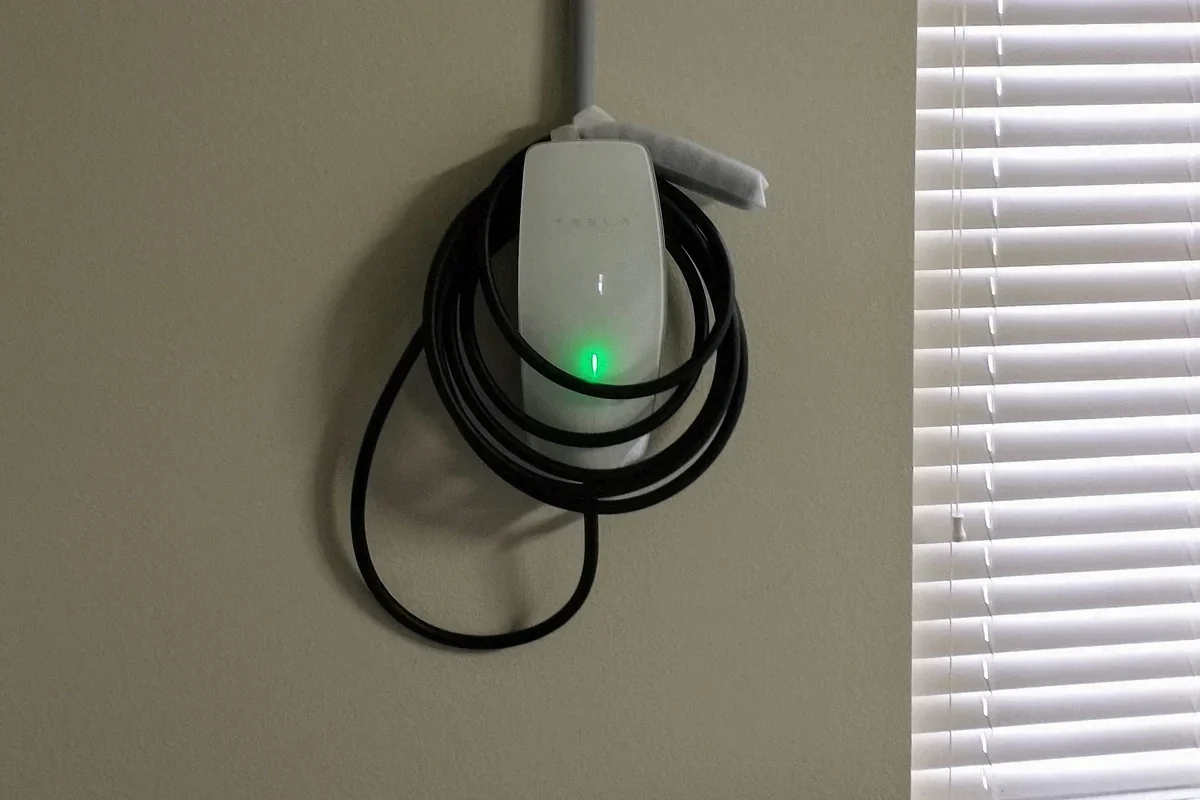
Reference photo: Whoisjohngalt / Wikimedia Commons. CC BY-SA 4.0. Cropped. Source and license in article.
EV Charging
EV Charger Installation Cost in the Bay Area: 2026 Scope Guide
Read the guide
EV Charging
Can a 100-Amp Panel Handle an EV Charger?
Read the guide
EV Charging