
San Mateo County
EV Charger Installation in San Carlos, CA
An electric vehicle (EV) charger supplied from a garage panel needs assessment of both that panel and the property's incoming electrical supply.
Free estimate →Check the Garage Supply Separately From the Main Service
An electric vehicle (EV) charger supplied from a garage panel needs assessment of both that panel and the property's incoming electrical supply. One rating does not establish the capacity of the other. We review the equipment, charging needs, parking position, and wiring route so the proposal addresses the whole installation rather than the nearest empty breaker space.
The San Carlos checklist requests the main-service and supplying-panel ratings separately. A charger connected through a garage panel needs both assessed, along with the proposed charging limits and any compatible control equipment.
Bring information from both supply points
A subpanel is a secondary panel supplied from another panel. Its available circuit space and supply rating need to be considered alongside the main service, the incoming electrical supply arrangement. Do not open equipment to collect labels; share safely available records and photographs, then allow the electrician to inspect what is needed.
Use the San Carlos checklist as a planning aid
The city's EV charging checklist asks for charger nameplate information and mounting details, as well as main-service and supplying-panel ratings. A nameplate is the manufacturer label stating equipment ratings. Those separate fields are a useful reminder that a charger quote needs more than its advertised output or a photograph of a garage breaker.
Compare charging and control options accurately
A load calculation assesses the electrical demand the installation must support. Load management means controlling demand within the installation's limits. Ask whether a proposed control adjusts charging, interrupts it, or shares capacity, and what equipment supports that behavior. Manufacturer options are specific; Tesla's dynamic control should not be generalized to any brand or multiple-charger arrangement.
Choose the mounting location around real parking
Show where each vehicle normally parks and where the charging port sits. A convenient electrical route can still produce an awkward cable position. Discuss clearance, cable reach, exposure, and any shared access. Identify wall openings, exterior routing, excavation, and restoration when relevant rather than treating the charger enclosure as the entire construction project.
Retain operating limits at handoff
Assign permit documents, inspection, setup, and any utility arrangements in the scope. Confirm which steps are complete before relying on normal use. Keep the installed equipment information and charging limits with the project record. A later change to settings or an additional charger should be reviewed against the supply design instead of assuming capacity remains available.
Local Planning Resources
Reviewed October 23, 2026. City guidance concerns the application process, and manufacturer information concerns only the equipment and configurations it names. Homeowner discussion informed the capacity questions, not a design approval.
Planning information updated October 23, 2026. Confirm requirements for the property and proposed work with the issuing authority.
San Carlos FAQ
Is a 200-amp service mandatory for a home charger?
Not in every installation. The suitable design depends on existing demand, equipment condition, charging requirements, and available compliant options. A load assessment should support the decision. The amperage printed on a panel alone cannot determine whether a particular charger and household arrangement will work.
Can I simply promise to charge only at night?
A personal schedule can help manage convenience or energy use, but it is not automatically an accepted electrical capacity control. Other loads can operate at night too. Where capacity management is part of the design, it must use an appropriate documented arrangement rather than depend only on occupant habits.
Should the quote include a future second EV?
Include it as a clearly defined option if it is a realistic plan. Identify the expected parking arrangement and whether both vehicles must charge simultaneously. The proposal can separate work useful now from optional preparation, without implying that every future configuration has already been designed or permitted.
Can the charger and a necessary panel upgrade be planned together?
Yes, the design can coordinate the charger circuit with the panel or service work it actually needs. Request separate descriptions of each scope and any PG&E dependencies. Combining the work does not establish a required service rating, a single approval, or a guaranteed outage window; those details follow the assessment and project requirements.
How do you plan a charger route to a detached garage at the property?
Start with the supplying equipment and the garage's existing electrical arrangement, then compare accessible routes to the intended parking position. A hillside or detached location can introduce exterior protective tubing for wiring, excavation, or finish work. The proposal should show the chosen path and its construction scope before equipment placement is treated as final.
Is a Tesla Wall Connector automatically better than a plug-in setup?
The choice depends on the exact equipment, vehicle, charging target, and installation conditions. A hardwired unit connects directly to its circuit; a plug-in unit needs a suitable receptacle and circuit. Compare compatibility and practical use first. Neither the brand nor the connection method guarantees faster charging on the home's available supply.
Which San Carlos approval covers a new charger circuit?
Confirm the electrical permit scope with the San Carlos Building Division and follow its current digital application instructions. Include any associated service alterations instead of assuming the charger approval covers them. The written proposal should assign submission, inspection scheduling, and corrections so an application receipt is not mistaken for completion of the permit process.
How is load management different from choosing a smaller charger setting?
A fixed lower setting limits the charger's designed output. Automatic load management controls charging in response to defined electrical conditions. Either approach must fit the equipment and approved design. Compare the expected charging availability, installed controls, and operating limits, including what the system does if its communication or monitoring function is interrupted.
Should a planned heat pump or induction range change the charger design?
Include confirmed appliance specifications and realistic installation plans in the capacity review. That lets the proposal compare a charger-only project with coordinated preparation for additional loads. Keep undecided appliances as separate options so the estimate does not imply that every future combination has already been evaluated, installed, or approved.
Can I raise the charging limit later in the app?
Only after confirming that the circuit, supplying equipment, and approved design support the change. The installed limit may reflect capacity management as well as the charger's own rating. Keep the original configuration with the project records, and request a review before a new vehicle or changed schedule leads to a higher setting.
Discuss your project
Plan Your Charging Installation in San Carlos
Tell us which vehicle you drive, where you park, and whether you already have a charger in mind. Include plans for a second EV, solar, or battery storage. We can discuss the assessment needed to define capacity, the wiring route, and your installation scope.
Serving homes and businesses in the San Francisco Bay Area and Santa Cruz.
(650) 550-0719Fox Electric is the marketing name of Fox Electric LLC. CSLB #1145945, C-10.
Related electrical guides
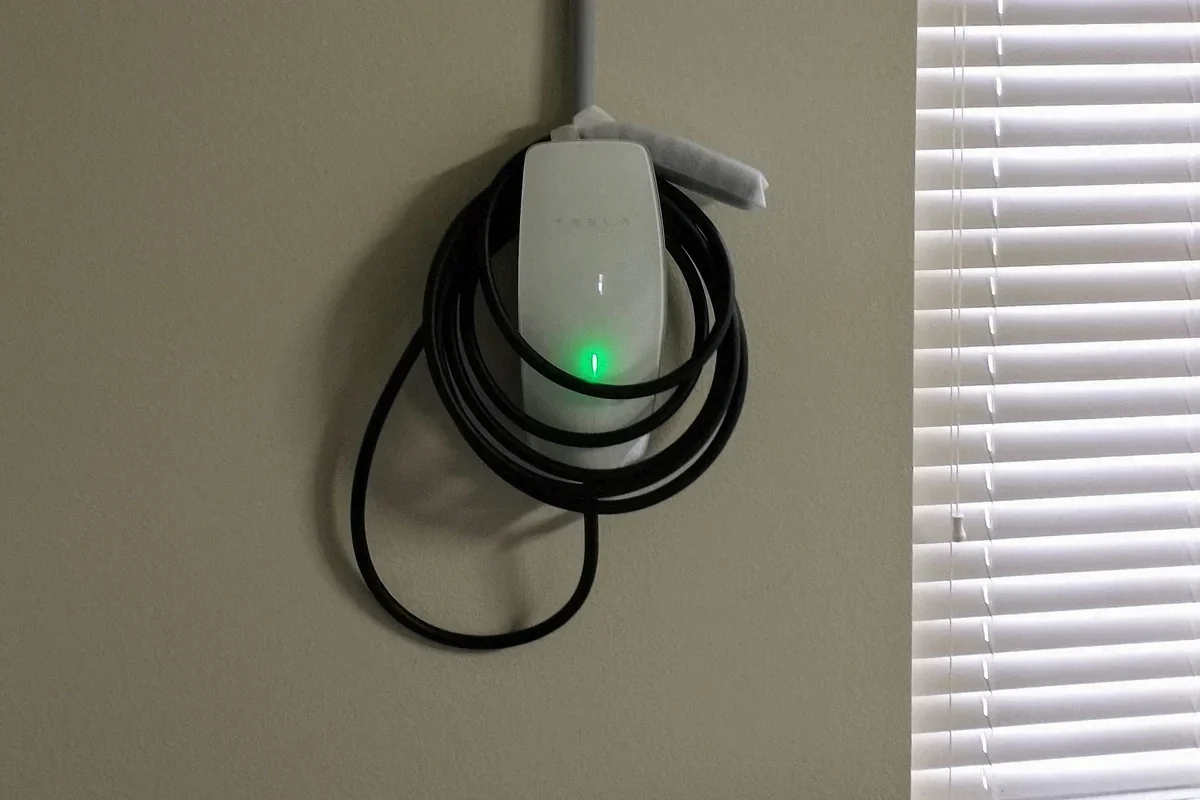
Reference photo: Whoisjohngalt / Wikimedia Commons. CC BY-SA 4.0. Cropped. Source and license in article.
EV Charging
EV Charger Installation Cost in the Bay Area: 2026 Scope Guide
Read the guide
EV Charging
Can a 100-Amp Panel Handle an EV Charger?
Read the guide
EV Charging