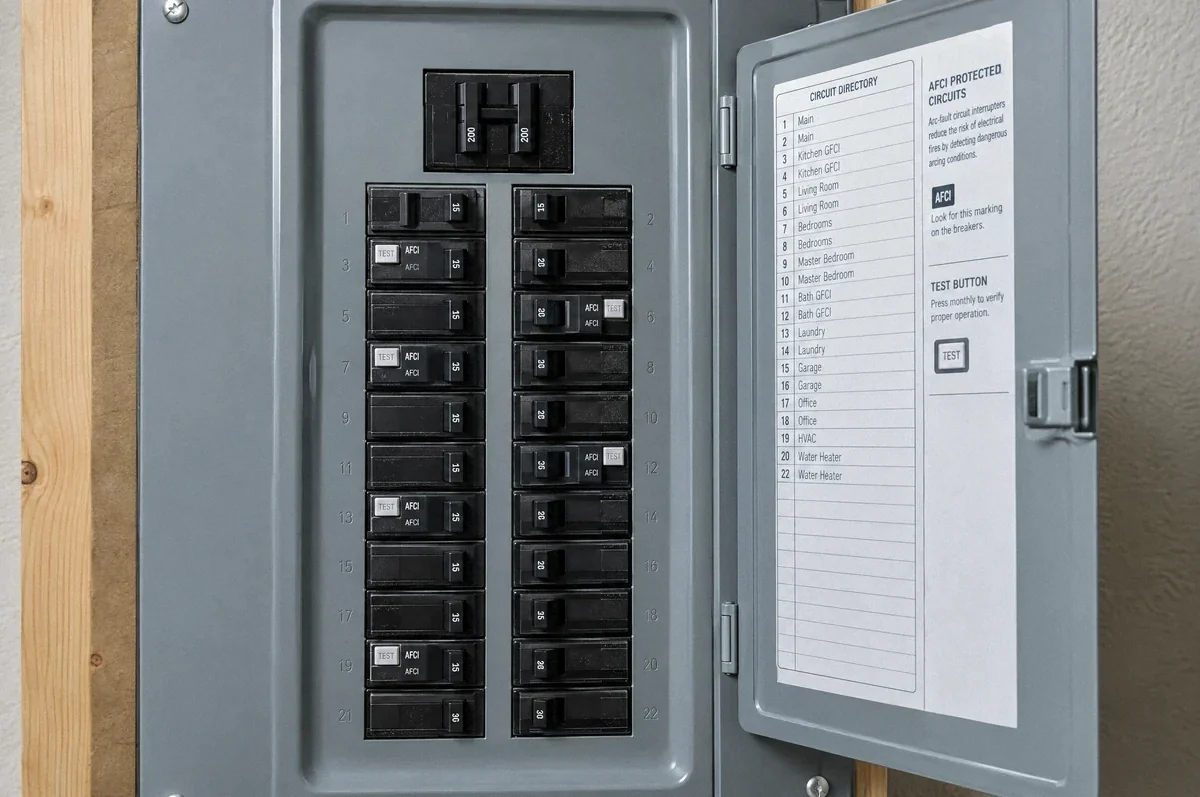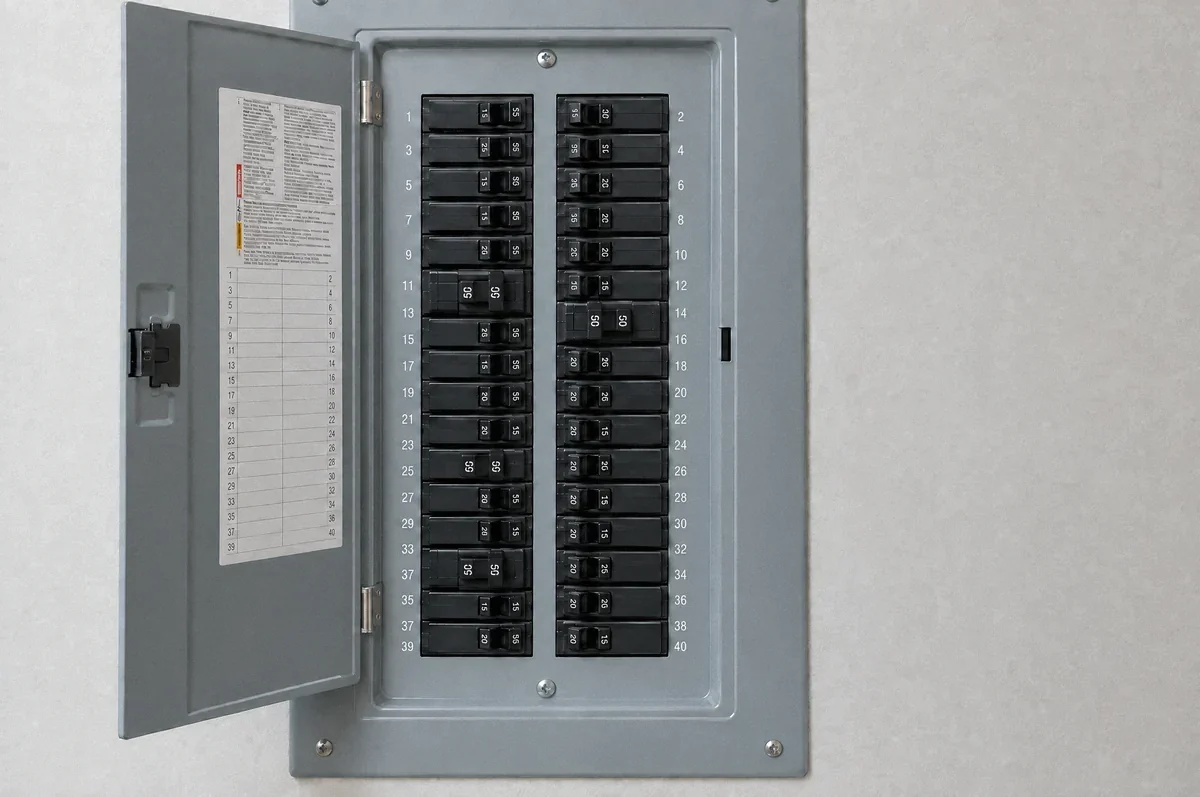

A buzzing electrical panel needs assessment when the sound is new, louder than before, persistent, or accompanied by other electrical symptoms. Sound alone cannot distinguish normal equipment vibration from a damaged connection or defective device. Do not remove the panel cover or press on breakers to locate the noise.
If there is smoke, fire, active arcing, or evidence of a developing fire, leave and call 911. Do not approach a smoking or crackling panel to turn it off. An electrical service contact form is not an emergency response channel.
Which accompanying symptoms matter?
| What you already observe | Appropriate response |
|---|---|
| Smoke, active arcing, flames, or a suspected developing fire | Leave the area and call 911 |
| Crackling, popping, burning odor, or visible discoloration | Stay clear and seek urgent electrical help; do not touch or open the equipment |
| Noise with lights becoming unusually bright or dim | Report the voltage symptoms to the utility and electrician |
| A new hum without visible damage or other warning signs | Arrange assessment and describe when the sound occurs; avoid testing it by adding loads |
| An existing equipment sound whose source is uncertain | Have the source identified before assuming it is harmless |
The CPSC Guide to Home Wiring Hazards identifies unusual sounds, odor, and heating as electrical warning signs. You do not need to establish which component is responsible before asking for help.
Why a panel can make noise
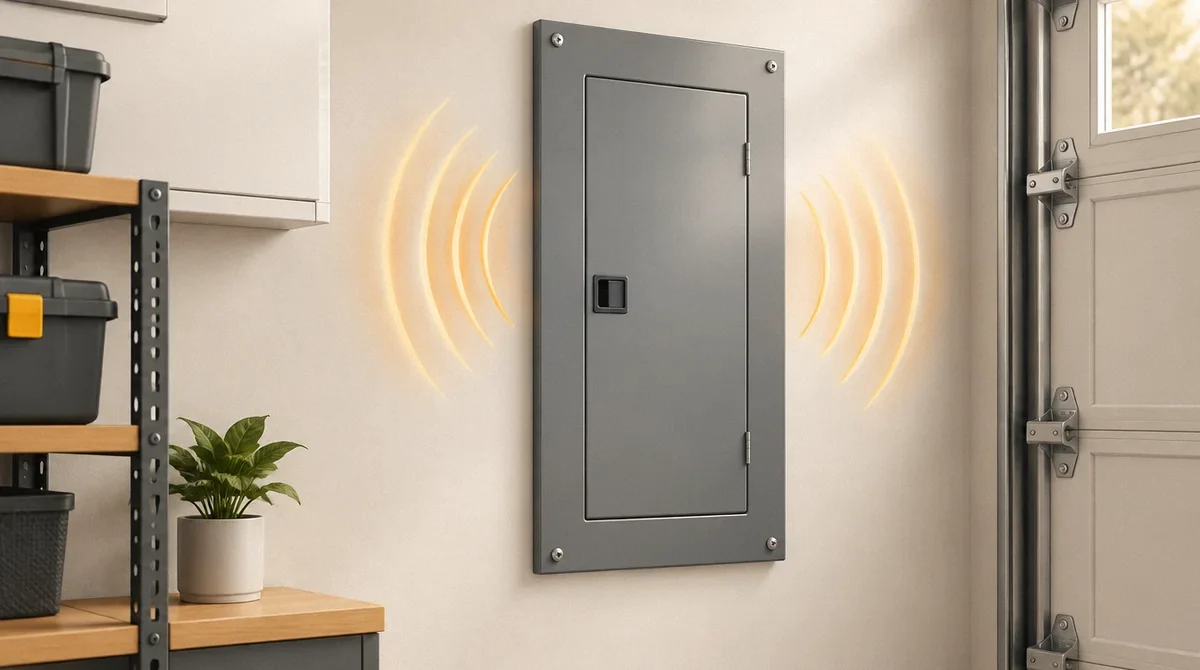
Electrical equipment can vibrate while operating. A sound can also come from a breaker, a nearby transformer, another connected device, or a failing connection. The panel enclosure can transmit sound, so the point where it is loudest does not necessarily identify the source.
An electrician needs the panel and breaker models, operating conditions, and inspection or measurement results. A recording taken from an already safe location may preserve an intermittent sound. Do not lean close to the panel or stay near suspect equipment to obtain a recording.
A breaker that stays on does not prove safety
A standard breaker primarily responds to excessive current. A poor connection can generate localized heat without drawing enough current to trip it. Conversely, a trip can have several causes and does not establish that the breaker itself failed.
Do not tighten terminals, reseat breakers, remove a cover, or spray any product into the panel. Incoming parts may remain energized even when the main breaker is off. The recurring-breaker-trip guide explains why the protective device and the circuit need to be evaluated together.
Record the circumstances without recreating them
Useful details include when the sound began, whether it is continuous, equipment that was already operating, and any recent electrical work. Report flickering, partial power, odors, or repeated trips in the same call.
Do not start an air conditioner, dryer, or EV charger simply to make the panel buzz again. If the noise coincides with charging, include the information in the EV charger troubleshooting guide. If lights brighten and dim across different rooms, use the voltage-warning guide and contact the serving utility promptly.
Does buzzing mean the panel must be replaced?
Not automatically. The repair depends on the source, equipment condition, compatible replacement parts, and extent of any damage. A localized repair and a complete panel replacement are different scopes. A service upgrade, which changes the electrical supply capacity, is another separate decision.
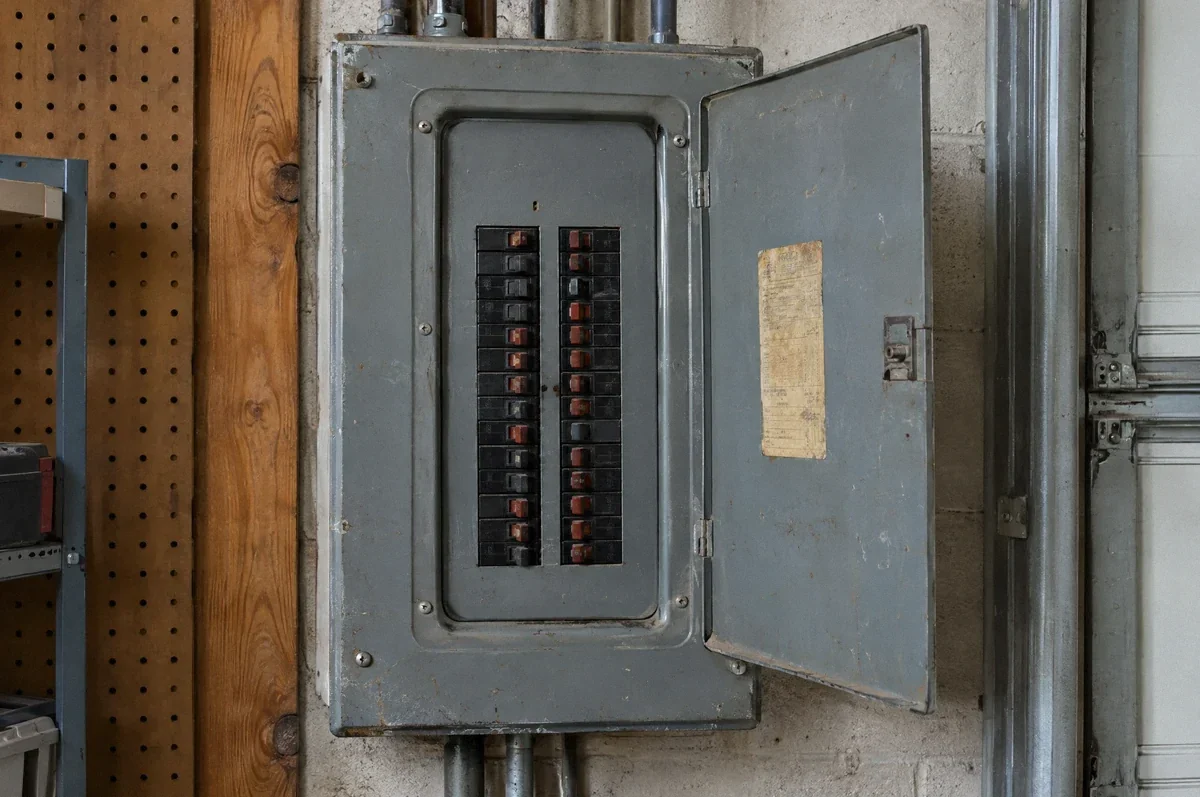
Ask what finding supports the proposed repair. For older equipment, the panel’s identity and condition may affect the options. Our legacy panel assessment guide explains why labels and equipment history matter without treating every sound as proof of a particular brand failure.
What to expect from diagnosis
The electrician should identify the sound source, establish safe working conditions, inspect the relevant equipment, and explain any measured or visible fault. The report should distinguish confirmed damage from suspected intermittent behavior and say whether further monitoring or utility coordination is needed.
For noise without an active fire, contact our electrical troubleshooting service and describe the sound and accompanying symptoms. Use our emergency service information when the condition needs urgent attention. Do not postpone an emergency call while waiting for an online response.