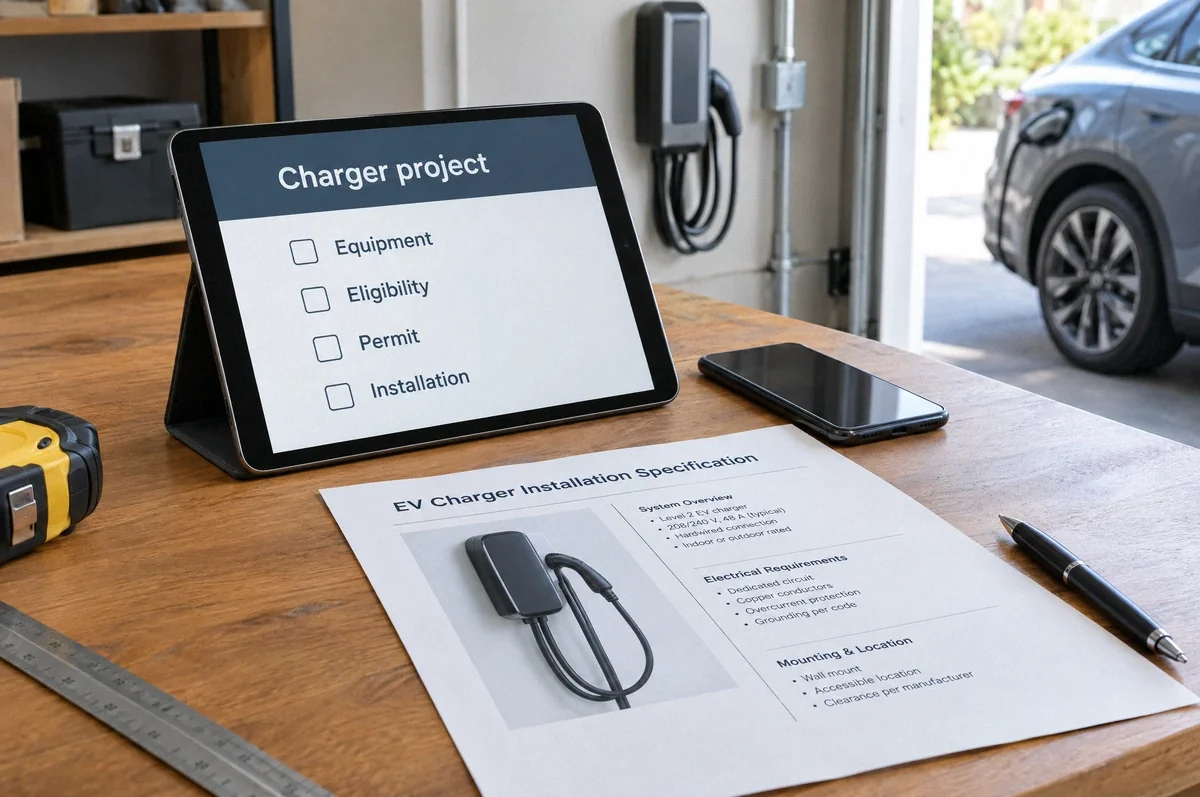
Check the incentive rules before buying a home charger or starting installation. Some programs reimburse eligible purchases after installation; others require preapproval and a participating contractor. A building permit confirms a construction approval path, not that a rebate administrator will pay for the project.
This guide was checked on September 13, 2026. One major change already affects new projects: the federal Alternative Fuel Vehicle Refueling Property Credit is not available for equipment placed in service after June 30, 2026. Older articles describing it as a continuing benefit should not be used to budget a new installation. The IRS credit page states the cutoff.
Identify three separate authorities
Your permit authority is usually the city building department or the county department for an unincorporated address. It reviews the proposed construction and required inspections. Your utility determines its own service, metering, and supply requirements. An incentive administrator separately decides whether an application satisfies its program rules.
Those organizations may overlap in a municipal-utility city, but their approvals remain distinct. A permit does not reserve incentive funding. A rebate preapproval does not authorize construction. A contractor’s estimate is not utility approval for a larger service.
Start with the actual service address and electric bill. PG&E serves much of the region, including many customers whose electricity generation comes from a community choice provider. Palo Alto, Santa Clara, Alameda, and other municipal electric territories have their own programs and processes. Receiving PG&E gas service alone does not establish eligibility for a PG&E electric-customer program.
For the physical installation decisions, use the home EV charger guide. Keep those choices connected to program requirements without allowing an incentive to determine an unsuitable installation.
When a charging project needs a permit
Installing a new branch circuit, adding a charging receptacle, or installing hardwired charging equipment generally requires an electrical permit and inspection. Plugging compatible portable equipment into an existing suitable circuit is a different scope. When no wiring is changing, confirm any uncertain permit requirement with the jurisdiction rather than assuming every charging session is a construction project.
San Mateo County provides an EV charging station permit page for properties under its authority. Incorporated cities use their own procedures. A county mailing address or a nearby city name is not enough to identify the correct department.
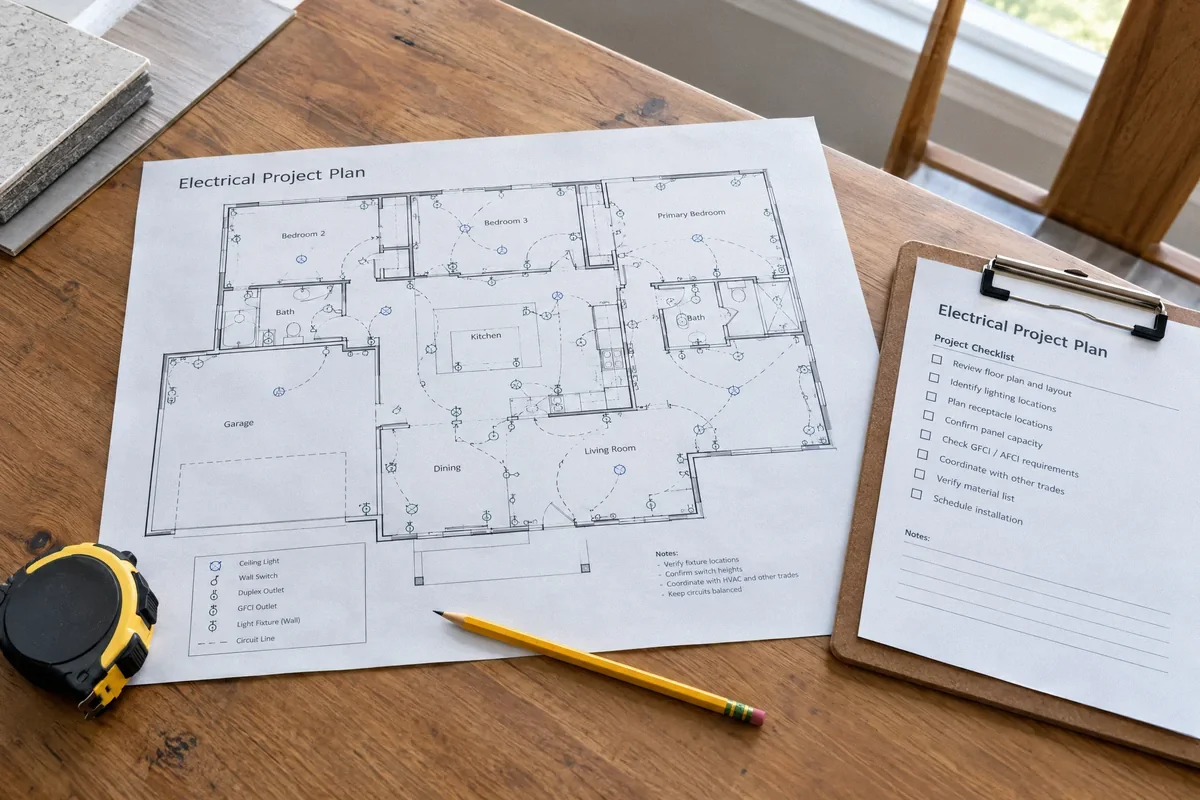
The permit package may need equipment specifications, proposed charging output, a demand assessment, circuit information, and a location or route drawing. A service change, detached structure, trench, or common-area installation can expand the review. The contractor should identify what is required for the actual project.
The electrical permit guide explains responsibilities and closeout. Retain the final inspection result as well as the permit number; an issued permit alone does not show that the work was completed and accepted.
What PG&E’s current residential program says
PG&E’s Residential EV Charging program currently lists a Standard option and an income-qualified Rebate Plus option. Eligibility includes an active residential electric account and a qualifying EV or plug-in hybrid, with approved equipment requirements. The page includes customers served by a community choice aggregator.
The Standard option follows a purchase-and-install process, with an application deadline tied to equipment purchase. Rebate Plus uses preapproval and a Trade Ally Network contractor process. These are different application paths. Read the current terms before deciding who buys the equipment or when work starts.
Funding is first-come, first-served, and the eligible-equipment list can change. This article does not establish a household’s eligibility, reserve funds, or confirm that Fox Electric participates in the required contractor network. Obtain the applicable program confirmation before relying on reimbursement.
Record the exact product, program option, qualifying purchase date, application deadline, and written approval conditions. A manufacturer’s brand appearing somewhere on the program website does not prove every product or installation from that manufacturer is eligible.
Municipal and regional offers need their own check
Start with the serving utility and the program administrator’s current page. Determine whether the offer is for a single-family house, a shared residential property, a workplace, public charging, or a vehicle purchase. These categories are often confused in search results.
For example, Palo Alto’s published EV charging infrastructure incentive terms describe a multifamily program with approval before purchase or installation. Those terms are not evidence of an incentive for every single-family garage. Confirm that the linked terms are still controlling and that the administrator is accepting your type of application.
Ask whether other incentives can be combined, which costs qualify, and whether equipment required by a building project is excluded. Also check any contractor, inspection, reporting, or ownership-period requirements. Keep copies of the terms used for the application because a general promotional page may omit decisive details.
For a board or property manager, our commercial and multifamily charging guide covers the broader construction and operating plan.
Do not count an expired federal credit in a new quote
The IRS cutoff is based on when eligible refueling property was placed in service, not merely when someone requested a quote. An earlier purchase date by itself should not be treated as qualifying completion. For work completed within the eligible period, the remaining requirements still need to be evaluated.
Those older claims can involve property location, eligible costs, documentation, and the taxpayer’s circumstances. Keep historical tax questions separate from a new installation budget, and have a tax professional review a claim for previously completed work. No amount is deducted from a current Fox estimate based solely on this article.
A rebate also differs from an electricity rate. A time-of-use plan changes what you pay for energy during specified periods. It does not reimburse the circuit installation. Compare the effect on the whole household bill rather than assuming a cheaper overnight charging period guarantees a lower total bill.
Build the installation scope before applying
An older 100-amp service does not automatically need a 200-amp upgrade for EV charging. Suitable lower-output charging or approved load management may fit. A subpanel can add circuit spaces but does not increase service capacity. Our EV capacity guide explains these options.
If an incentive can fund one type of equipment or upgrade, still establish why that work is appropriate. The application should match the final permitted design. When equipment, output, route, or service scope changes, check whether the permit or program approval must also be revised.
Agree on who submits applications, responds to correction requests, schedules inspections, and provides closeout documents. The homeowner may need to supply account and income information directly through the administrator’s authorized portal; those records do not belong in a public project file.
Keep a complete closeout record
Retain the approved equipment information, invoices, proof of purchase, serial numbers, permit and inspection records, application confirmation, and any written preapproval. Check that names, addresses, dates, and model numbers agree across documents. A simple mismatch can require follow-up even when the installation itself is correct.
Fox Electric can prepare a defined scope for home EV charger installation and identify the permit steps for the property. Request a project assessment with your address, proposed equipment, and any program requirements you have received.