
If half your house loses power while the breakers appear on, the problem may involve several circuits or the electrical supply to the building. Contact your electricity provider about partial power and arrange electrical diagnosis. Do not keep resetting breakers or turn on a large appliance to try to restore the missing power.
If you see smoke, fire, active arcing, or signs of a developing fire, leave and call 911. Stay away from damaged service equipment and fallen wires. An online service request is not an emergency response channel.
Start with the extent of the interruption
“Half the house” describes what you see, not how the circuits are arranged. Rooms on opposite sides of the building can share a circuit, and adjacent outlets can have different supplies.
| What stopped working | What the pattern can suggest | Useful next step |
|---|---|---|
| One outlet or one group of outlets | A circuit connection, protective device, or switched outlet | Note the affected locations; use the dead-outlet guide for safe external checks |
| Several unrelated rooms or circuits | A supply connection, main equipment, or utility problem | Report partial power to the serving utility and an electrician |
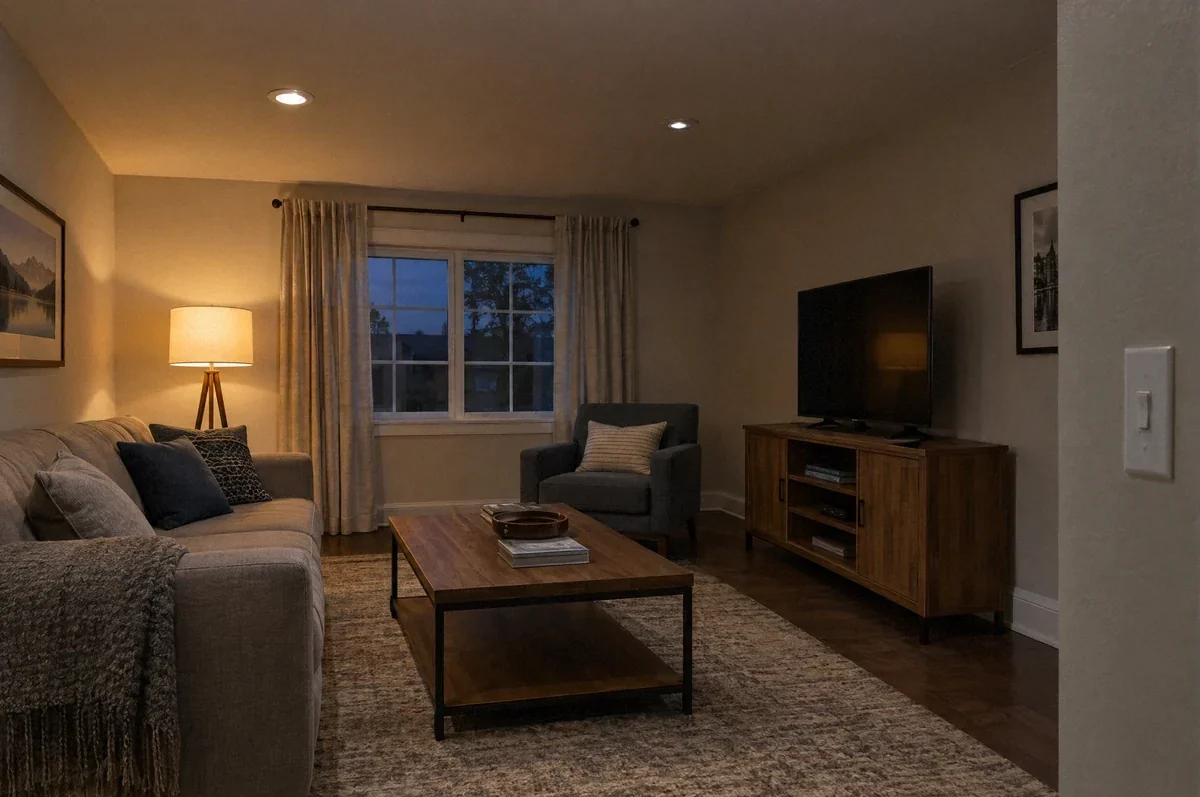
| Some lights become unusually bright while others dim | A potentially serious voltage or neutral problem | Stop using affected equipment and seek urgent help |
| The entire home and nearby homes lose power | A wider outage is possible | Check the utility’s outage information and report the interruption |
Neighbors having power does not rule out a utility-side fault affecting only your connection. An outage map without a report also cannot establish that the fault is inside your home.
Why the breakers may still look on
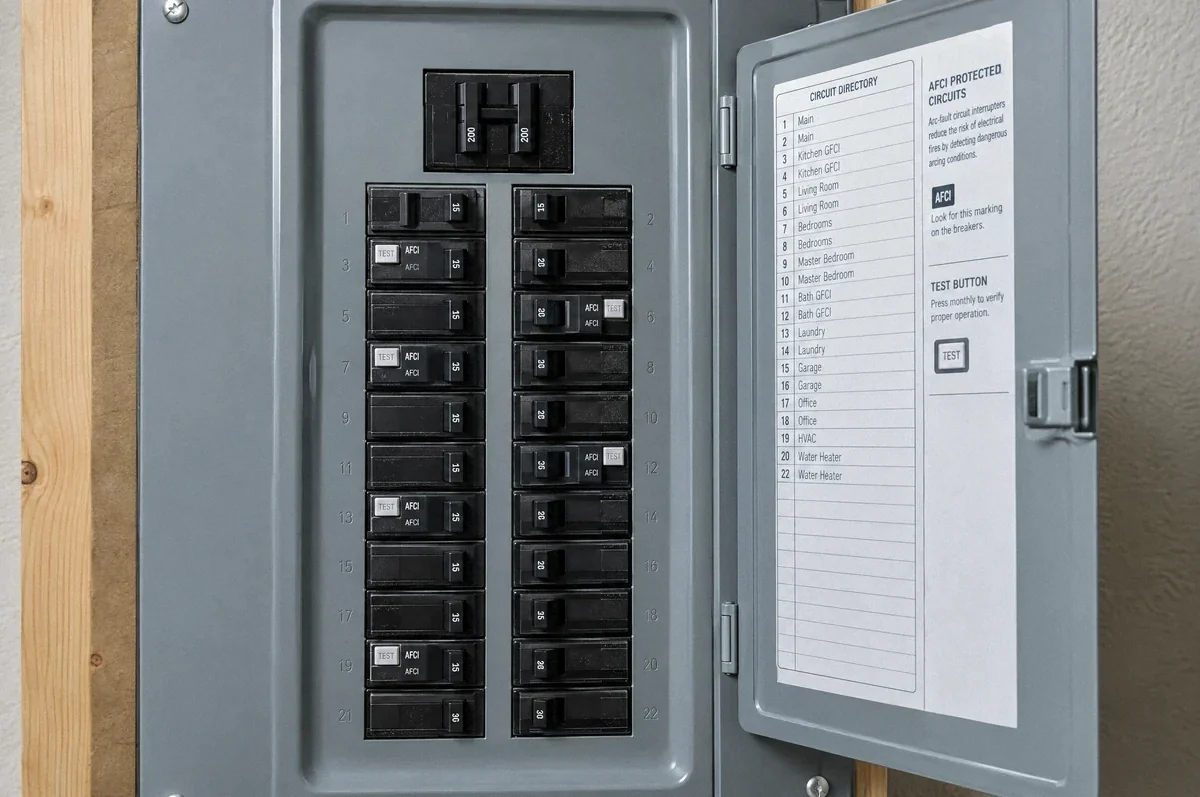
A breaker responds to particular conditions; it is not a monitor for every loss of supply. An interrupted connection can stop current without causing an overload. A handle can also sit in an intermediate tripped position that is difficult to recognize.
A typical house has a 120/240-volt supply with two energized conductors. Losing one supply conductor can affect a group of 120-volt circuits and 240-volt appliances. This is a possibility for an electrician and utility to test, not a diagnosis you can make from which rooms went dark.
The neutral is the normal return conductor for 120-volt loads. A damaged shared neutral can produce abnormal voltages, including lights brightening and dimming in different areas. Our flickering-lights guide explains that warning pattern. Do not recreate it by operating appliances.
Contact the correct electricity provider
PG&E accepts voltage complaints involving partial power, flickering lights, and high or low voltage. Its investigation determines whether the service voltage meets its requirements and whether further customer-side assessment is needed.
Use the electric utility shown for your address. Palo Alto and Santa Clara have municipal utilities; the company supplying your electricity may differ from the organization supplying your gas. Describe partial power explicitly, including unusual brightening, recent storms, visible service damage, or a solar or battery system.
For local starting points, see PG&E voltage reporting, City of Palo Alto Utilities, or Silicon Valley Power. These are provider resources, not evidence that the cause is on the utility side.
Do not open a meter enclosure, touch service conductors, or attempt to tighten a connection. Even turning off the main breaker does not make all incoming equipment safe to touch.
What to record without testing live wiring
Write down when the interruption began, which lights or appliances were already operating, and whether the problem is continuous or intermittent. Include any recent electrical work and utility reference number. Photos of intact external labels may help if you can obtain them safely; do not remove covers for a photo.
Avoid repeatedly starting a dryer, range, air conditioner, or charger to see what happens. Unusual appliance behavior during partial power is information to report, not an experiment to repeat. For interruptions that resolve before help arrives, keep the short-outage observation log.
What should the diagnosis establish?
The investigation should separate a utility supply problem from a fault in customer-owned equipment, then identify the affected connection or circuit. Ask what was measured, where the problem was found, what was repaired, and whether any part remains unconfirmed.
A larger panel does not repair a failed connection by itself. Capacity work needs a separate justification. If the problem is within the property, request electrical troubleshooting and include the utility’s findings. For urgent electrical symptoms without an active fire, call through our emergency electrical service page and explain the condition before arranging a visit.