An outlet can stop working while its breaker appears to remain on. The cause may be a tripped GFCI elsewhere, a switched receptacle, a failed device, an interrupted connection, or a breaker that has tripped without an obvious handle movement. A broken neutral can also leave an appliance without usable power while energized wiring remains behind the outlet.
Do not remove the faceplate or receptacle to investigate. If you notice heat, scorch marks, a burning smell, crackling, a shock, or unusual brightening and dimming elsewhere, stop testing and arrange urgent help. Smoke, fire, active arcing, or signs of a developing fire call for leaving the area and calling 911.
First establish what stopped working
The distinction between a failed lamp and a failed outlet is useful, but checking it should not involve a damaged appliance. If the device and cord appear intact and there are no warning signs, confirm whether its normal switch, power supply, or controls explain the loss of operation. A known-working small lamp can help check a dry, undamaged receptacle.
Do not use a space heater, hair dryer, or other large load as a tester. Do not test a hot, loose, wet, or scorched receptacle by plugging anything into it. A lamp that stays off indicates a lack of usable power at the plug; it does not establish that all conductors in the box are de-energized.
Record whether the problem affects the whole receptacle, only its upper or lower half, nearby outlets, room lighting, or several rooms. A simple sketch is sufficient. Room boundaries do not reliably follow circuit boundaries.
A switch may control one half of the outlet
Some living rooms and bedrooms use a wall switch to control a plug-in lamp. One half of a duplex receptacle may remain powered while the other responds to the switch. A switch changed accidentally can therefore look like a failed outlet.
If there are no signs of damage, use the room’s normal wall-switch controls and observe whether the known lamp responds. Consider recent furniture moves, replaced lamps, smart plugs, or changed schedules that may explain why the arrangement became noticeable.
Do not remove the receptacle to check its connecting tabs or change a switched outlet into an always-on outlet. If the behavior changed after electrical work, report that history. There may be more than one supply arrangement to understand before modifying it.
Find the associated GFCI
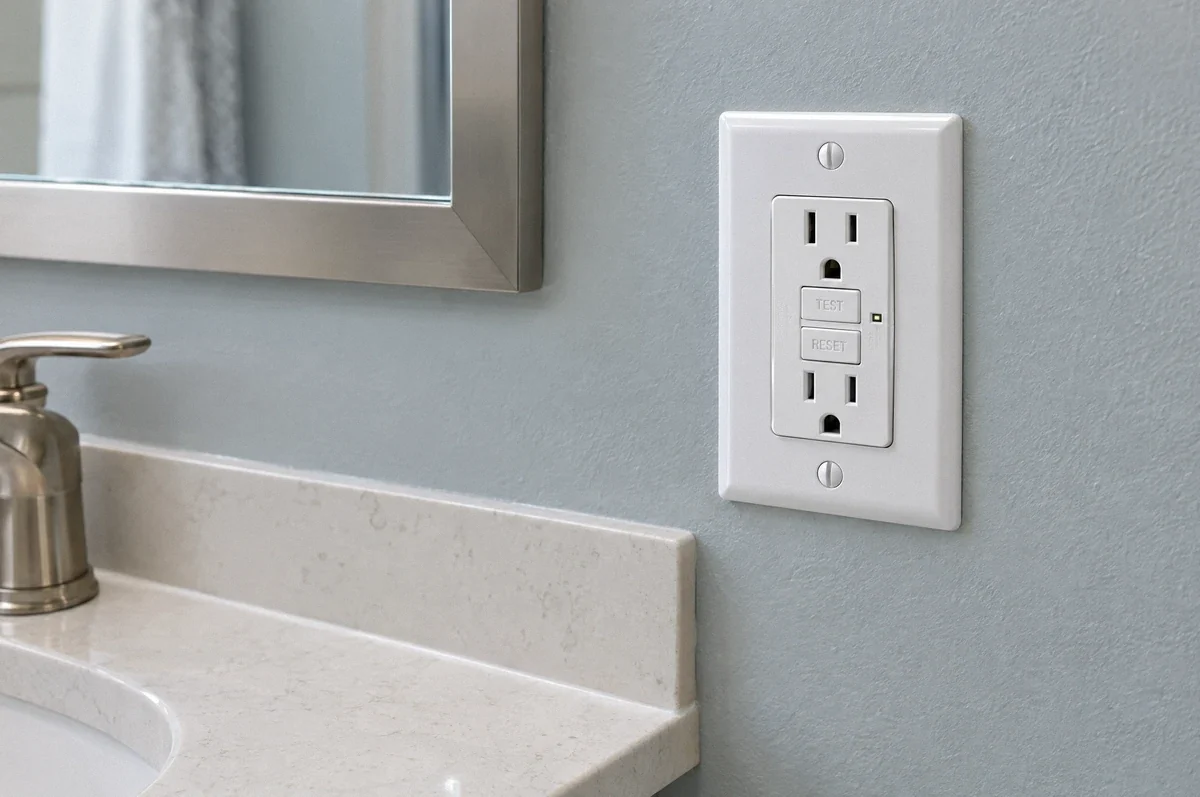
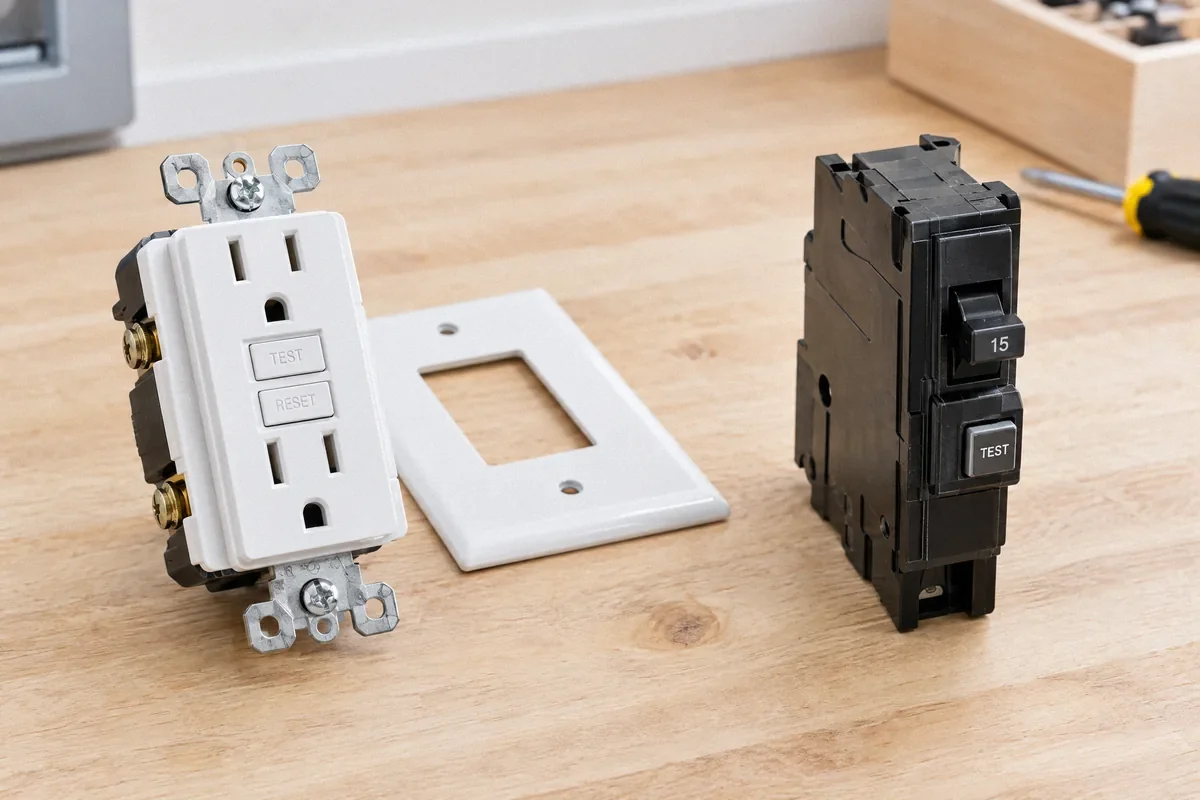
A ground-fault circuit interrupter, or GFCI, can interrupt power at its own receptacle and at other outlets connected to its protected output. Those other outlets may have no TEST or RESET buttons. The protected group depends on the connections, not on how close the outlets are to each other.
Leviton’s GFCI installation instructions show how to verify downstream protection. That verification is part of installation; homeowners do not need to open wiring to use an established circuit directory or visible protection labels.
Look for an accessible GFCI associated with the affected location, including nearby kitchen, bathroom, garage, and outdoor locations. Do not assume a bathroom-to-bedroom connection is a desirable current circuit design simply because such arrangements can exist in altered older homes.
If the device is dry, intact, and has no damage or warning signs, switch off and unplug accessible affected loads before considering one reset under its instructions. If it trips again or refuses to reset, stop. A wet exterior device is not something to reset as part of an indoor outlet search.
The GFCI troubleshooting article explains incoming power, repeated trips, and weather-related symptoms in more detail.
Why an apparently on breaker is not conclusive
Some breakers move to an intermediate position when they trip, and that movement may be subtle. The circuit label may also be wrong, or the affected outlet may be supplied from another panel. A handle that looks on does not prove the circuit is receiving a sound supply.
Only approach a dry, intact panel with a safe route and no heat, odor, crackling, damage, or exposed parts. You may read labels behind its hinged outer door while the screwed protective cover remains installed. Do not remove that cover, reach into gaps, or open a compartment exposing wiring.
If you can identify a tripped branch breaker, the loads have been removed, and there is an apparent overload with no other warning sign, follow the manufacturer’s normal reset instructions once. Stop if it trips again. Do not cycle every breaker in the building or reset an unknown shared-building disconnect.
Where an AFCI or dual-function breaker operated, record its visible designation. A trip can involve more than excessive current; see AFCI breaker diagnosis.
A connection can fail without tripping the breaker
A standard breaker primarily responds to excessive current. If a connection opens and interrupts current instead, the breaker may remain on. A poor connection can also develop localized heat without producing enough total current to trip it.
Possible locations include the dead receptacle, an upstream receptacle that still works, a splice, a switch, or the panel. The first failed outlet in the room is not necessarily where the defect is located. Circuits can branch and cross between rooms.
Spring push-in terminals are one possible connection type to inspect, but the symptom does not prove a backstab connection failed. Screw terminals, splices, damaged conductors, and internal receptacle parts can also be involved. Do not confuse all rear-entry terminals with spring push-in connections; some use a separate screw-operated clamp.
Loose plug fit and receptacle damage are reasons for outlet repair, but replacing the visible outlet without tracing its supply may leave the circuit dead or the fault unresolved.
The open-neutral hazard
The neutral is the normal return conductor on a typical 120-volt circuit. If it opens, a lamp may not operate even though the hot conductor remains energized. This is why “the outlet is dead” must never be treated as proof that it is safe to touch its wiring.
On a shared-neutral circuit or at the service, a neutral fault can also create abnormal voltages across different loads. If some lights become unusually bright while others dim, or several circuits behave unpredictably, stop the outlet checks and contact an electrician and the electricity provider promptly. Our electrical warning signs guide explains the urgency of that pattern.
PG&E accepts reports of partial power and voltage problems. Use the provider serving the property; municipal-utility customers should contact their own utility. Do not touch the meter or service equipment to locate a fault.
What useful professional diagnosis includes
An electrician should identify the circuit, establish safe working conditions, and distinguish loss of supply from device or connection failure. Ask the report to explain where the fault was found, what was repaired, and whether further circuit work is recommended.
A repair may be localized. It does not automatically require a new dedicated circuit or panel upgrade. Those choices become relevant when the investigation establishes a capacity, equipment, or circuit-design need.
The CPSC Home Electrical Safety Checklist is a useful reference for broader visible warning signs. Keep homeowner checks external; finding and repairing concealed defects requires appropriate isolation, testing, and electrical expertise.
Fox Electric can trace a persistent dead-outlet problem through its electrical troubleshooting service. Request a diagnosis with the affected locations, whether one or both halves are dead, any associated GFCI, and what happened before power was lost. Those details help direct the visit without asking you to expose wiring.