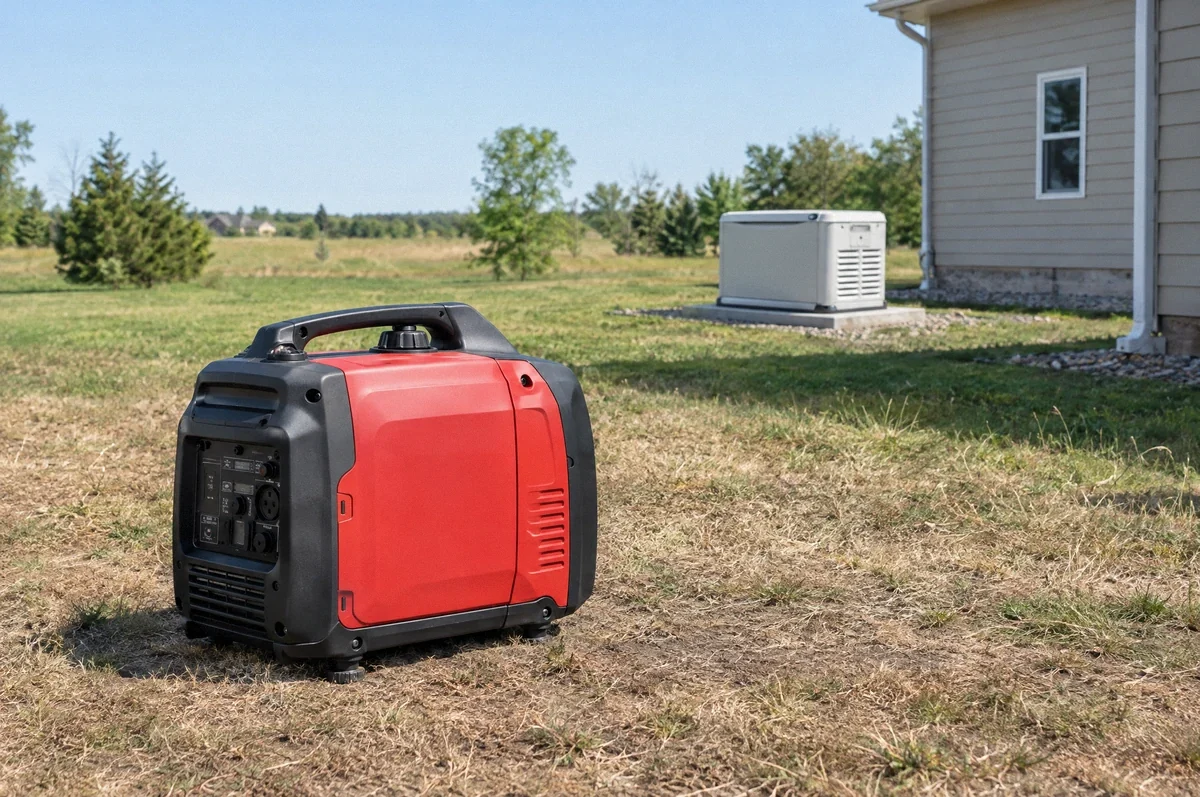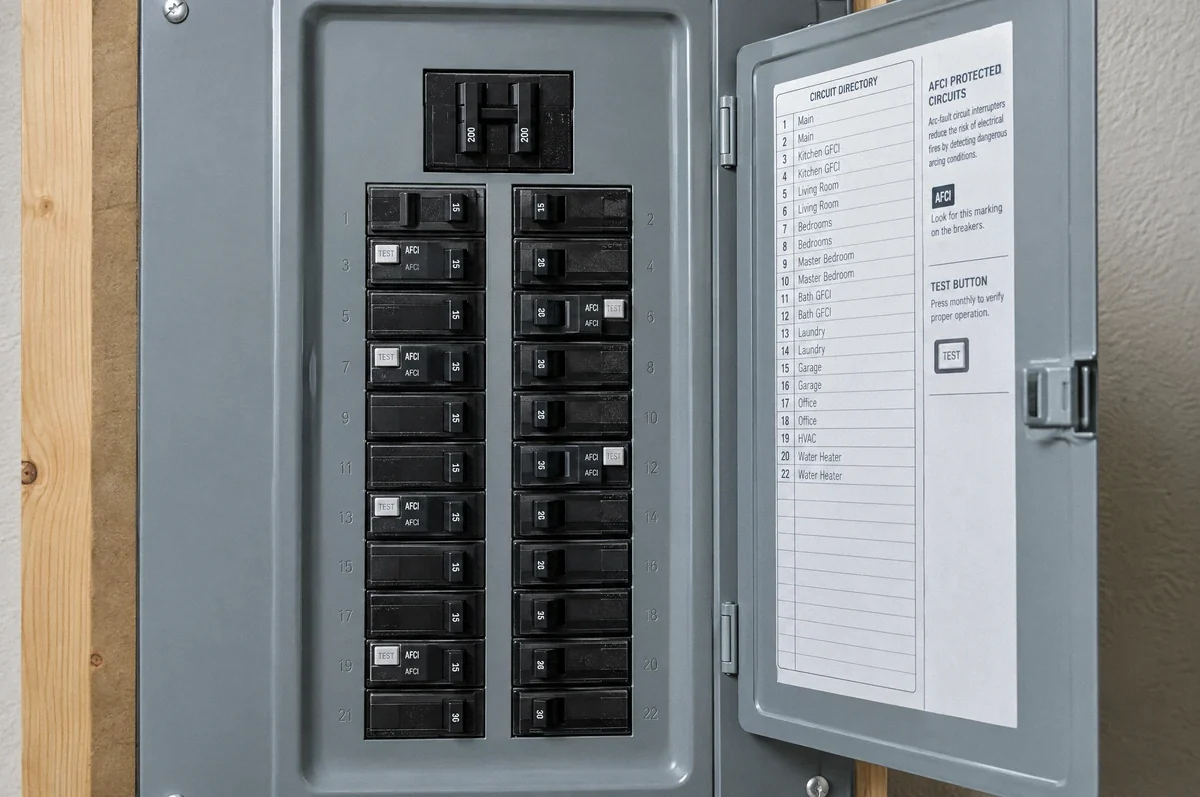
A generator connected to home wiring needs an approved way to separate that wiring from the utility supply. Transfer equipment performs that function. An automatic transfer switch can also manage the changeover for a compatible standby generator, but automatic operation is not the only acceptable design. A portable generator inlet alone is never a substitute for transfer equipment.
For a Bay Area home, the project begins with the loads you need during an outage, an acceptable interruption time, and a feasible equipment location. The generator, transfer equipment, fuel supply, and distribution panel must then be designed as one system.
What a transfer switch does
A transfer switch connects selected home circuits to one available power source at a time in a typical open-transition backup design. Open transition means one source disconnects before the other connects. This prevents the generator from operating in parallel with the utility through an uncontrolled connection.
With a compatible standby system, an automatic transfer switch, or ATS, detects a loss of acceptable utility power. The system starts the generator, waits for suitable output, and transfers the planned loads. When utility power is stable again, the system transfers back and follows its shutdown sequence.
There is an interruption during startup and changeover. Timing depends on the generator, controls, and configuration. An ATS should not be described as uninterrupted power. Computers may restart, and equipment that cannot tolerate an interruption needs an appropriate additional backup plan.
PG&E’s Distribution Interconnection Handbook describes open-transition transfer using a double-throw switch or an interlock scheme that prevents parallel operation. The exact equipment must be suitable for the installation and accepted by the relevant utility and authority. An improvised interlock is not an equivalent design.
Manual transfer, interlocks, and portable inlets
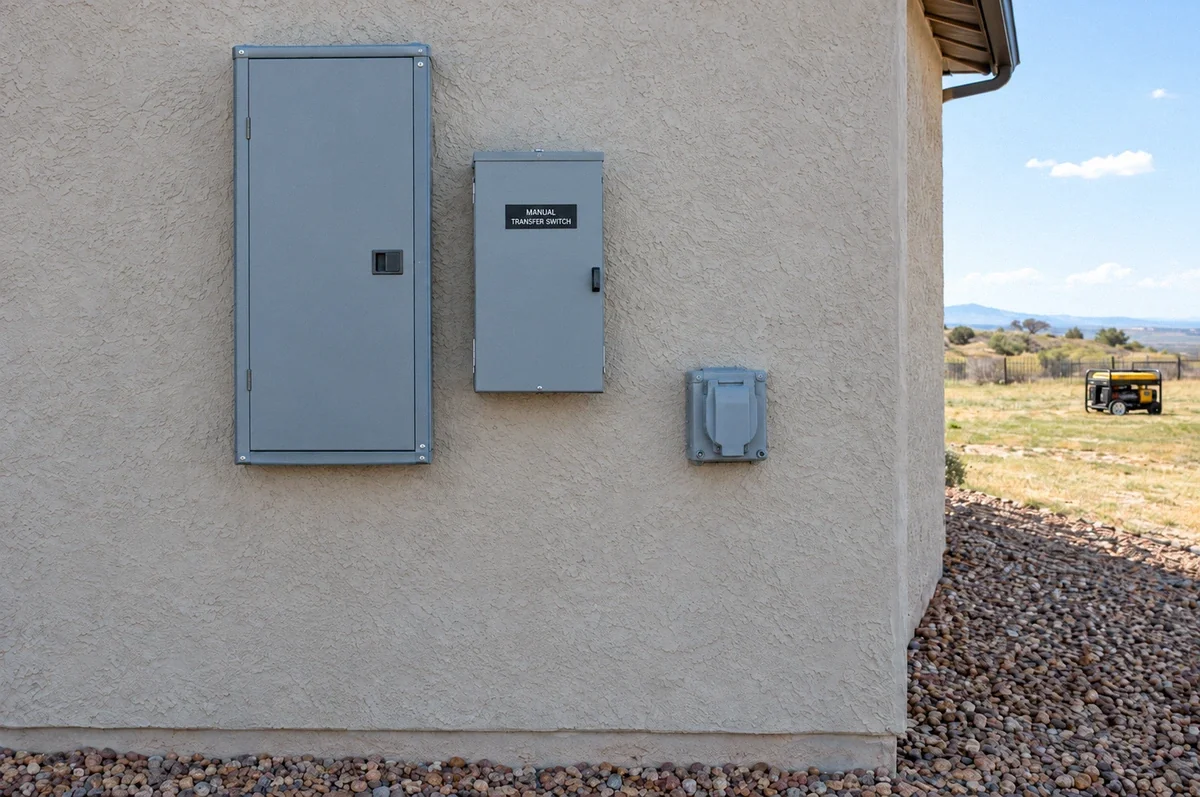
A manual transfer arrangement requires a person to perform the approved changeover. A compatible panel interlock can be part of an approved manual system when it prevents the normal and generator supplies from being connected together as required. It must be identified for the actual panel and installed as part of the complete design.
An inlet is the connection point for a portable generator cord. Unlike a receptacle used to supply an appliance, it receives power from the generator. It does not select a power source, disconnect the utility, or make an otherwise unsuitable panel safe to backfeed.
A portable system feeding home circuits therefore needs an appropriate combination of generator, cord, inlet, circuit protection, and transfer arrangement. Voltage, current rating, grounding and neutral arrangement, and equipment instructions must agree. Neutral switching and bonding are design questions for the electrician, not settings to experiment with when a breaker trips.
Our standby versus portable generator comparison covers the difference in day-to-day operation. The appropriate transfer method depends on which system you choose and how it will be used.
Never feed a generator into a wall outlet
Connecting generator power through an ordinary household outlet can energize wiring and utility equipment in an uncontrolled way. A cord with two male ends also creates exposed energized-prong hazards. Turning off a main breaker by hand does not turn that arrangement into an approved transfer system.
Have permanent connections designed and installed before an outage. Do not bypass a breaker, alter neutral or grounding connections, remove an interlock, or improvise an adapter to make incompatible equipment operate together.
Individual compatible appliances can instead be powered directly from a portable generator according to its instructions, using suitable cords where permitted. That does not feed the house wiring. Hardwired equipment such as many furnaces and pumps needs an appropriate planned connection rather than an improvised appliance cord.
Decide which circuits receive backup power
An essential-circuits design supplies a selected group such as refrigeration, lighting, communications, heating controls, and necessary pumps. Some installations place those circuits in a separate backup panel. Others use an approved transfer assembly with its own circuit arrangement.
A whole-home connection makes more circuits available to the backup source. It does not mean the generator can operate every appliance simultaneously. The available output, motor starting requirements, and load controls still limit operation.
Load management can temporarily disconnect or delay selected large loads to keep demand within the generator’s capabilities. It should follow an agreed priority plan. A household may prioritize a well pump over EV charging, while another may need cooling for a temperature-sensitive resident.
Record those priorities before selecting a generator. The generator sizing guide explains running power, starting loads, and what to include in a backup-load list. If battery backup is also being considered, compare its different energy limits in battery versus generator planning.
Portable generator exhaust requires a separate safety plan
Correct transfer equipment addresses the electrical connection. It does not control carbon monoxide from the engine. Carbon monoxide, or CO, is an invisible, odorless gas that can be fatal.
The Consumer Product Safety Commission’s 2026 generator safety guidance says to operate portable generators outdoors at least 20 feet from homes and buildings, with exhaust directed away from windows, doors, and vents. Never run one in a garage, basement, shed, or other enclosed area, even with doors open. Follow the manufacturer’s wet-weather instructions.
Check whether the property actually provides a suitable outdoor operating location before choosing a portable system. A narrow side yard beside your own or a neighbor’s windows may rule it out. An inlet close to the panel does not establish a safe generator location.
Use working CO alarms with backup power as appropriate. For alarm planning, see our smoke and CO alarm guide. If a CO alarm sounds or exposure is suspected, move outside to fresh air and call 911.
Standby placement, fuel, and maintenance
A permanently installed standby generator follows its own manufacturer clearances and applicable building, fire, fuel, noise, and siting requirements. Do not use the portable-generator distance as a universal standby installation specification. Site review should consider exhaust, windows and vents, neighboring buildings, maintenance access, and the fuel route.
Natural-gas supply must be adequate when other gas appliances operate. Propane storage must support the planned demand and duration. Utility or fuel availability can be interrupted, so neither fuel is an unlimited runtime guarantee.
An automatic generator still needs care. Generac’s continuous-use maintenance guidance explains that extended operation can require additional checks and service. Arrange the maintenance plan for the selected model, including safe shutdowns when required. Automatic starting does not mean the unit can be forgotten through a long outage.
Permits and the finished system
Electrical transfer work and a permanent standby installation require review under the local permit process. Fuel work, a pad, screening, noise, or other site changes can add requirements. The San Mateo County permit page illustrates the different construction and agency reviews that may apply; incorporated cities and other counties use their own processes.
Identify the electric utility and any gas provider for the address. Confirm required notification or utility review, particularly when service equipment is affected. Do not assume every backup project uses PG&E or requires the same utility work.
At handover, retain the approved drawings, backed-up circuit list, operating limits, labels, inspection record, and maintenance instructions. Have the contractor demonstrate the intended transfer behavior and explain any delay or load shedding.
Fox Electric can scope the electrical work for generator and transfer equipment installation. Send your essential-load list and accessible panel and site photos to begin the assessment.