A home alarm plan must answer three questions: where alarms are needed, how they receive power, and how they warn occupants in other rooms. Hardwired power, battery backup, and interconnection are separate features. An existing home’s requirements depend on its layout, conditions, and the work being performed; a remodel or sale does not support a universal claim that every alarm must be rewired the same way.
If a smoke or carbon monoxide alarm is sounding an emergency signal, leave the home and call 911 from outside. Do not disable the alarm while searching for a cause. This article addresses planning and maintenance, not how to determine that an active warning is false.
Smoke and carbon monoxide need different detection
A smoke alarm detects conditions associated with smoke. A carbon monoxide alarm detects CO, a colorless, odorless gas that can result from incomplete combustion. Fuel-burning equipment and an attached garage are among the conditions relevant to CO protection.
An ordinary smoke alarm does not detect CO. A CO alarm does not replace required smoke detection. A listed combination alarm provides both functions, but its placement and installation must satisfy the requirements for both.
Do not rely on smell to rule out carbon monoxide, and do not assume an all-electric appliance list settles the question of CO alarms for a property. Garage configuration, other combustion sources, building type, and applicable requirements still need review.
Begin with a floor plan
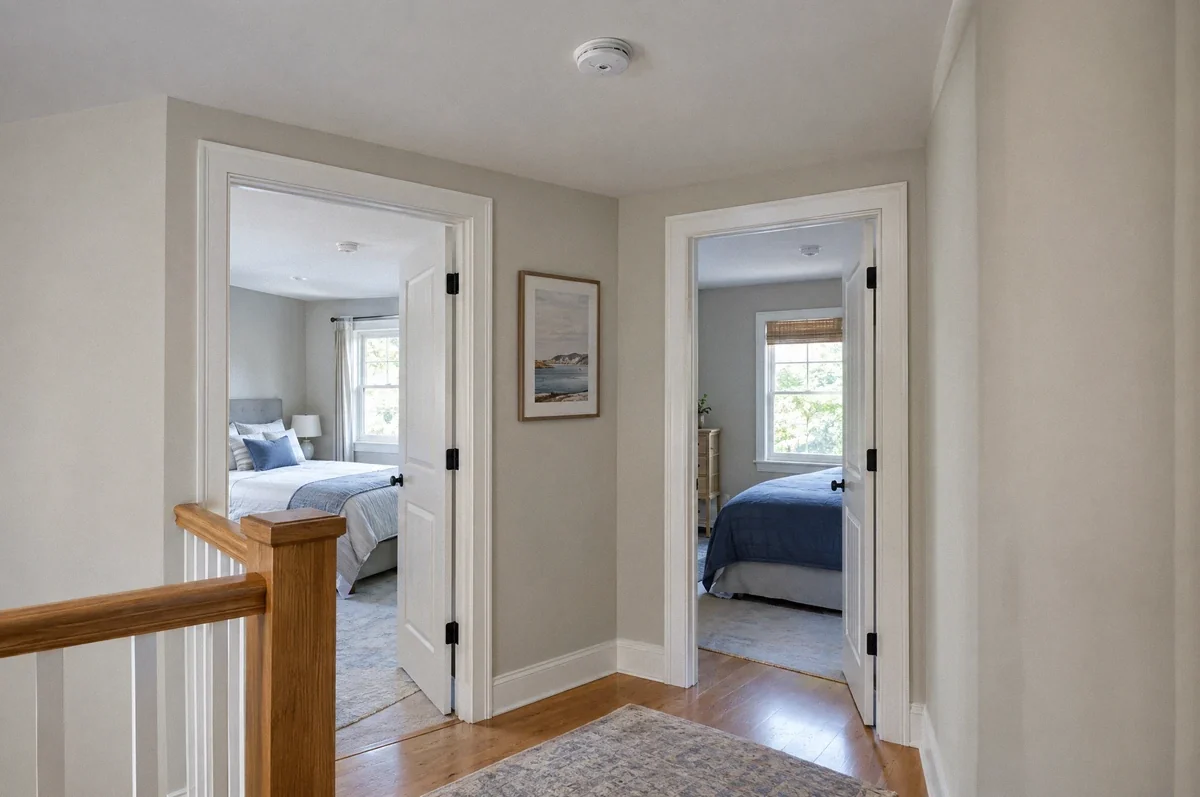
The common smoke-alarm pattern is inside each sleeping room, outside each separate sleeping area, and on every level of the home, including the basement. The U.S. Fire Administration’s smoke-alarm guidance describes this coverage and recommends interconnection so occupants receive warning beyond the room where the hazard begins.
For existing dwellings within the conditions described by San Mateo County’s guidance, CO alarms belong outside each separate sleeping area and on every level, including basements. The requirement is not limited to the floor containing the furnace or other fuel-burning appliance. See the County’s smoke and CO alarm affidavit, revised September 2025.
Mark bedrooms, separate sleeping areas, stories, and the proposed alarm locations before selecting products. Split-level homes, additions, vaulted ceilings, and unusually separated bedrooms can require more care than a simple count by floor.
Exact mounting location also depends on the alarm instructions and building requirements. Do not place every device at the geometric center of a ceiling without considering nearby cooking equipment, bathroom doors, supply-air outlets, ceiling shapes, and other installation restrictions.
Hardwired does not mean maintenance free
A hardwired alarm receives its normal power through the building’s wiring. Battery backup supports operation when that supply fails. The required battery type and replacement schedule depend on the model; some products use replaceable batteries, while others have sealed batteries.
A connected power cable does not prove the alarm has a working supply, functioning sensing components, or a serviceable backup battery. Age, damage, contamination, and incorrect installation can affect any alarm.
Identify the manufacture or replacement date where safely accessible. Follow the manufacturer’s testing and maintenance instructions. USFA advises monthly smoke-alarm testing and replacement of smoke alarms at ten years. CO-only and combination products may have different marked service lives, so their instructions control the replacement interval.
Do not remove an alarm’s battery to deal with repeated chirping and then leave it disabled. Determine the model’s meaning for the signal and arrange the appropriate battery service or replacement. Treat an unfamiliar full alarm pattern as a warning until the emergency has been assessed.
Interconnection can be wired or wireless
Interconnection lets a triggering alarm notify other compatible alarms in the system. A wire between devices is one method. Listed wireless interconnection is another, where the system is designed and approved for that arrangement.
The communication method is separate from the power source. An alarm can receive hardwired power while using wireless communication, or use batteries as part of a compatible wireless system. Installing a device labeled “wireless” does not automatically mean it communicates with the alarms already in the home.
Kidde explains that its wireless alarms communicate by radio and link with specified compatible products. Follow the manufacturer’s wireless alarm guidance and the compatibility list for the exact models. Do not mix brands or product generations merely because their plugs fit or their marketing descriptions sound similar.
A phone notification is a separate function. A Wi-Fi connection or smart-home app does not, by itself, provide approved alarm-to-alarm interconnection. The installation needs the required local warning even when an internet connection is unavailable.
Existing-building exceptions require an actual scope review
An alarm upgrade may be part of an addition, alteration, repair, or other permit. What must change depends on the applicable trigger and existing-building provisions. The availability of attic, crawlspace, or basement access can matter even when finished walls remain closed.
San Mateo County’s affidavit describes circumstances in which existing-building alarms may remain battery operated and where interconnection exceptions may apply. These depend on the work and access conditions; they are not a general exemption for all older homes. The city or county reviewing the actual address applies the requirements.
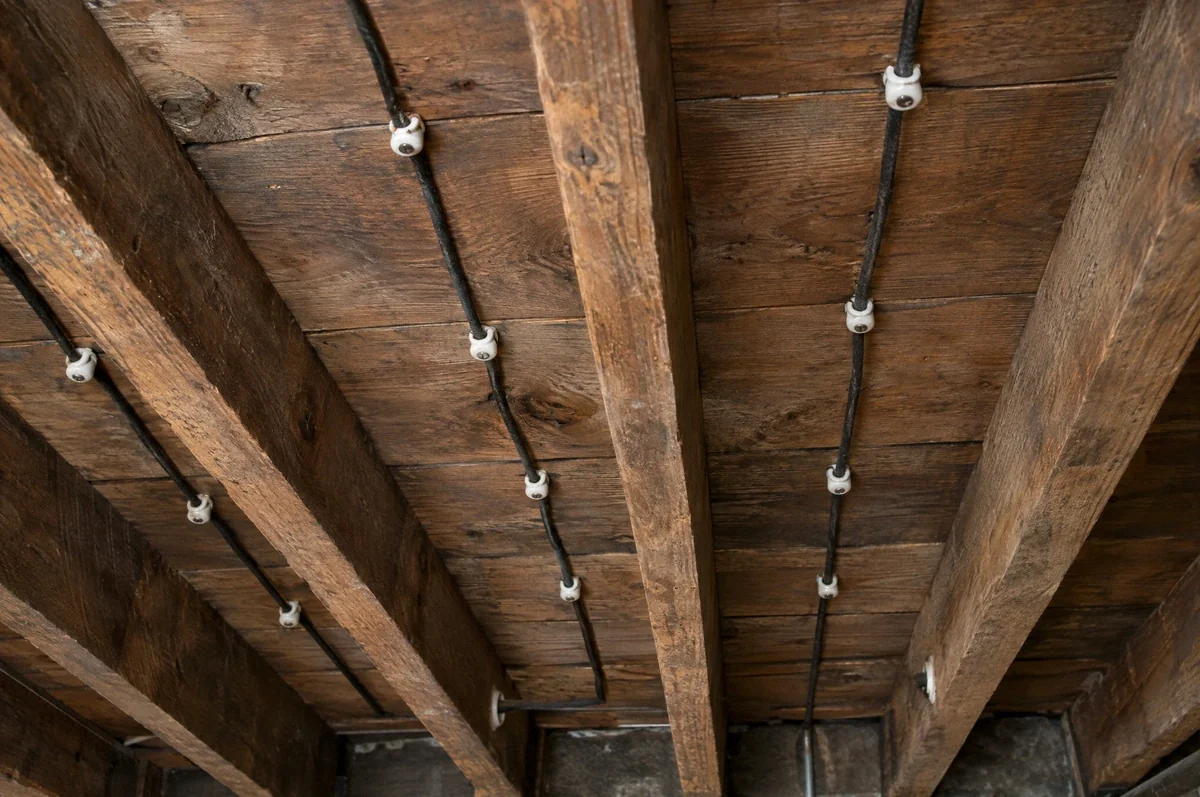
Keep an existing hardwired or interconnected system intact unless an approved replacement plan provides the required features. Replacing a failed hardwired unit with an unrelated battery alarm may remove protection that the existing installation is required to maintain.
For a kitchen remodel or whole-home rewiring project, include the alarm plan before the electrical scope is finalized. The timing may allow required cable routes or device locations to be addressed while access is available.
Do not assume a garage needs an ordinary smoke alarm
Garages have different environmental conditions from bedrooms and hallways. Exhaust, dust, and temperature changes can make a residential smoke alarm unsuitable at a particular garage location.
USFA’s garage fire-safety guidance recommends a heat alarm rather than a smoke alarm for garage warning. A heat alarm responds to temperature conditions and has its own listing and installation requirements. It does not replace the required smoke alarms in the dwelling.
Ask the designer or electrician which garage detection, if any, is required or appropriate and how it will connect to the intended system. Do not extend a bedroom alarm cable into the garage and add an arbitrary device as a substitute for that review.
What combination units simplify
A combination smoke and CO alarm can reduce the number of devices at a location where both are required. It does not necessarily mean every existing smoke-alarm location is also suitable for the combination product.
The installer should check the sensing functions, location restrictions, power supply, communication compatibility, and signal behavior. Document which devices sound for a smoke event and for a CO event. A system should be understandable to the people who live with it, including how to distinguish an emergency signal from a maintenance chirp.
Where occupants have hearing-related needs, discuss appropriate accessible notification devices as part of the design. A louder standard alarm should not simply be assumed to meet every person’s needs.
A complete installation and handoff
A useful proposal lists the devices and locations, what existing equipment remains, the power source and backup, the interconnection method, and any required permit or certification. It should also include access and finish repair if wiring must be added.
At completion, have the installer demonstrate testing under the manufacturer’s instructions and verify the intended linked response. Keep the manuals and model list with the home records. Interconnection and new wiring should be verified as a system rather than by checking one alarm’s light.
Fox Electric provides smoke and CO alarm installation and home electrical safety inspections across the Bay Area and in the city of Santa Cruz. Send the floor plan, existing alarm models if known, and proposed work. For an ADU project, identify the dwelling boundaries so the alarm plan is coordinated with its own approved design.