Size a home generator by identifying the loads that must operate together and the starting demand of equipment such as pumps and compressors. Then check the generator’s continuous output, starting capability, voltage, fuel configuration, and transfer arrangement. House size and main-breaker rating alone cannot select the correct generator.
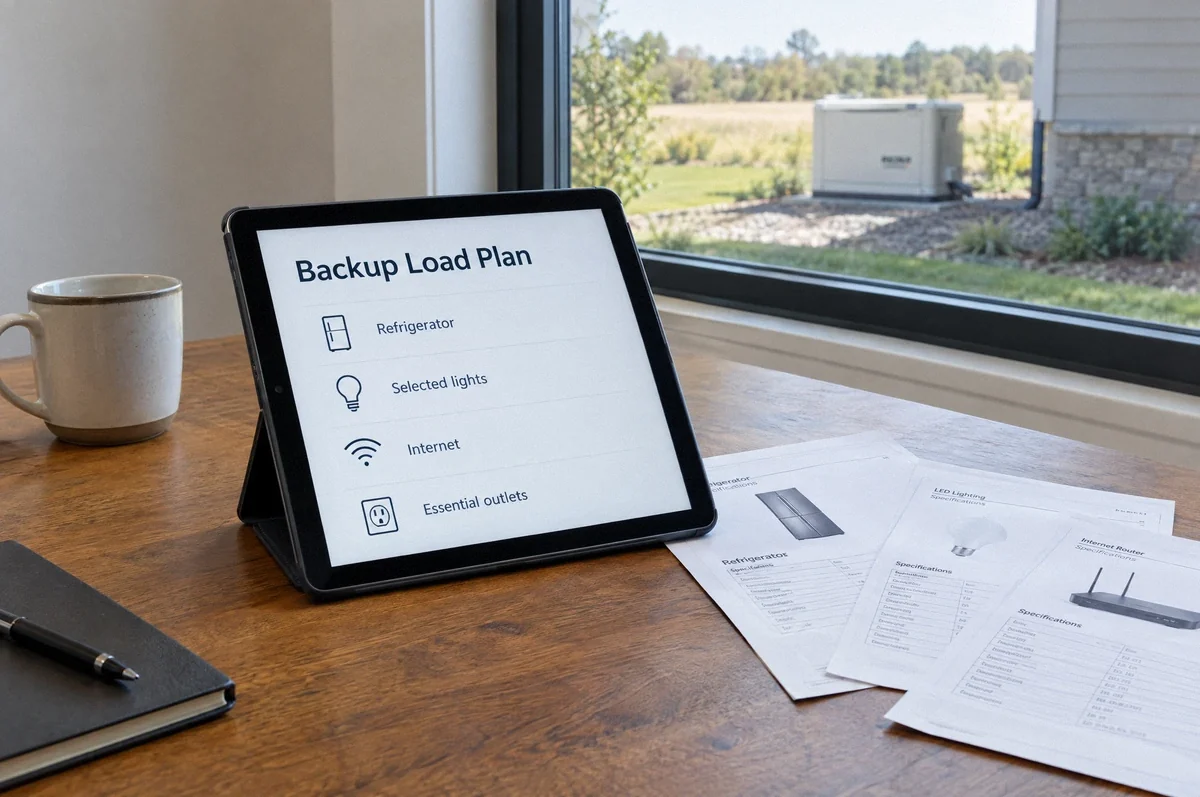
The most useful homeowner preparation is a load-priority list. It turns a broad request for backup power into a specific question: which equipment must run, when must it run, and what can wait?
Choose the level of service during an outage
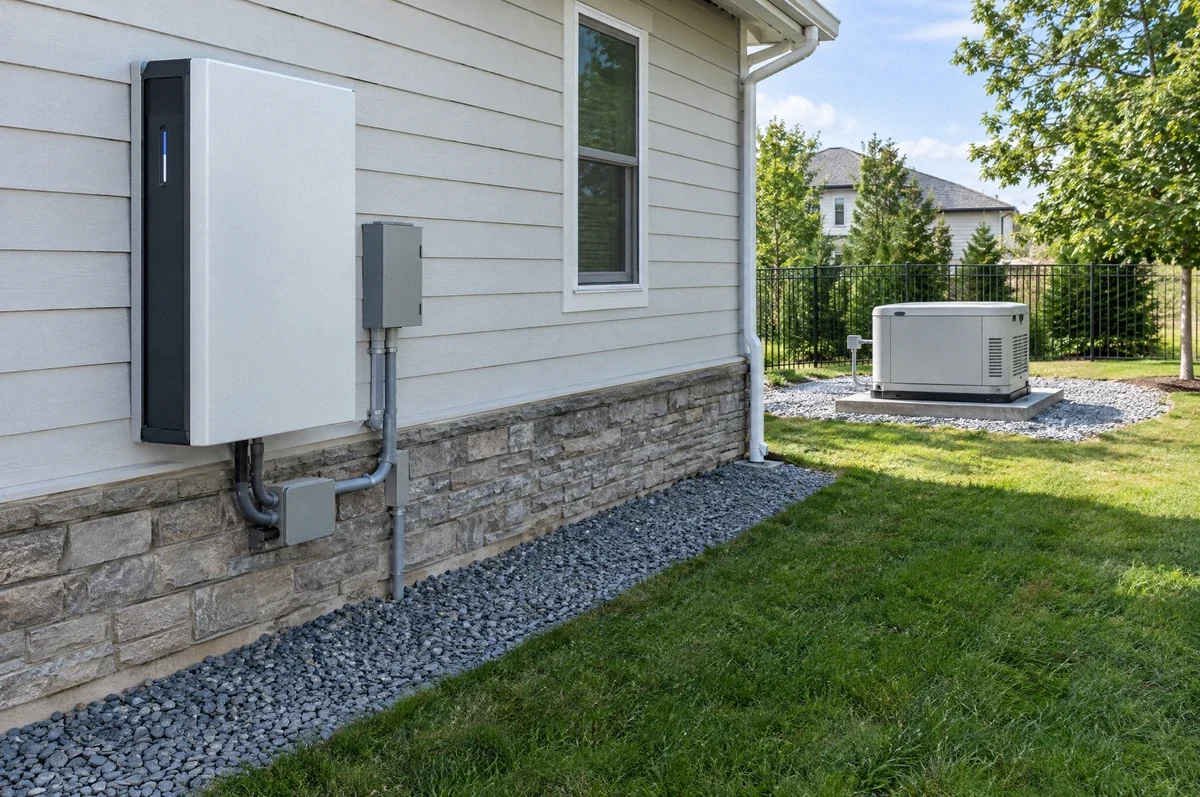
An essential-circuits design supplies a selected set of circuits. A whole-home transfer arrangement makes more of the home’s circuits available, but it can still require automatic load controls or operating restrictions. Whole-home connection does not mean every appliance can run at the same time.
Think about three practical cases. The minimum case preserves refrigeration, basic lighting, communications, and required pumps or controls. A more comfortable case adds selected heating or cooling and cooking options. The broadest case tries to retain most normal household operation, with the generator and controls designed accordingly.
Do not assume one is appropriate because of the property’s square footage. Two similar homes may differ in heating fuel, pump equipment, medical needs, cooking, water heating, and vehicle charging. A small house with substantial electric heating can need more backup power than a larger house supplying only a few essential circuits.
If the type of generator is still open, read the standby versus portable comparison before selecting a wattage.
Make a load list without opening electrical equipment
Use appliance manuals, accessible labels, and available equipment records. Homeowners should not remove panel covers, probe wiring, or attempt live measurements. The electrician can verify circuits and obtain necessary measurements safely as part of the assessment.
| Item to record | Why it matters |
|---|---|
| Equipment and exact model | Establishes the correct electrical specifications |
| Required voltage | Confirms compatibility with the backup supply |
| Running demand | Contributes to continuous generator loading |
| Starting demand or manufacturer requirement | Identifies possible startup limitations |
| Expected hours of use | Helps plan energy and fuel consumption |
| Priority and acceptable interruption | Establishes what can be delayed or shed |
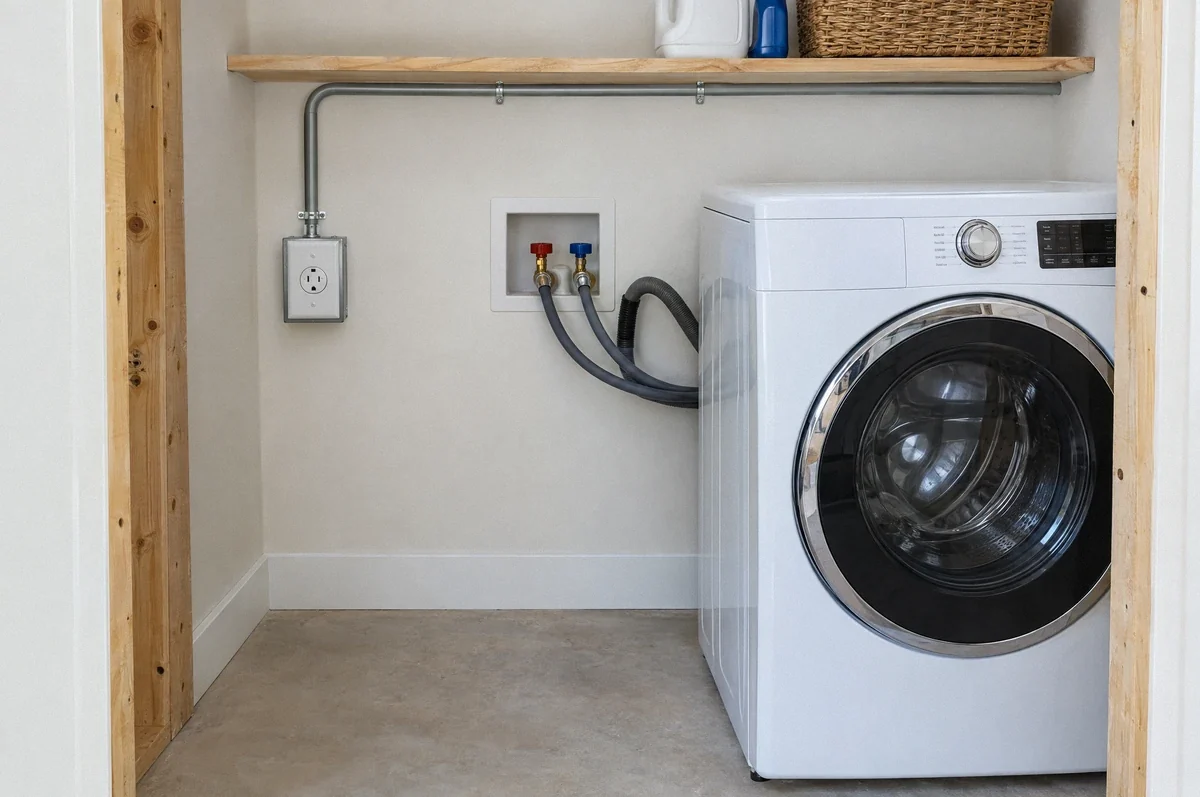
Include refrigerators and freezers separately, each pump, heating equipment, communications hardware, garage or gate access, and any other necessary load. Record electric auxiliary or resistance heat when present; the compressor’s ordinary rating alone may not describe the highest heating demand.
For medical equipment, establish acceptable transfer time and backup duration with the equipment provider. A generator does not eliminate the need for an additional plan if it fails or needs service. Cooling or heating may also be medically important, so those priorities should come from the household rather than a generic essential-load list.
Running watts and starting demand are different
Running power is the demand after equipment has started. Some motors and compressors draw additional current during startup. The generator has to support both the existing loads and the new starting event without unacceptable voltage or frequency change.
Honda’s generator wattage estimation guide distinguishes approximate running and starting values. Such tables help identify questions, but the manufacturer’s data for your actual appliances and generator are better design inputs. Modern motor controls and variable-speed equipment do not all follow the same startup multiplier.
As a simplified illustration, suppose other operating loads total 1,800 watts and a pump draws 700 watts while running but needs 2,000 watts during startup. The steady combination is 2,500 watts. The starting event is approximately 1,800 plus 2,000, or 3,800 watts. It is not necessary to add the pump’s 700 running watts again on top of its full 2,000-watt starting figure.
Real selection is more involved than that arithmetic. Starting events may overlap; published surge ratings have time limits; motors involve current and apparent power as well as watts. The electrician must compare the actual load behavior with the generator’s applicable ratings and manufacturer sizing method.
Check voltage and output under the intended fuel
A portable generator with enough total advertised watts may still lack a suitable 120/240-volt output for the proposed home connection. Output receptacles, maximum continuous current, and the distribution of 120-volt loads also matter. The inlet and transfer equipment must match the actual source.
Use the generator’s continuous rating for sustained loading, not only a prominently advertised maximum or starting-watt figure. For a model that operates on different fuels, compare the rating and consumption data for the fuel you intend to use. Check any manufacturer derating for location or operating conditions.
Do not assume that a larger breaker or a different plug makes an undersized source adequate. Overcurrent protection, conductors, equipment terminals, and available generator output have separate limits. Changes belong in the electrical design.
Our transfer-switch guide explains how source isolation and the inlet fit together. An inlet alone cannot safely connect a generator to the house wiring.
Use load management deliberately
Load management can delay or disconnect selected equipment when the backup source is near its operating limit. This can reduce the generator capacity needed for a particular service level, provided the controls and load priorities are properly designed.
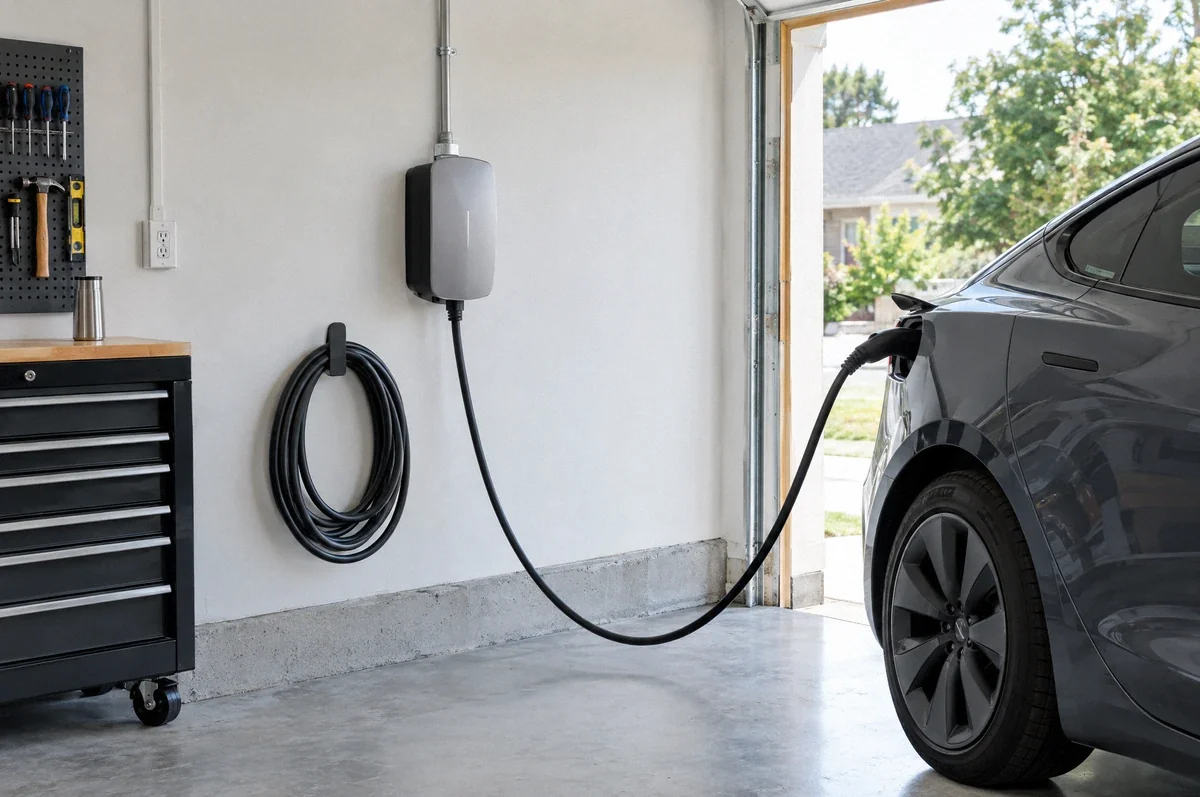
For example, a household might allow a large water heater to wait while a necessary pump starts. It might exclude EV charging during an outage or permit it only when other demands are low. These are operating choices with consequences, not free additional generator capacity.
Agree on which loads are highest priority, how long lower-priority loads may remain off, and what happens after power returns. A heat pump may need a manufacturer-approved control method and restart timing. Do not assume that any appliance can be repeatedly interrupted by any available switch.
Ask the proposal to identify the actual control equipment and acceptance checks. A household promise not to use two appliances together is different from an approved automatic system relied on by the design.
Size the fuel plan as well as the electrical output
Generator kilowatts describe power, not how long the system can run. Runtime depends on fuel availability, load, maintenance, and operating conditions. Use the selected model’s consumption data at the intended load rather than a general claim of several days of backup.
Natural-gas sizing must account for the generator and other connected gas appliances. Propane planning includes storage, delivery access, and the fuel system’s ability to supply the demand. Portable units need a safe refueling plan and an operator who can carry it out.
Extended operation can require planned interruptions for checks or service. Generac’s continuous-use maintenance guidance describes additional attention during long runs. Schedule the specific requirements for the selected model rather than treating fuel availability as the only duration limit.
If limited stored energy is preferable to fuel handling, the battery-versus-generator guide offers a comparison using the same load priorities.
Verify placement before committing to equipment
The installation location may restrict the options before final sizing. Standby units need manufacturer clearances and applicable siting, noise, fuel, and permit review. Larger equipment is not useful if the property cannot accommodate its required location or service access.
Portable generators require a separate outdoor operating site. The Consumer Product Safety Commission’s 2026 safety guidance calls for outdoor operation at least 20 feet from the house, with exhaust away from buildings and openings. Never operate one in a garage or other enclosed area, and never feed it into a household outlet.
What a completed sizing proposal should show
The proposal should identify included and excluded loads, the starting-demand assumptions, selected generator and fuel, transfer equipment, load controls, site requirements, permit scope, and utility coordination where required. Ask for the expected operating limits and maintenance responsibilities in writing.
The final commissioning should demonstrate the intended backup loads and controls, not merely that the engine starts. Retain the circuit list, inspection closeout, equipment manuals, and service plan. The electrical permit guide explains why final inspection documentation matters.
Fox Electric can assess the distribution equipment and selected loads for home generator installation. Send your equipment list and outage priorities to begin a sizing and connection review.