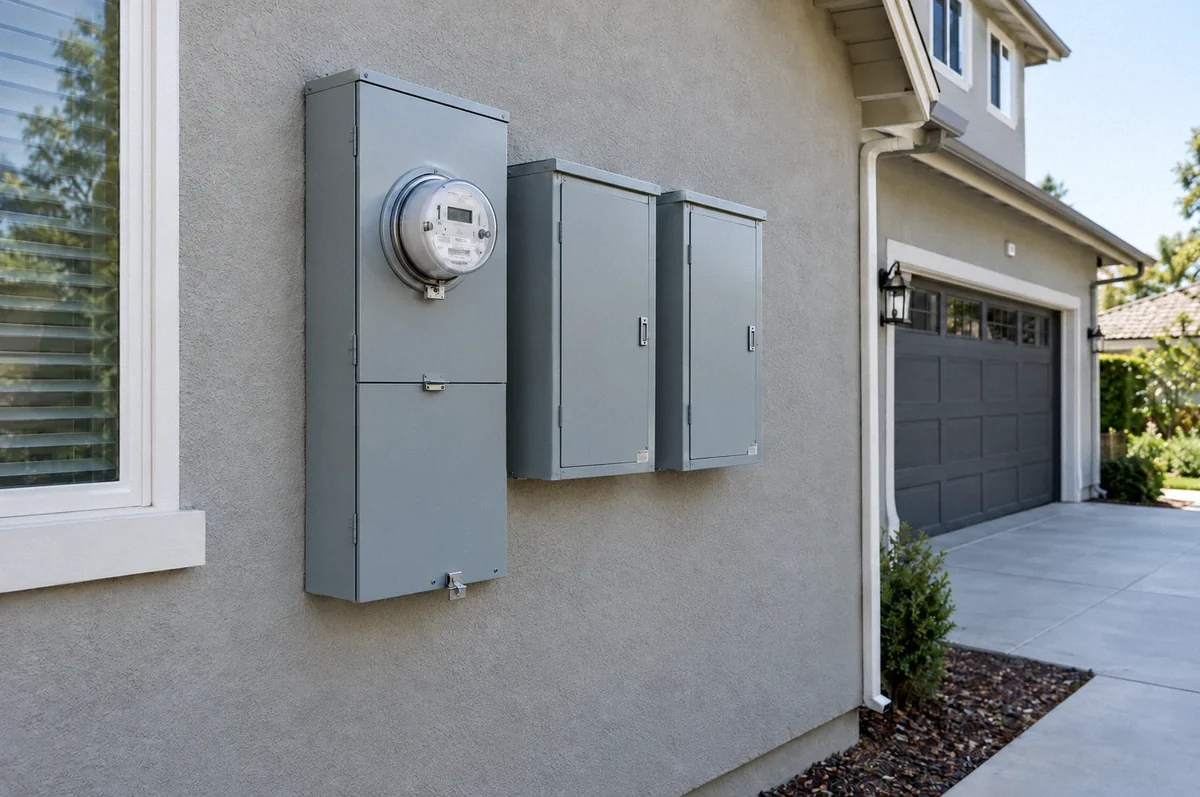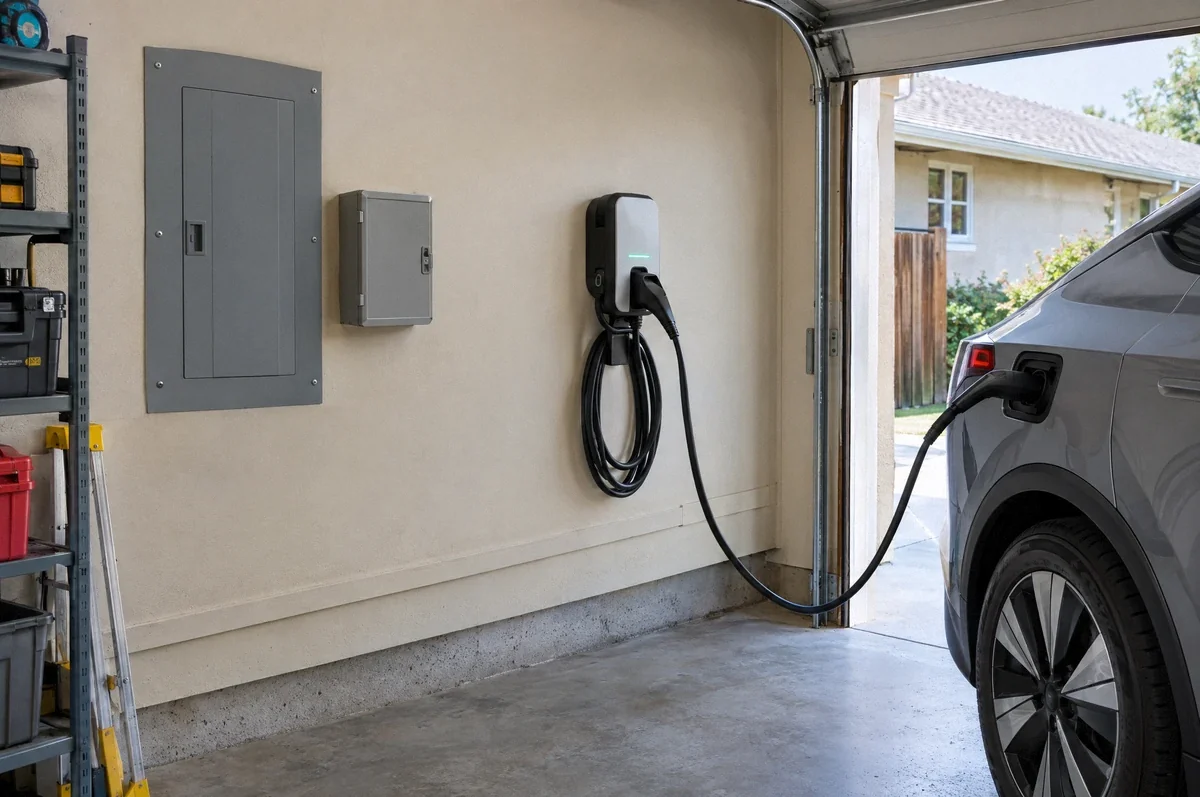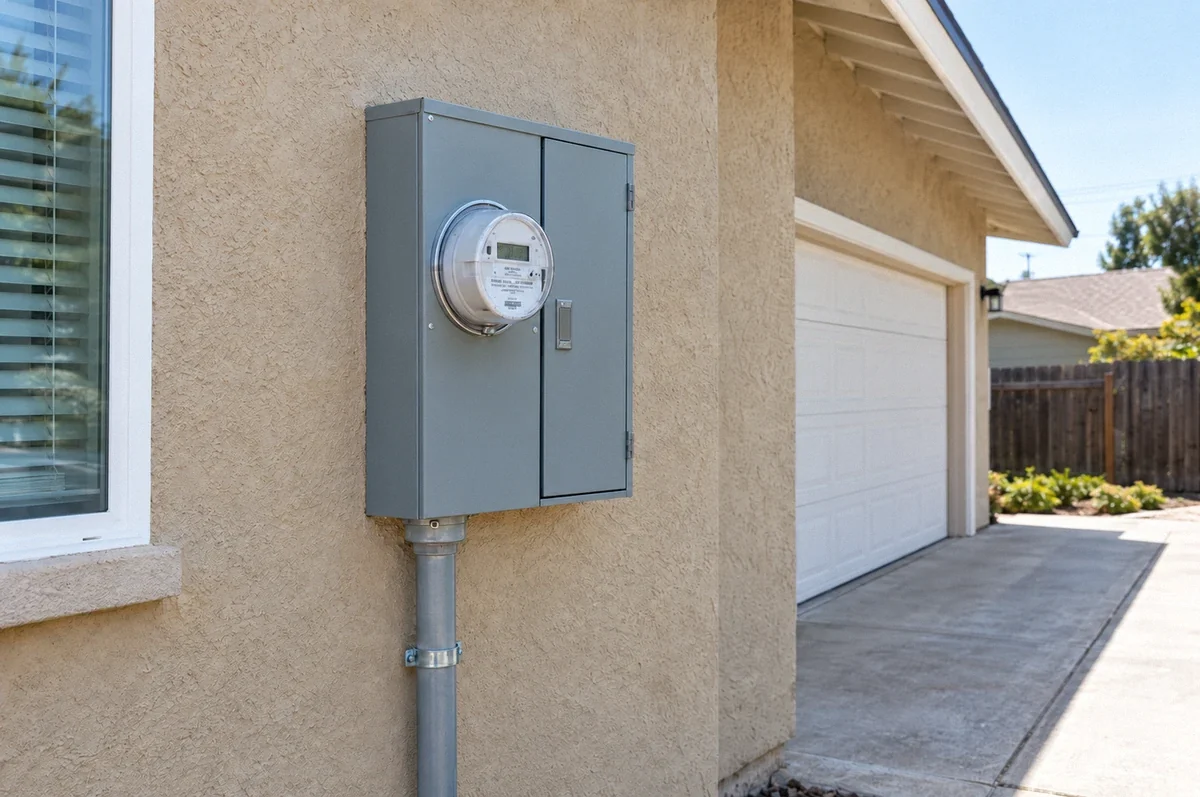
A 100-amp service does not automatically need replacement when you add an electric vehicle charger, heat pump, or induction range. An upgrade to 200 amps makes sense when the proposed electrical demand exceeds the existing service’s usable capacity and the alternatives do not meet your needs. The decision starts with the actual equipment and a load calculation, followed by a separate check of panel condition and available breaker spaces.
For a Bay Area homeowner, that distinction can change the entire project. A full panel may need more circuit spaces. Damaged equipment may need replacement at the same amperage. A service upgrade increases the capacity of the incoming electrical supply, which can involve the meter equipment, conductors, and utility connection as well as the panel.
What changes when a service goes from 100A to 200A?
Amps measure electrical current. In a typical residential 120/240-volt service, moving from 100 amps to 200 amps doubles the service’s nominal current rating. It does not make individual outlets more powerful or change the protection required for their wiring.
The panel’s bus, the metal assembly that distributes electricity to the breakers, has its own rating. So do the service equipment, main disconnect, and conductors. Installing an enclosure labeled 200A does not establish a 200A service if the rest of the installation remains limited to 100A.
A complete proposal should state the finished service rating and identify which components will change. If a larger panel will initially operate at the existing service rating while utility work is pending, that staged arrangement should be documented. Do not assume the new box means the utility upgrade is complete.
Check three different limitations
Electrical demand. A load calculation uses the home’s floor area, required household loads, appliance ratings, and planned equipment under the applicable electrical code. It is a design calculation, not a momentary reading of what happens to be running during a site visit. Our load calculation guide explains the inputs and the questions to ask about the result.
Circuit space. A panel with every breaker position occupied may still have adequate service capacity. Approved tandem or quad breakers can provide additional circuit positions in some panel models; other installations need a subpanel or a panel with more spaces. Compatibility and the panel’s marked limits decide what is permitted. Schneider Electric’s tandem breaker guidance explains that approved positions and maximum pole counts are part of the panel labeling. A tandem is not automatically evidence of an overloaded service.
Equipment condition. Corrosion, water entry, damaged connections, or unreliable legacy equipment may justify replacement even when the load fits. Conversely, a healthy panel does not gain capacity merely because it looks clean. These findings belong in the assessment alongside the calculation.
An EV charger does not settle the answer by itself
Charging equipment comes with different output limits, and the fastest available setting is not always necessary for the household’s driving needs. A car parked overnight may have enough time to replenish its daily use at a lower charging rate. The vehicle’s onboard charger also limits the rate it can accept.
Other choices matter just as much. Heat pumps vary in their electrical requirements, especially when auxiliary resistance heat is included. An electric tankless water heater can have a very different demand from a heat pump water heater. An accessory dwelling unit, or ADU, adds an entire set of household loads rather than one appliance.
Bring the intended model numbers to the assessment. A list that says only “EV, heat pump, and ADU” is too vague to establish whether 100A works or 200A will be enough.
Compare the alternatives before ordering equipment
Keeping the existing service may be practical when the calculation passes and the equipment remains suitable. A lower charging setting, different appliance selection, or an approved system that automatically limits selected loads can sometimes avoid an increase in service size. PG&E’s guide to electrifying without a panel upgrade describes equipment selection and panel-space options for this situation.
Automatic load management is more than a promise to avoid using two appliances together. The installed equipment must monitor and control the relevant load as required by its approved design. Ask what happens when the home reaches the limit, which appliance pauses, and how that affects daily use.
If the service has enough capacity but the distribution panel is full, a subpanel may provide circuit space. It cannot increase the total supply. If you are considering several large additions, compare the full design using our 200A versus 400A guide rather than assuming either size fits every home.
What drives the cost of a 200A upgrade?
Two homes can receive the same finished service rating and require very different work. A useful estimate explains the following items.
Meter and panel location. Retaining an acceptable location is different from moving equipment across a building. Relocation may require extended circuits, new feeder wiring, structural attachment, and repair of exterior finishes. Required access and clearances must be established before the equipment is selected.
Overhead or underground supply. An overhead project may involve the mast, weatherhead, attachment, or service conductors. Underground work may involve a trench, conduit, utility structures, and surface restoration. The utility determines its own connection requirements; a larger mast or a new trench should not be assumed without reviewing the site.
Grounding and bonding. The electrician evaluates the grounding electrodes and the connections that keep metal equipment on an effective fault-current path back to the source. Existing compliant components may be retained where allowed. The estimate should identify the actual corrections rather than automatically charging every home for an identical package of ground rods.
Existing circuits and new work. Transferring existing circuits is different from installing a charger, rewiring a kitchen, or correcting damaged branch wiring. Ask whether these are included, optional, or outside the proposal. A new panel does not repair every wiring issue elsewhere in the house.
Permits, utility work, and restoration. Separate the contractor’s electrical scope from permit fees, potential utility charges, trench restoration, stucco, and painting. Identify allowances that depend on agency review. Our panel upgrade cost guide explains how to compare these items across proposals.
Coordinate the utility and permit work early
The serving electric utility needs to be identified from the address. PG&E serves much of the region, while municipal utilities use their own requirements. Palo Alto, for example, publishes its own application forms and electrical service standards, which it explicitly distinguishes from other utilities’ standards.
Utility review and local permit preparation may proceed together. Resolve the proposed meter location, service arrangement, and any utility construction before committing to an outage date. PG&E’s panel upgrade roadmap asks applicants to provide the project’s loads and site information early and notes that complexity and request volume affect completion time.
The construction outage is one part of that larger schedule. Some straightforward projects can be completed and released for reconnection in one workday; others require a longer or phased interruption. The proposal should explain the inspection and reconnection dependencies and what happens if either is delayed.
What to have ready for an assessment
Provide the property address, a list of existing and proposed major appliances, and any remodel drawings. If it is safe, photograph the closed panel, accessible manufacturer labels, and the surrounding work area. Do not remove a cover, enter a sealed meter compartment, or approach equipment that is sparking, smoking, or visibly damaged.
Ask for a recommendation that connects each proposed item to a specific need: condition, capacity, circuit space, or utility requirements. For a 100A-to-200A project, contact Fox Electric with your planned loads and request a panel and service assessment. The first useful answer is what your home needs to support the project, followed by a scope that can be priced and scheduled.