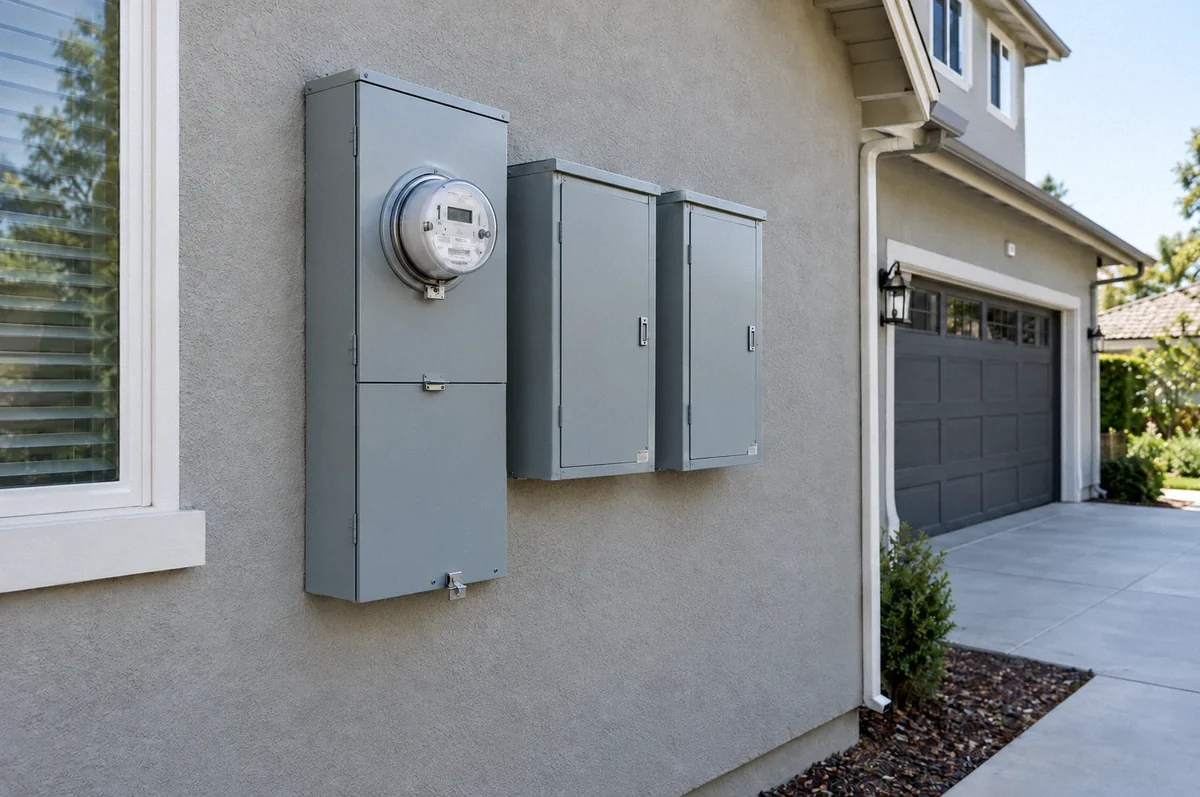
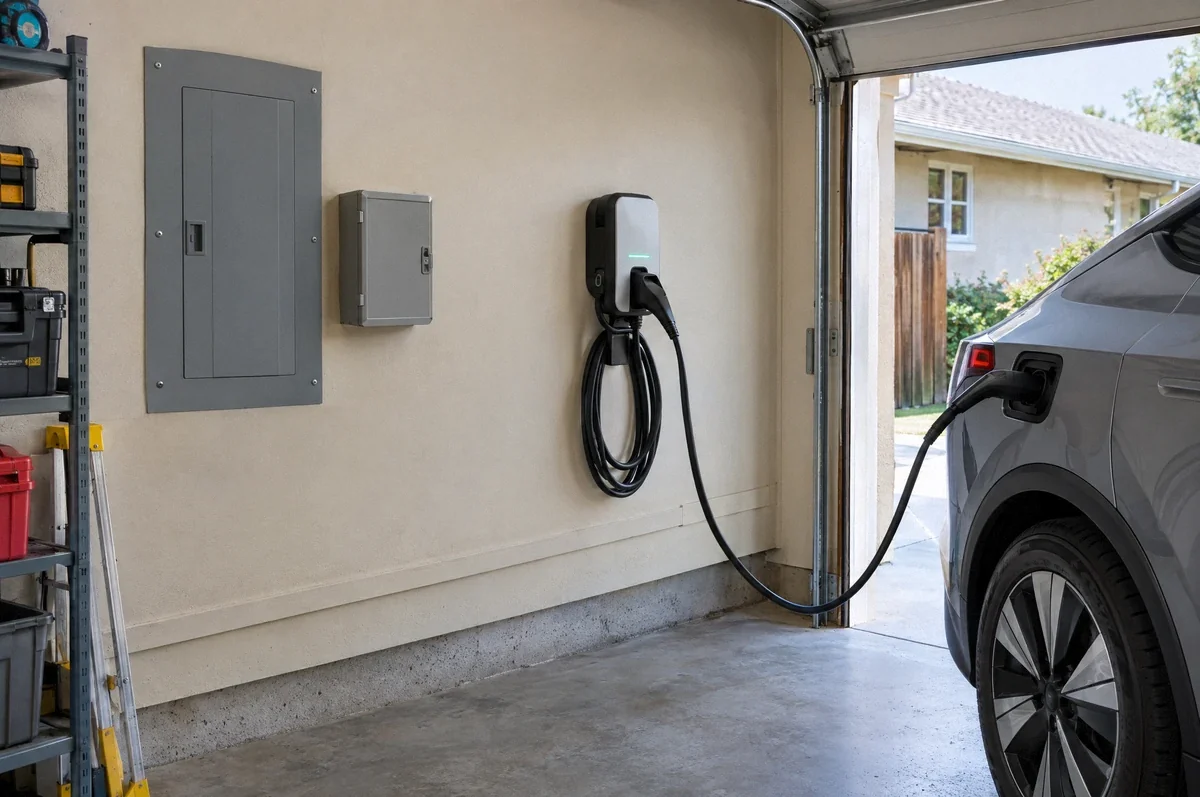
A smart electrical panel can make household energy use visible, control selected circuits, and, with the right equipment and design, manage limited service capacity or battery backup. Those are different capabilities. A panel described as “smart” does not automatically provide all of them, and replacing a panel does not necessarily increase the utility service rating.
The strongest reason to choose one is a specific need: managing an electrification project on an existing service, changing battery-backed circuit priorities, or monitoring loads that are difficult to understand. If the only goal is adding one circuit, compare a conventional installation or targeted load-control device before committing to a complete smart-panel system.
Start with the feature you need
Monitoring measures power or energy. Whole-home monitoring shows the total; circuit-level monitoring separates individual circuits. A circuit serving several appliances still shows their combined use unless the system has a supported way to distinguish them.
Circuit control switches selected circuits on or off. The mechanism may be a controlled breaker or a relay associated with the panel. This does not mean the system can remotely reset every protective trip, and an app’s “off” indication is not a safe-isolation procedure for electrical work.
Service-capacity management automatically limits designated loads to keep demand within an approved operating limit. This requires suitable hardware, configuration, and a design accepted for the installation. A graph showing high consumption is not the same as a system that acts on it.
Backup management controls which loads receive power from a compatible battery or generator arrangement. That is a separate operating condition with its own power limits and communication requirements.
Write the needed functions into the proposal. “Install smart panel” leaves too much unanswered.
SPAN and Leviton are not interchangeable systems
SPAN offers panel-based circuit monitoring and control, with capabilities that depend on the model and configuration. Its PowerUp feature is intended to manage service demand, while battery integration provides a separate set of outage features.
Leviton’s Load Center family uses a modular approach that can include standard breakers and supported smart breakers. Leviton states that its second-generation smart breakers support remote on/off control with the Whole Home Energy Monitor, or LWHEM. First-generation smart breakers could be remotely tripped but could not be remotely turned back on. See Leviton’s generation and control comparison.
Therefore, an estimate needs the panel model, breaker generation, monitoring equipment, and which circuits will receive smart functions. A conventional Leviton panel with ordinary breakers should not be described as providing every connected capability. Likewise, a feature available on one SPAN model or configuration should not be assumed on every installation.
Can a smart panel avoid a service upgrade?
Sometimes, when the approved system can manage the proposed loads within the existing service’s limits and the existing service equipment is otherwise suitable. It does not create additional power. It changes when certain loads can operate.
SPAN’s PowerUp documentation describes a power-control-system listing and requires installer review, load calculations, local permit approval, and proper labeling. That is a more specific basis than simply assuming an app schedule will keep demand low.
The household also needs to understand the operating tradeoff. If a charger or another appliance pauses during a high-demand period, will that be acceptable? Which loads must remain available? How will the design accommodate future additions? These questions belong alongside the load calculation.
A smaller charging output or a dedicated charging-management system may solve an EV-only problem with less work. A conventional service upgrade may be preferable when the owner needs more simultaneous capacity or the existing service is unsuitable for retention. Compare complete scopes rather than only the panel purchase price.
Battery backup depends on more than the panel
A smart panel does not store energy. Backup power requires an appropriately designed source and the equipment that separates the home from the utility during an outage. A rooftop solar system alone should not be assumed to keep the house operating when the grid is down.
SPAN’s outage guidance distinguishes compatible battery systems from unsupported integrations. A nonintegrated battery may supply power according to its own design without enabling SPAN’s backup-priority functions. A downstream subpanel also does not give SPAN independent control over every branch circuit inside it.
For Leviton, the documented load-shedding arrangement in its Load Center overview uses an LWHEM connection to an automatic transfer switch and eligible second-generation smart breakers. That backup feature should not be presented as proof that every Leviton installation can enforce a utility-service capacity limit.
Ask for the proposed battery or generator model, transfer equipment, supported communication path, and the circuits that will be controllable. Also identify loads that are too large for the backup source. Priority settings cannot make a battery deliver more power than its rating permits.
What happens when the internet goes down?
There is no accurate category-wide answer that all automation stops. The distinction is between internet access, local control, the electrical supply, and communications within the backup system.
SPAN states that PowerUp continues using its current settings when internet or cellular service is temporarily lost. Changing those settings through the normal app requires restored connectivity. SPAN also documents Home On-Premise access, a local web interface for supported monitoring and control when the usual internet connection is disrupted.
For any proposed system, have the installer demonstrate which functions remain available locally and which need a working internet connection. Confirm that the router or other required network equipment is included in the backup plan if those functions matter during an outage.
Basic circuit protection and software-controlled switching are distinct functions. Internet loss should not be described as removing ordinary breaker protection. At the same time, do not assume that every manufacturer’s automation, app access, or communication-dependent backup behavior is identical.
Monitoring can help, but savings are not automatic
A circuit history may reveal equipment running longer than expected or clarify when a large load operates. The homeowner can then investigate the appliance, adjust an appropriate schedule, or compare equipment options.
Installing monitoring does not itself guarantee a lower bill. Savings depend on actual consumption changes, rate structure, settings, and the loads being controlled. The economic comparison should include equipment, labor, added accessories, any ongoing service terms, and the useful function gained.
If understanding a high bill is the main goal, compare a monitoring-only option with a complete panel replacement. If outage flexibility is the goal, compare the smart panel with a conventional essential-loads arrangement. Our generator and battery comparison provides context for that broader choice.
Questions to settle in the proposal
Ask which panel and breaker models are included, which circuits will be monitored, which can be controlled, and what is required for later expansion. Specify whether service-capacity management is part of the permitted design or merely an optional feature that has not been enabled.
Also clarify ownership of the app account, access for household members, transfer to a future owner, current warranty and support terms, and how settings and circuit labels will be handed over. These are purchasing questions to confirm from current terms, not reasons to assume every product carries a subscription or that cloud support will last indefinitely.
The physical installation still needs adequate circuit space, working clearances, suitable environmental protection, and compatible connections. Replacing a downstream distribution panel may be different from changing a meter-main or increasing utility service. The permitting and utility scope must describe the actual work.
For an electrification or backup project, contact Fox Electric for a panel assessment. Bring the specific function you want and any existing battery, solar, or charging equipment details so the proposed smart features can be checked against the complete system.