In a conventional household lighting circuit, two three-way switches let you control the same light from two locations. For control from three or more locations, four-way switches can be placed between the two three-way switches. The names describe switch types, not the number of lights they operate.
Smart lighting can achieve similar everyday behavior through different arrangements, including dedicated accessories or wireless remotes. That is why replacing a switch requires identifying the complete system. A device that looks identical from the front may not perform the same electrical function.
What the switches actually change
A conventional three-way switch selects between two paths called travelers. The traveler conductors can carry household line voltage and current for the lighting load. They are not low-voltage communication wires. A four-way switch changes how those paths connect between the end switches.
This arrangement lets a person change the light’s state from any intended location. A particular switch position does not permanently mean “on” or “off,” because the result also depends on the other switches.
Leviton’s switch application information describes the conventional combination of two three-way switches and an intermediate four-way switch. Actual conductor identification and connections belong to the electrician and the specific circuit; a generic color diagram is not reliable evidence of how an existing home was wired.
Common places for multiple controls
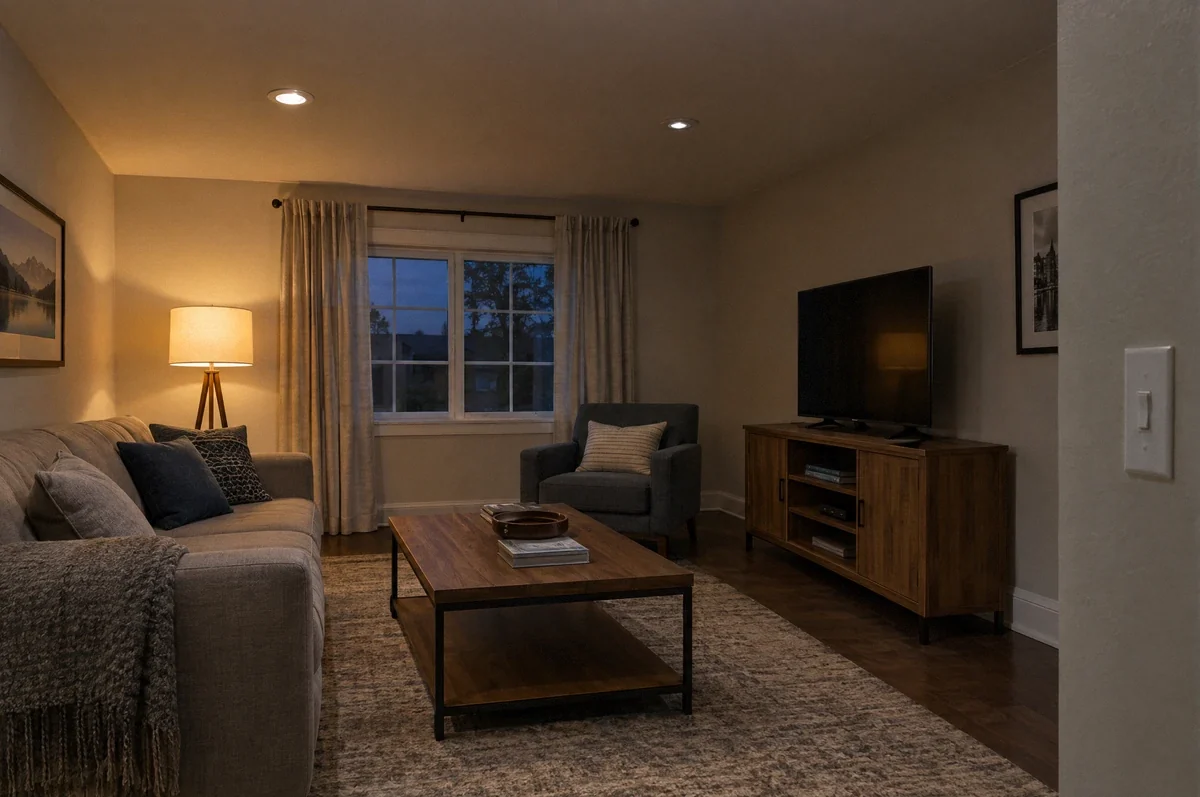
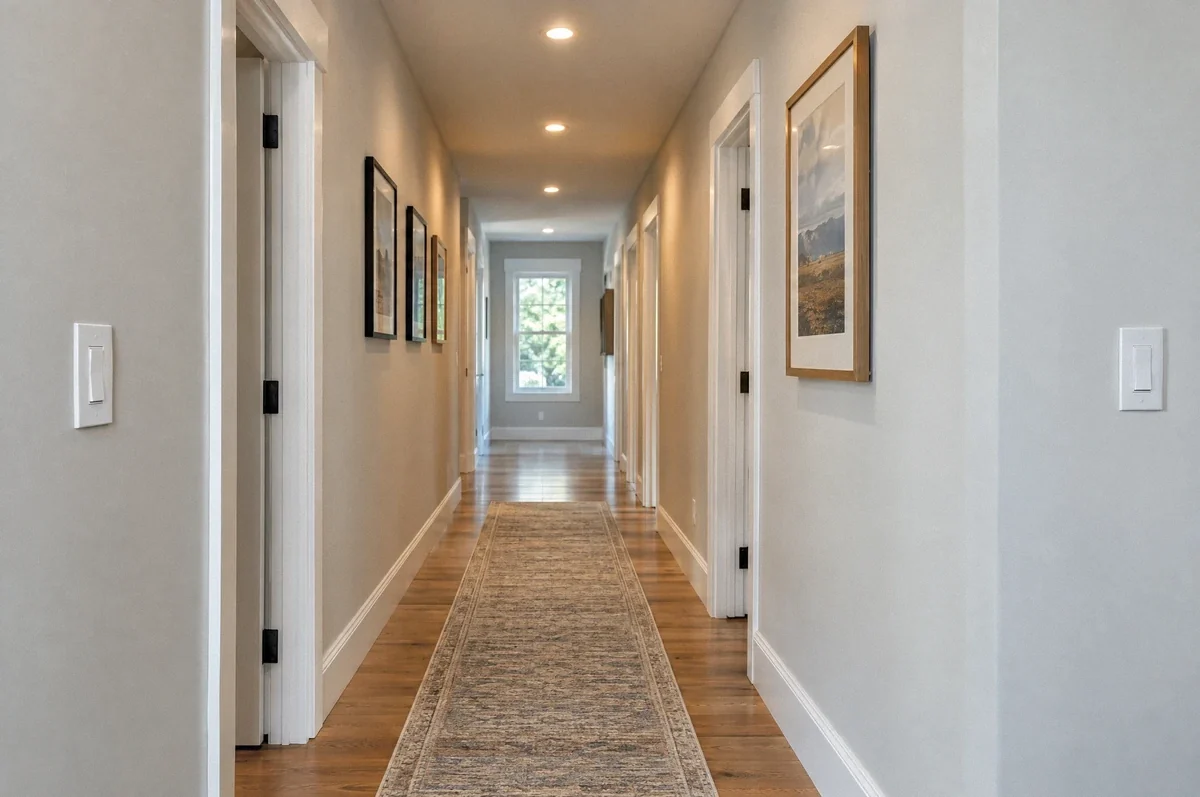
Hallways, stairs, and rooms with more than one entrance often benefit from several control positions. A large garage may need a control at both the interior door and the vehicle entrance. A bedroom may benefit from a bedside control in addition to the doorway switch.
Before adding a location, decide what it should do. Is on/off operation enough, or should it also adjust brightness? Should the entire room respond, or only a particular group? Do you want a fixed wall device, a removable remote, or both?
Mark the desired locations on a room plan. Include furniture, door swings, and the usual walking routes. A control hidden behind an open door can meet the drawing’s intent while being inconvenient to use.
When a light works only in certain switch positions
If one switch seems to work only when another is set a particular way, the circuit needs assessment. Possible causes include an incorrect connection, a failing device, an interrupted conductor, or an incompatible replacement control. The symptom does not establish which wire or switch is at fault.
Document what changed before the problem started. A recent switch replacement, dimmer installation, remodel, or fixture change gives the electrician useful context. Describe the behavior from each location without removing covers or testing exposed conductors.
Do not keep operating a switch that becomes unusually hot, emits an electrical odor, crackles, or shows damage. If there is smoke or fire, leave the building and call 911 from a safe location. For nonemergency symptoms, arrange electrical troubleshooting and identify the affected lighting group.
If the lights also fluctuate while appliances operate, that may be a separate problem. See flickering-light warning signs rather than assuming every symptom comes from the multi-location switches.
Adding a dimmer changes the compatibility question
A dimmer must suit both the lighting load and the control arrangement. Two ordinary dimmers are not automatically a compatible pair on a three-way circuit. Depending on the product, the design may use one dimmer and a mechanical switch, one primary dimmer and supported accessories, or a different approved arrangement.
The electrician needs the fixture or lamp model, the dimmer model, the number of control locations, and the available conductors. If the new device requires a neutral, that conductor must actually be present and usable at the intended location. An equipment ground is not a substitute.
Lutron’s Claro smart accessory instructions illustrate a specific arrangement using a compatible primary control and accessory switches. Those options should not be generalized to another product family.
For broader choices between bulbs, wall controls, and systems, use the smart lighting comparison. The right result should feel natural at every entrance, including for someone who has never used the app.
Another control location may not require the same wiring route
A conventional added switch may require a new cable route through a wall or ceiling. The difficulty depends on framing, accessible attic or crawlspace, and the existing circuit layout. A finished second floor or masonry wall can change the scope substantially.
A supported wireless remote can sometimes provide another control position with less disturbance. That option still has requirements: communication range, compatible primary equipment, mounting, pairing, and battery replacement where applicable. Confirm what works without internet and what depends on a hub.
The best choice is not always the one with the fewest new wires. Consider long-term usability, the desired dimming behavior, and how the household will maintain the system. A remote that is routinely misplaced may be less useful than a fixed control in the right position.
Define the job before opening finished surfaces
For a repair, the initial scope may be diagnosis with a separate decision about replacement or wiring changes. For a new location, ask the estimate to identify the proposed controls, route, expected wall openings, and finish repairs.
If the work is part of a remodel, decide the locations before insulation and drywall. Coordinate the controls with recessed lighting groups and any pendant or chandelier that should operate separately.
The electrician should also determine the applicable permit requirements for added wiring or altered circuits. A simple device replacement and a new branch of wiring are different scopes, even if the visible result is one additional switch.
Check every location at completion
Test the lighting from each intended control position as part of the handoff. Review on/off operation, dimming where provided, startup at a low setting, and any app or remote functions in the agreed scope.
Keep the exact model numbers and note which control is the primary device. That information helps prevent a future replacement from introducing an incompatible accessory. For wireless controls, keep the pairing instructions and battery information with the house records.
Fox Electric’s outlet and switch service can assess existing controls and planned additions. Send the number of locations, the affected room, and any proposed device models so the visit can focus on the right circuit and outcome.