A service upgrade can involve much more than the rows of breakers inside a new panel. The meter enclosure, main disconnect, grounding electrodes, and bonding connections all affect how the installation is supplied and protected. The scope should explain which components need replacement, which can remain, and why.
Two distinctions are especially useful. A meter-main combines metering equipment and a main disconnect, but it is not the only possible service arrangement. Grounding electrodes connect the system to earth, but earth is not the intended effective return path that makes an ordinary breaker open during an equipment fault.
Follow the service from the utility to the circuits
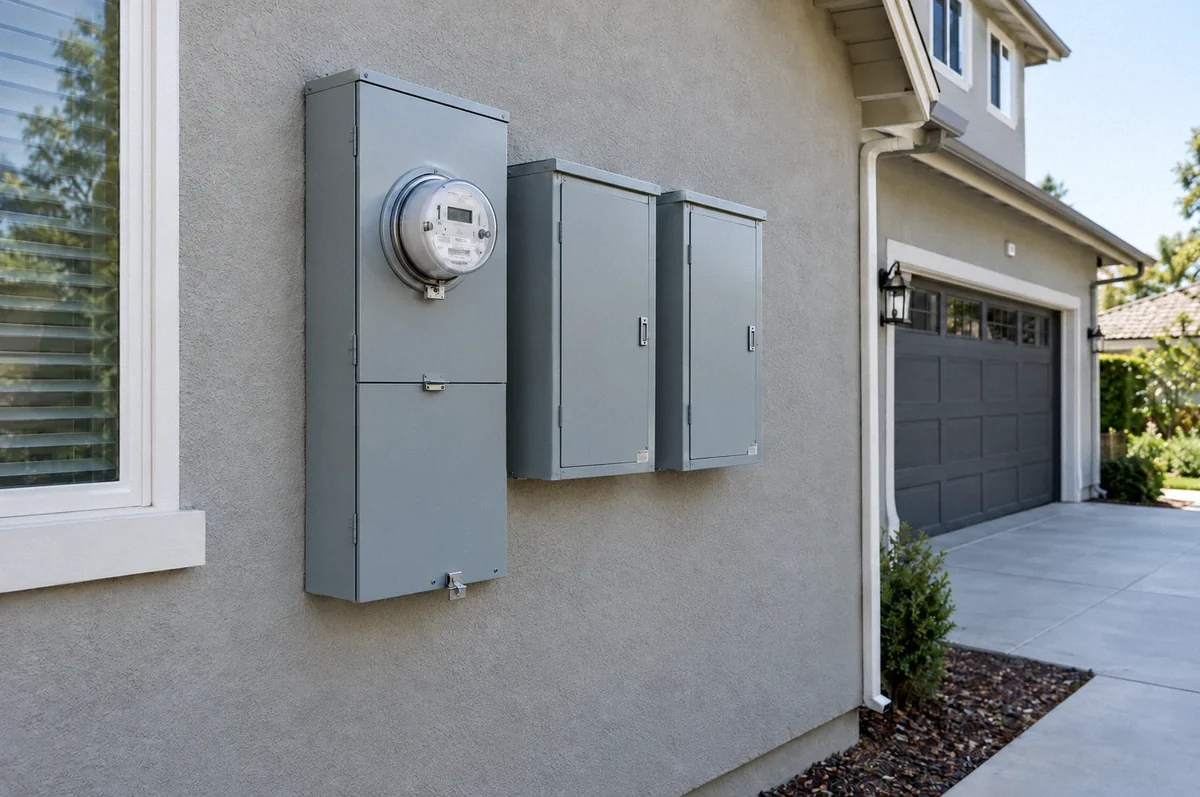
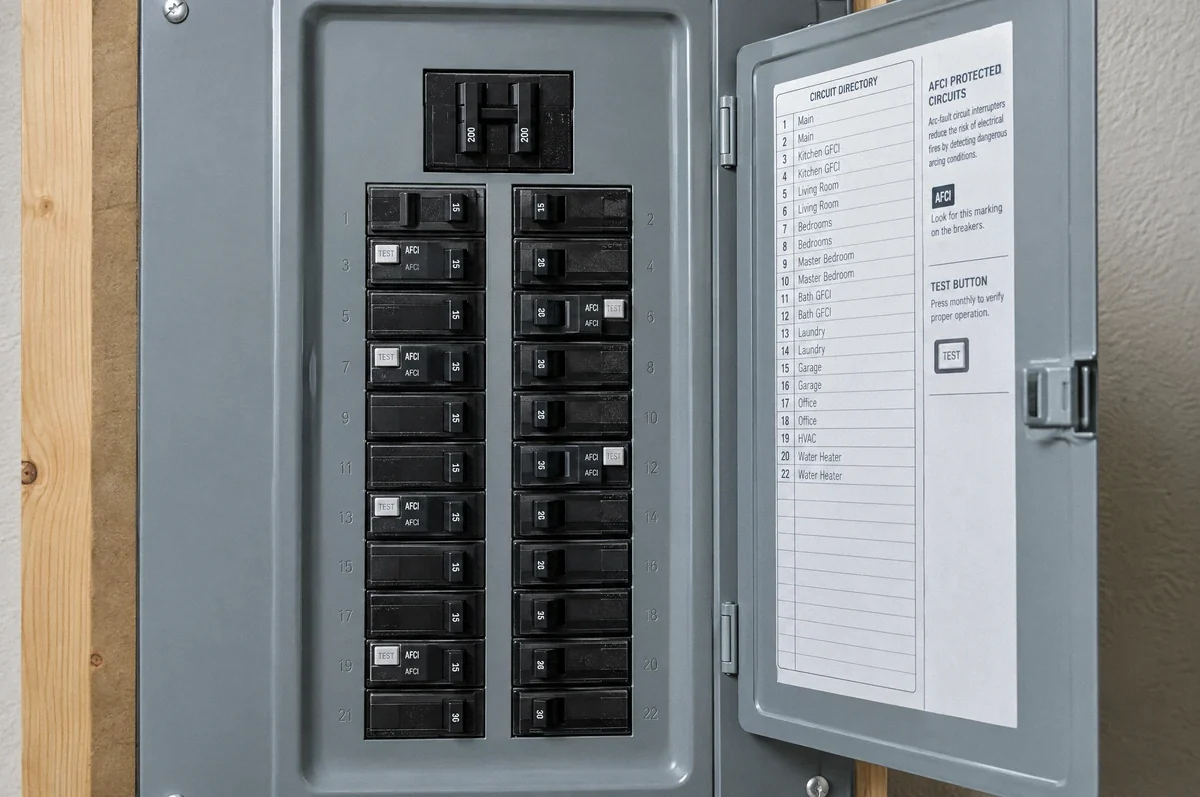
The electric meter measures energy used by the property. It is installed in a meter socket or enclosure that must be acceptable to the serving utility. The main disconnect provides a means of disconnecting the load it supplies. The distribution panel divides electricity among branch circuits, each with its own protection.
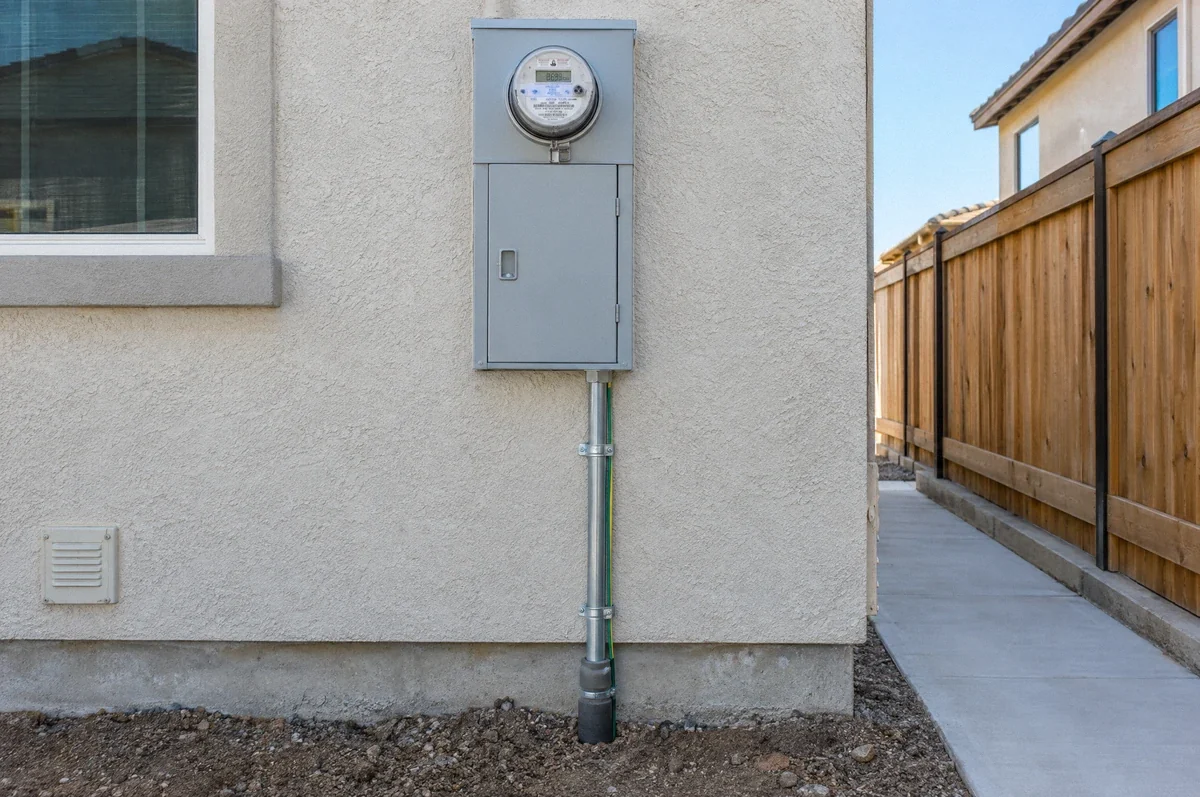
These functions may share an enclosure or be located in separate approved equipment. A meter-main commonly combines the meter socket and main disconnect. Some assemblies also include branch-circuit spaces; others feed a separate distribution panel elsewhere in the home.
The exact arrangement affects the amount of work. Moving an exterior meter-main may require new service conductors and a new feeder to the interior panel. Replacing a downstream panel may leave the meter equipment untouched if it remains suitable. The proposal should identify the components rather than using “panel upgrade” for every possible scope.
An outside shutoff does not require one universal box
An exterior disconnect can provide an accessible way to shut down the supply to a dwelling. Whether a particular project needs a new disconnect, how it must be labeled, and what equipment arrangement is acceptable depend on the applicable electrical code, the work being performed, and local and utility requirements.
A meter-main is one common way to provide that arrangement. Separate metering and disconnect equipment may also be appropriate. Do not assume every Bay Area jurisdiction requires a single combined enclosure or that every existing installation must be moved just because another city approved a different configuration.
PG&E’s residential project resources direct customers to its service requirements and meter working-space guidance. Those requirements need to be checked for a PG&E address before deciding that an existing location or a proposed enclosure will be accepted.
The California Electrical Code is Part 3 of Title 24. The Energy Code is a separate part. The Building Standards Commission’s code directory identifies the current code edition and effective date. The relevant permit and local amendments determine the requirements for the project; “Title 24 requires it” is too vague to explain a particular line item.
Grounding electrodes and equipment grounding have different jobs
A grounding electrode is a conductive part in contact with the earth, such as a qualifying metal water service, a concrete-encased electrode, or a ground rod. The grounding electrode conductor connects the electrical system to that electrode system. These connections help establish the system’s relationship to earth and address conditions such as lightning or higher-voltage contact.
Equipment grounding and bonding create a conductive path connecting normally noncurrent-carrying metal parts back toward the electrical source. If a hot conductor contacts a properly bonded metal enclosure, that path allows fault current to return so the protective device can operate. A poor or missing path may leave exposed metal energized.
OSHA’s grounding training material distinguishes these functions and explains the importance of a continuous, sufficiently low-impedance fault-current path. The practical point is that adding a rod in the soil does not replace missing equipment grounding or fix every shock hazard.
Where the neutral bond belongs
The neutral carries return current during normal operation of loads that use it. At the appropriate service bonding point, it is connected to the equipment-grounding system according to the design. Downstream, normal neutral current should remain on its intended conductor rather than sharing metal equipment and other grounding paths.
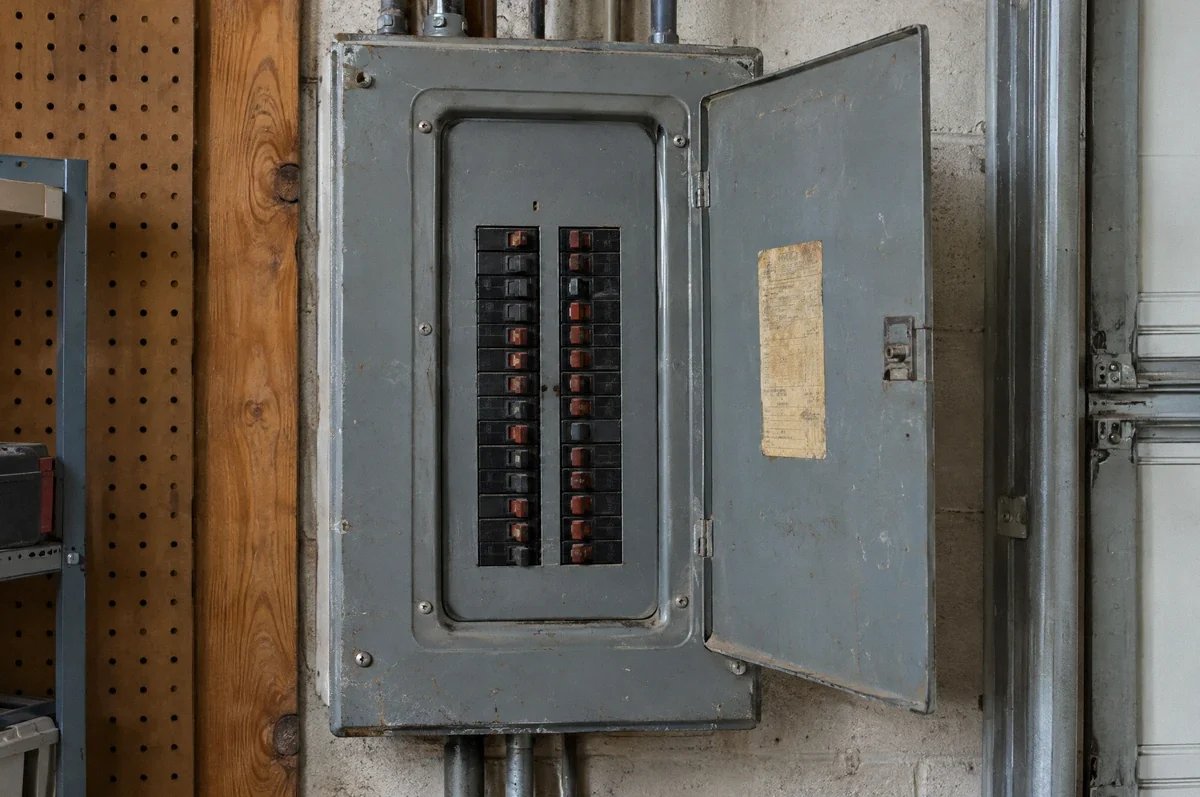
If a new outdoor service disconnect changes how an existing interior panel is supplied, the interior panel may become a downstream distribution panel. Its neutral and equipment-grounding arrangement must then be evaluated as part of the conversion. This is one reason an outdoor equipment replacement can involve work inside the old panel as well.
The exact bonding arrangement also needs attention where there are generators, transformers, or other separately derived systems. A homeowner should not add a bonding screw or join bars based on a generic diagram. Our subpanel guide explains the common residential downstream arrangement.
Why existing grounding sometimes needs correction
A service assessment may find a loose or damaged connection, a conductor without adequate protection, corrosion, or an electrode arrangement that does not meet the requirements applicable to the work. The electrician should identify what was found and what correction is needed.
The answer is not automatically “two new ground rods at every house.” The existing electrodes, their condition, and the permitted design matter. A qualifying existing electrode or conductor may be retained when suitable and allowed. Other installations need substantial replacement or additional connections.
Water-pipe work can change the picture. Replacing metal piping with plastic may interrupt a connection that previously depended on metallic continuity. OSHA’s discussion of interrupted water-pipe grounding paths describes why relying on an interrupted path can leave equipment hazardous. If substantial plumbing changes are part of the project, include the electrical bonding implications in the coordination between trades.
Metal water piping and other metal systems also need the bonding appropriate to the installation. Do not assume every pipe gets the same connection or that a gas pipe should be used as a grounding electrode. The electrician must determine the required arrangement for the actual systems present.
A new service does not ground every old outlet
An older home may have branch circuits without an equipment-grounding conductor or another approved grounding path. Installing a new meter-main and electrode system does not automatically create that missing path at each outlet.
This is a separate branch-wiring issue. A modern-looking three-prong receptacle does not prove that grounding exists behind it. Testing, correction, labeling, or rewiring may be required depending on the circuit and permitted solution. Our open-ground guide explains why a working appliance is not evidence of a complete grounding path.
Similarly, grounding work at the service does not repair loose connections throughout the house or make damaged equipment safe to reuse. Keep the service scope and any whole-home rewiring needs distinct in the assessment and estimate.
What should appear in the estimate?
The proposal should identify the meter and disconnect arrangement, finished service rating, equipment location, and any feeder changes. Grounding and bonding items should describe the intended work rather than rely on an unexplained “bring everything to code” allowance.
Ask whether the scope includes evaluation of existing electrodes, replacement or protection of conductors, corrections at downstream panels, and coordination with plumbing work. Identify restoration of stucco, drywall, roofing, paving, or other finishes separately.
The utility may require information or work on its side of the connection, while the local building department reviews the permitted customer installation. Confirm both responsibilities before the construction outage. Our panel upgrade timeline guide explains why a permit, inspection release, and utility reconnection are separate milestones.
Safe documentation is enough for the first conversation
If the equipment appears normal and can be approached safely, photographs of the closed meter-main, panel, accessible labels, and surrounding location help establish the initial scope. Do not remove the meter, break a seal, remove a protective cover, or touch grounding clamps and conductors to see whether they are loose.
Turning off a main breaker does not establish that every part of the enclosure is de-energized. Incoming utility terminals may remain live, and solar, battery, or generator sources can add other supply paths. Qualified personnel must establish safe isolation for the work.
For a service upgrade or a question about grounding work in an estimate, contact Fox Electric for a panel and service assessment. Ask for a scope that names the equipment and connections being changed and ties each item to the condition or requirement it addresses.